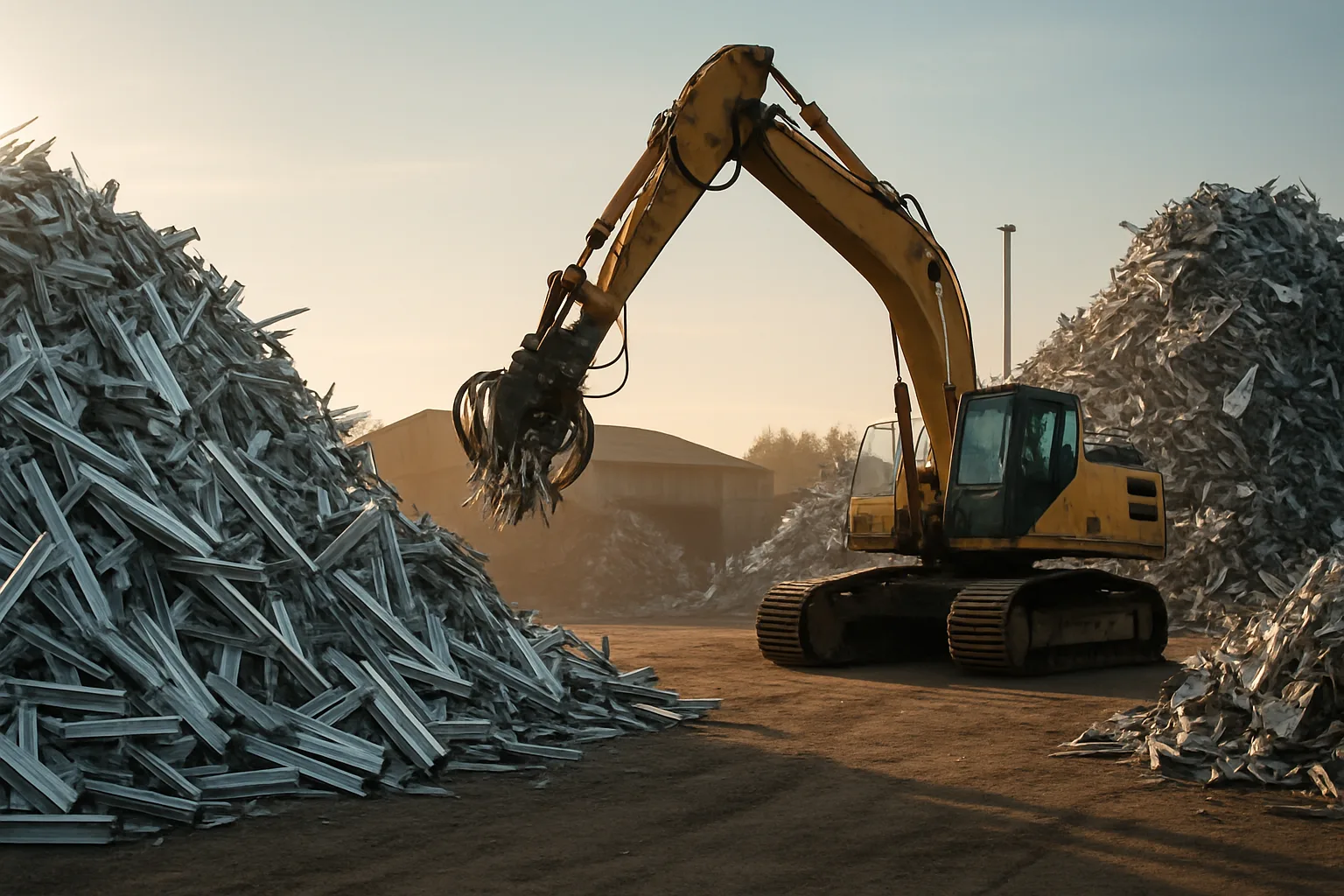
Aluminum Scrap Grades Explained: How Sudbury Sellers Can Get Top Dollar This Week
Most sellers leave money on the table — not because they're getting ripped off, but because they don't know what they're actually holding. Aluminum scrap spans a wide range of grades, and the price gap between the lowest and highest grades can be significant. If you're doing scrap metal recycling in Sudbury and throwing mixed aluminum into one pile, you're almost certainly underselling.
This week's market recap breaks down aluminum grades, what buyers actually pay attention to, and how to position your loads for better price discovery — whether you're running a yard, clearing a shop, or moving regular non-ferrous loads across Ontario.
Disclaimer: Scrap metal prices fluctuate daily based on commodity markets, regional demand, and grade. Always check current Canadian scrap metal prices before selling.
---Why Aluminum Grade Separation Directly Affects Your Scrap Metal Prices in Ontario
Aluminum isn't one thing — it's a family of alloys with very different scrap values. Buyers price each grade based on its chemistry, contamination level, and how easily it can be remelted and reused. Mix them together and buyers default to pricing the whole load at the lowest common denominator. That's money you don't recover.
Here's a practical breakdown of the grades most sellers encounter:
- 1100 / Pure Aluminum (Bright & Shiny): Extrusions, sheet, gutters. Clean, uncoated, unalloyed. Highest per-pound price in the aluminum family. Buyers love it because there's almost no processing required.
- Cast Aluminum: Engine blocks, transmission cases, wheels. Heavier, often contaminated with iron inserts or steel bolts. Lower price per pound than clean extrusion, but high volume makes it worthwhile. Remove the steel before you sell.
- Aluminum Breakage: Mixed, dirty, contaminated aluminum — painted, coated, or with attached non-aluminum materials. The catch-all grade. Lowest value tier.
- MLC (Mixed Low-Copper Aluminum): Sheet aluminum from auto bodies and consumer goods. Common in automotive recycling. Priced between breakage and clean sheet.
- Aluminum Turnings / Borings: Machining waste from fabrication shops. Often wet with cutting fluid. Buyers discount heavily for moisture and oil content. Dry it out before selling if you can.
- Painted Siding / Aluminum Cans: Low-grade, high-volume material. UBCs (used beverage cans) are actually well-understood by the market and often have their own posted price.
The practical takeaway: sort before you sell. Even a rough separation of clean extrusions, cast, and breakage into three separate containers gives buyers more confidence and gives you a stronger negotiating position.
---This Week's Market Context: What's Moving Aluminum Prices Right Now
Aluminum on the LME has remained active through June 2026, with energy costs continuing to influence primary aluminum production costs globally. Secondary aluminum — the kind your scrap feeds into — tends to track primary pricing but with regional premiums depending on local foundry demand and transportation costs.
For sellers in Sudbury and across northern Ontario, a few factors are worth watching this week:
- Currency spread: CAD/USD fluctuation affects how Canadian yards translate LME pricing into local posted rates. A weaker Canadian dollar generally means posted prices in CAD look higher, but your actual commodity exposure hasn't changed.
- Auto sector demand: Cast aluminum from automotive sources — wheels, engine components — remains in steady demand from secondary smelters. If you're clearing automotive cores alongside your aluminum, keep them separated and documented.
- Summer slowdown or pickup: Mid-June typically brings mixed signals. Construction activity (a strong source of aluminum extrusion scrap) is active, but some industrial sources slow ahead of summer shutdowns. Watch your local posted prices carefully.
The bottom line: competition between buyers is still the most reliable way to discover what your aluminum is actually worth. One buyer quoting your load is just one data point. Platforms like SMASH expose your load to multiple vetted buyers simultaneously — that's how price discovery actually works. smashrecycling.ca explains the auction model in detail.
---How to Prepare Your Aluminum Load for Better Bids — Practical Steps for Sudbury Sellers
Preparation isn't just about sorting. Buyers make decisions based on what they can verify. A well-documented load with photos, weights, and grade breakdowns signals that you're a serious seller — and that reduces the risk discount buyers build into their bids.
Here's what actually moves the needle:
- Sort by grade. Even rough separation is better than none. Extrusions in one bin, cast in another, breakage in a third.
- Remove steel and iron contamination. Cast aluminum with iron inserts buried in it costs buyers in processing. They price that in. Pull the bolts, brackets, and ferrous hardware before you weigh.
- Let turnings dry. Wet aluminum turnings get discounted — sometimes aggressively. If you have machining waste, let it drain and air out before selling.
- Photograph your load. Top-down and side shots. If a buyer is bidding remotely, photos are your load's handshake. Good documentation builds buyer confidence and reduces low-ball risk.
- Know your weights. Don't estimate. Certified scale tickets carry weight (pun intended) in negotiations. If your yard has a certified scale, use it and keep the tickets.
- Track serial numbers on equipment cores. If your aluminum includes motors, compressors, or industrial equipment, serial tracking supports documentation and protects both parties in the transaction.
These steps don't take long, but they change the category of seller you are in a buyer's eyes. Documented, sorted loads attract more serious bids. That's not a theory — it's how buyers manage their own risk.
---Aluminum and the Bigger Non-Ferrous Picture: Copper, Catalytic Converters, and Getting Everything Sold Right
Aluminum rarely shows up alone. Most sellers clearing a shop, a yard, or a demolition site are also dealing with copper, steel, and often catalytic converters. Each category has its own pricing logic, and getting the full picture matters.
Copper scrap prices in Sudbury remain one of the most closely watched non-ferrous benchmarks in Ontario — and for good reason. Copper's conductivity makes it irreplaceable in electrical and construction applications, which keeps demand steady. Grades here also matter: bare bright copper, #1 copper, #2 copper, and insulated wire all carry different prices. Strip your wire if the labour makes sense at current spreads.
Catalytic converters deserve their own line item. If you're accumulating cats alongside your aluminum loads, don't bundle them into a general metals quote. Cats are priced based on PGM (platinum group metals) content — palladium, platinum, rhodium — and that content varies dramatically by make, model, and year. The ability to sell catalytic converters online through a documented platform gives you access to buyers who specialize in this material and can price it accurately. VIN lookup and serial tracking make a real difference here.
If you want to find the best Canadian scrap metal prices today across all your non-ferrous categories — aluminum, copper, cats — getting competitive bids across the board is the only way to know if your posted local price is actually the market.
---Why Competitive Bidding Beats a Single Buyer for Best Scrap Metal Prices in Ontario
This is the core problem in scrap selling that most people accept without questioning. You call one yard. They give you a price. You take it or you don't. That's not a market — that's a single data point presented as if it's the whole picture.
Competitive bidding changes the dynamic. When multiple vetted buyers see the same load at the same time, they have to price competitively to win it. You're not guessing whether you got the best price — you're seeing the market respond in real time. That's what SMASH was built to deliver. No subscription fees. No guessing. The platform only wins when you do.
For sellers moving regular aluminum loads — or any non-ferrous volume — out of Sudbury or anywhere across Ontario, this approach makes the most practical sense. You've already done the work sorting and documenting. Let the market tell you what it's worth.
Want to go deeper on pricing strategy across metal categories? Read the latest Canadian scrap metal pricing guides for current breakdowns by metal type and region.
If you're serious about getting the best return on your scrap this week, don't settle for one number from one buyer. Check the market, document your loads, and let competition do its job. Sudbury scrap metal services are available through the platform — get started and see what your aluminum is actually worth.
The market is active. Your loads are documented. Time to find out what they're really worth — find the best Canadian scrap metal prices today and put your aluminum in front of buyers who compete for it.
---Frequently Asked Questions
Q: What aluminum grades get the highest scrap prices in Sudbury?
Clean, uncoated aluminum extrusions (sometimes called 6061 or bright extrusion) consistently command the highest per-pound price in the aluminum category. Removing any attached steel hardware and keeping the material free of paint or coatings puts your load in the top pricing tier. Buyers in Sudbury and across Ontario pay a premium for material that requires minimal processing.
Q: How do I know if I'm getting a fair price for scrap metal recycling in Sudbury?
The only reliable way to know is to get multiple bids on the same load. A single yard quote is just one data point — it's not the market. Platforms like SMASH connect you with vetted buyers across North America who bid competitively on your load. More buyers means better price discovery, not just a better feeling about the number you accepted.
Q: Does it matter if I sort my aluminum before selling?
Yes — significantly. Mixed aluminum gets priced at the lowest-grade component in the load. Separating clean extrusions from cast aluminum and breakage lets each grade be priced on its own merits. The extra time to sort almost always returns more value than the convenience of selling everything mixed.
Q: Can I sell catalytic converters online alongside my aluminum scrap?
Yes. Catalytic converters should actually be sold separately from your general aluminum loads — their value is based on PGM content (platinum, palladium, rhodium), not weight. Selling them through a documented online platform with VIN lookup and serial tracking gives buyers the information they need to price accurately, which typically results in better offers than a general metals quote.
Q: What's the best way to track scrap metal prices in Ontario before I sell?
Check posted rates regularly on Canadian-focused pricing resources, and compare them against what buyers are actually bidding on real loads. Posted prices are a starting point, not the ceiling. For current benchmarks across aluminum, copper, and other non-ferrous categories, check rates at best-scrap-prices.ca before heading to the yard.
---Stay current on aluminum grades, copper price movements, and non-ferrous market shifts — follow SMASH on LinkedIn for weekly scrap metal market insights and industry updates.