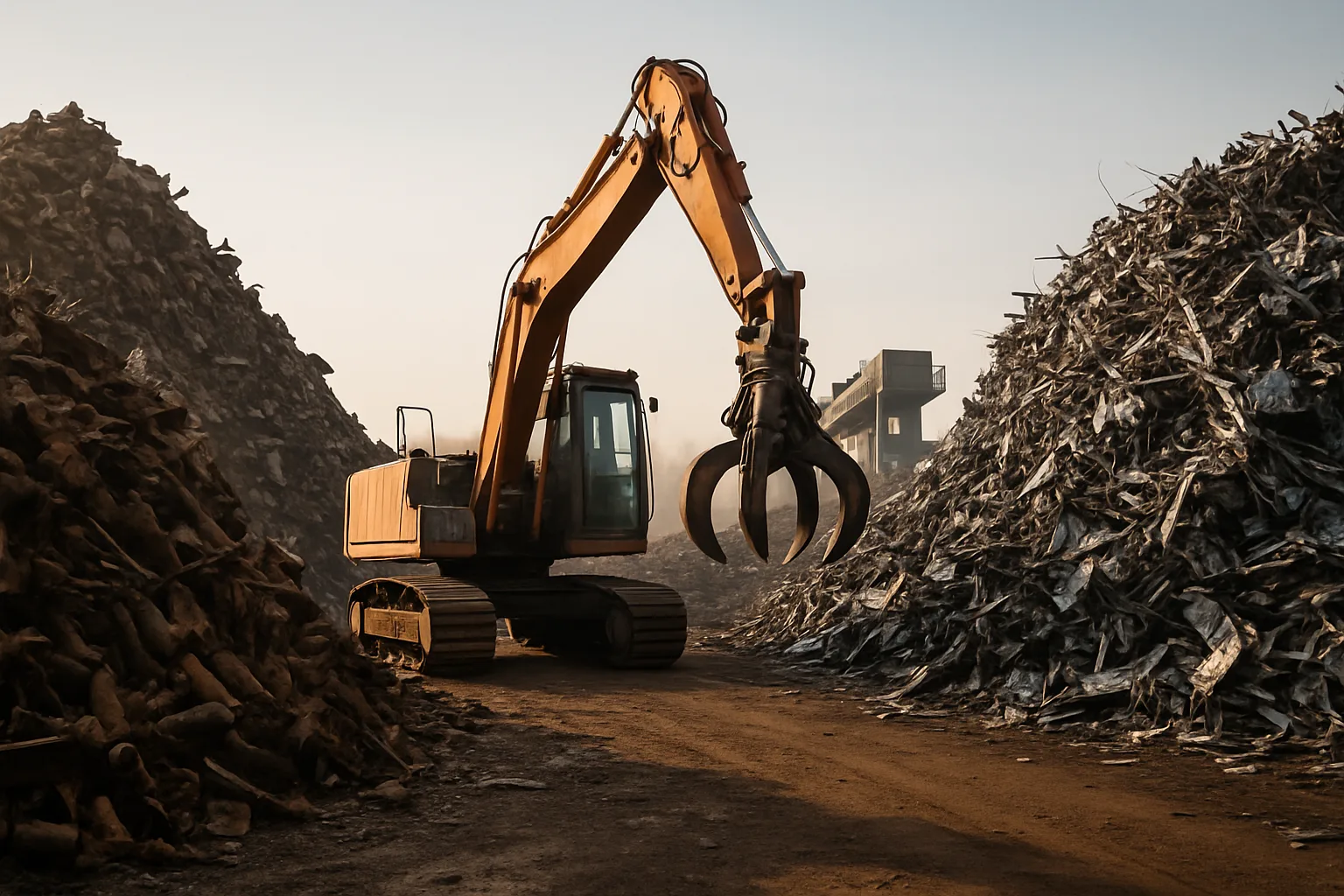
Most sellers assume steel and iron are basically the same thing at the yard. That assumption costs them money every week. The gap between what a yard pays for clean steel versus cast iron versus shredded mixed ferrous isn't cosmetic — it's structural, and it shifts with market conditions. If you're hauling loads in Burnaby or anywhere across British Columbia without understanding why these materials price differently, you're flying blind.
This week's market recap breaks down the steel vs. iron price gap, what's driving it right now, and how to use that knowledge to get better returns on your ferrous loads — whether you're a one-truck operation or running a full yard.
---Why Steel and Iron Are Not the Same Price at the Scale
Steel and iron come from the same family, but they're processed differently, priced differently, and valued differently by mills and foundries. Cast iron has a higher carbon content — typically 2–4%. That makes it brittle, heavy, and useful for specific casting applications, but it can't just be tossed into a steel melt without affecting the chemistry. Steel scrap, by contrast, has a lower carbon content and is the backbone of electric arc furnace (EAF) production across North America.
That distinction matters at the yard gate. A ton of heavy melt steel (#1 HMS) consistently commands a higher price than a ton of cast iron because steel has more direct, high-volume demand from mini-mills running EAFs. Cast iron has a market too — but it's narrower, and the buyers are more selective about grade and contamination. When mill demand surges, the spread between steel and iron widens. When the market softens, it narrows — but it rarely disappears entirely.
Breaking Down the Ferrous Price Tiers: What Buyers Actually Pay For
Not all steel is the same price either. The ferrous scrap market runs on grades, and those grades reflect how much processing a mill needs to do before the material is usable. Here's how the main categories typically stack up:
- #1 Heavy Melt Steel (HMS 1): Clean, thick-gauge steel, minimum ¼ inch. Highest value in the ferrous category. Minimal prep for the mill.
- #2 Heavy Melt Steel (HMS 2): Thinner gauge, may include light structural steel. Slightly lower price than HMS 1 due to higher burn-off and processing needs.
- Shredded Steel: Machine-processed, dense, and consistent. Mills love it for its uniformity. Prices sit close to HMS 1 depending on the region.
- Cast Iron (Breakable): Radiators, engine blocks, machine bases. Valued separately from steel. Often priced lower per ton due to casting chemistry and demand variability.
- Busheling / Plate and Structural: Cleaner cuts of steel plate and structural sections. Can command premium pricing when properly sorted and sized.
- Mixed Ferrous / Light Iron: The catch-all grade. Lowest price tier because the buyer has no idea what they're getting until it's shredded or processed.
The takeaway: sorting before you sell isn't optional if you want top dollar. A load that's 80% HMS 1 mixed with 20% light iron gets priced as a mixed load. Keep your grades clean and your price discovery improves dramatically. Platforms like SMASH make it easier to document your load by grade so buyers are bidding on what they're actually getting — not a mystery box.
What's Moving the Ferrous Market in June 2026
Ferrous scrap markets in North America are reacting to a combination of mill utilization rates, export demand out of key ports, and the ongoing reshoring of domestic manufacturing capacity. U.S. and Canadian mini-mills running EAF operations have been active buyers, but they're also disciplined — they're not overpaying for grades they don't need right now. Export flows, particularly to overseas foundries, continue to shape what buyers will offer for cast iron grades specifically.
For yards in British Columbia, regional factors add another layer. West Coast export economics — shipping costs, container availability, and demand from Pacific Rim buyers — influence local ferrous pricing in ways that don't always line up with what Eastern Canadian or Midwest U.S. yards are seeing. A Burnaby yard operator watching Ontario prices and assuming they apply locally is working with incomplete data. That's exactly why price transparency tools and competitive bidding matter more on the West Coast, not less.
If you want to check current Canadian scrap metal prices before committing a load, doing that homework first is the difference between a good week and a frustrating one.
Copper Scrap Prices in Burnaby — Why Non-Ferrous Still Dominates the Conversation
Even in a ferrous-focused recap, copper scrap prices Burnaby sellers are tracking deserve attention. Copper is the bellwether of the non-ferrous world. When copper prices move, the whole scrap market pays attention — because copper margins often subsidize yard operations that break even or worse on ferrous volume.
Right now, copper scrap is being influenced by global demand for electrification infrastructure — EV charging networks, grid upgrades, and industrial buildout. That long-cycle demand story hasn't gone away. For sellers in Burnaby and across British Columbia, that means bare bright copper, #1 copper, and even #2 copper are getting real attention from buyers. But — and this is critical — you have to know your grades. Painted copper, copper with insulation still on it, or mixed copper alloys don't get bare bright prices, no matter how hard you argue at the scale.
Grade documentation, photo evidence, and weight verification all affect what a buyer will pay. That's not bureaucracy — that's how you get a number that reflects what you actually brought. To find the best Canadian scrap metal prices today, you need to know what grade you have before you make the call.
The Old Way of Selling Ferrous Is Leaving Money on the Table
Here's the honest version of how most ferrous loads get sold: a yard operator calls one buyer they've worked with for years, gets a number, and either takes it or argues for a few dollars more. That's it. One data point. No competition. No benchmark. Just a handshake price that may or may not reflect what the market actually cleared that week.
That approach made sense before price transparency existed. It doesn't make sense anymore. SMASH runs a vetted buyer auction model specifically built for B2B scrap metal transactions — connecting yards with multiple buyers who are actually competing for the load. When buyers compete, price discovery improves. That's not a sales pitch; that's how markets work.
Whether you're moving a few tons of cast iron out of a Burnaby shop or a full trailer of HMS 1 steel heading to a regional mill, more buyers seeing your load means more information about what it's actually worth. You can compare scrap metal bids from Canadian buyers and stop guessing what your ferrous is worth this week.
And if you want a deeper dive into how to read the market before you sell, read the latest Canadian scrap metal pricing guides to stay current on what's moving and why.
How to Improve Your Ferrous Returns — Practical Steps for 2026
You can't control what the market does. You can control how prepared you are when you go to sell. Here's what separates yards and sellers who consistently get strong ferrous prices from those who leave money at the gate:
- Sort before you sell. Grade separation is worth real dollars per ton. Don't let your HMS 1 get penalized because someone threw light iron in the pile.
- Weigh accurately and document everything. BOLs, packing lists, photos of the load — buyers pay more confidently when the documentation is clean.
- Know the difference between mill grades and yard grades. What a yard calls "heavy melt" and what a mill spec requires aren't always the same. Know your buyer's spec before you price.
- Track weekly pricing, not just your last sale. Markets move weekly. What you got three months ago for shredded steel is not the benchmark for today.
- Use competitive bidding when volume justifies it. Not every load needs an auction. But when you have a significant load of clean material, getting multiple bids is basic due diligence.
- Separate your iron from your steel. Mixing cast iron with steel scrap is one of the fastest ways to get a blended price that benefits no one but the buyer.
These steps aren't complicated. But most sellers skip most of them, most of the time. The yards that don't skip them are the ones building real margin in a commodity market that doesn't offer many places to hide.
---Frequently Asked Questions
Q: Why do copper scrap prices in Burnaby sometimes differ from prices in other Canadian cities?
Regional pricing in Burnaby and across British Columbia reflects local buyer demand, proximity to export facilities, and transportation costs. West Coast scrap markets don't always mirror what's happening in Ontario or the Prairies. Getting local bids — not just national benchmarks — gives you a more accurate picture of what your copper is actually worth where you are.
Q: Is cast iron worth selling separately from steel scrap?
Yes, in most cases. Cast iron and steel scrap have different mill applications and different buyer pools. Mixing them together typically gets you a blended, lower price. If you have a meaningful volume of cast iron — engine blocks, radiators, machine castings — separating it and presenting it as a distinct grade will usually produce a better return than throwing it in with your steel pile.
Q: What's the best way to get competitive scrap metal prices in Burnaby?
Get more than one bid. Whether you're selling ferrous or non-ferrous material, a single phone call to a single buyer gives you one data point. Platforms like SMASH connect sellers with vetted buyers who compete for loads — which is how you find out what the market actually thinks your material is worth, not what one buyer is willing to offer on a Tuesday morning.
Q: How often do scrap metal prices change in Canada?
Ferrous and non-ferrous scrap prices can shift week to week, sometimes more frequently during periods of high market volatility. Copper and aluminum tend to move with global commodity markets. Steel and iron pricing often follows domestic mill demand and export economics. Checking prices regularly — not just when you're ready to sell — helps you time loads more strategically.
Q: What does a B2B scrap metal marketplace do differently than calling a local yard?
A B2B scrap metal marketplace like SMASH brings multiple vetted buyers to your load instead of relying on a single relationship. That competition is the core difference. You also get better documentation tools, transparent transaction records, and pricing that reflects actual market demand — not just what one buyer decides to offer that day.
---Scrap metal pricing rewards preparation and market awareness. If you're moving ferrous loads in Burnaby, tracking copper, or trying to understand why your iron isn't getting what your steel does, the answer starts with better information. Get the best Canadian scrap metal prices and stay ahead of the market — check rates at best-scrap-prices.ca.
Stay current on scrap metal market moves and industry insights — follow SMASH on LinkedIn for weekly updates, pricing context, and practical advice built for people who actually work in scrap.