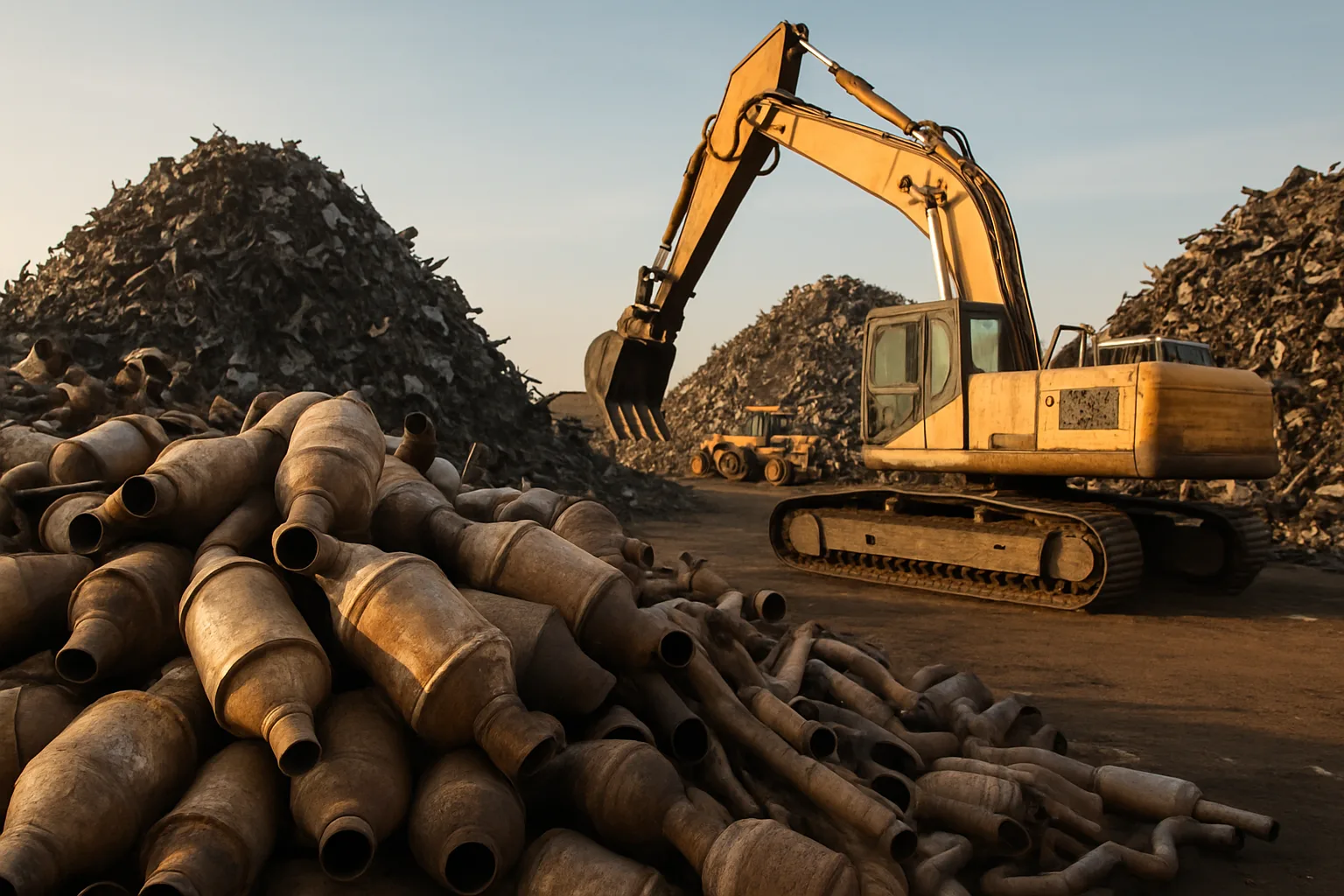
Why Two Catalytic Converters From the Same Parking Lot Can Pay Completely Different Prices
Most people assume scrap is scrap. Pull a cat off a Honda, pull one off a Ford, get roughly the same money. That assumption costs sellers real dollars every single time. Catalytic converter recycling is one of the most price-volatile corners of the scrap metal world — and if you don't understand why, you're leaving money on the table before the conversation even starts.
Whether you're running a salvage yard in Oshawa, stripping end-of-life vehicles across Ontario, or just trying to get fair value on a handful of cats, this guide breaks down exactly how the process works and why prices swing the way they do. No guessing. No generic advice.
What Actually Happens When You Recycle a Catalytic Converter
A catalytic converter isn't just a chunk of metal. Inside that steel shell sits a ceramic or metallic honeycomb substrate coated with platinum group metals (PGMs) — platinum, palladium, and rhodium. These are the materials driving the price. The outer steel casing is almost irrelevant to value. The PGMs are everything.
Here's the basic recycling chain:
- Collection — Cats are pulled from vehicles at salvage yards, repair shops, or auto recyclers.
- Identification and grading — Each unit gets identified by make, model, part number, or physical characteristics. Grade determines estimated PGM content.
- Decanning — The ceramic or metallic substrate is extracted from the steel shell.
- Processing and assay — Substrate material is processed (crushed, sampled, or smelted) and assayed to determine actual PGM concentrations.
- Refining — PGMs are extracted and sold on commodity markets. Buyers settle with sellers based on assay results and prevailing metal prices.
That chain takes time. It also introduces variability at every step. Two cats that look identical on the outside can carry dramatically different PGM loads inside. That's the fundamental reason why catalytic converter prices are so complex compared to, say, aluminum scrap value per pound or standard copper grades — metals where you can measure purity and weight with a scale and a basic test.
The 5 Reasons Catalytic Converter Prices Vary So Much
If you've ever gotten a wildly different quote from two buyers on the same load of cats, here's what's actually driving that gap.
1. Vehicle Make and Model
A catalytic converter from a Ferrari or a late-model diesel truck carries a completely different PGM load than one from a base-model economy sedan. Buyers use proprietary databases and assay histories to price by part number. If a buyer can't identify your unit, they price it conservatively — or low.
2. PGM Spot Prices
Platinum, palladium, and rhodium trade on open commodity markets. Rhodium in particular has seen extreme volatility over the years — swinging from a few hundred dollars per troy ounce to thousands. When PGM prices move, cat prices move immediately. The same physical converter is worth more on Monday than it was Friday if rhodium spiked over the weekend.
3. Condition of the Substrate
A melted, cracked, or severely damaged substrate holds less PGM material. So does a "washed out" converter — one that's been run past its useful life with the coating degraded. Buyers visually inspect and sometimes weigh substrates to assess condition. Poor condition equals lower offers.
4. Whether You're Selling Whole Units or Decannad Substrate
Whole converters are easier to handle but give buyers more uncertainty. Decanned substrate with accurate weight is easier to assay and price. Some processors pay a premium for decanned material. Others prefer whole units because they control the decanning process. Know your buyer's preference before you strip anything.
5. Who You're Selling To
This one matters more than most sellers admit. A single buyer with no competition quotes what works for their margin. Multiple buyers competing for your load means the price discovery process actually happens. That's exactly the dynamic that platforms like the SMASH Recycling auction platform are built around — putting your inventory in front of vetted buyers who compete, rather than letting one phone call set the price.
How Copper and Aluminum Scrap Pricing Compares — And Why Cats Are Different
If you deal in mixed scrap, you already know that copper scrap prices Oshawa and aluminum grades follow a fairly trackable logic. Bare bright copper is bare bright copper. Twitch aluminum is twitch aluminum. Spot prices move, but the grading system gives you a framework. You can check published rates, compare buyers, and estimate your load value with reasonable accuracy before you even make a call.
Catalytic converters don't work that way. There's no single published "cat price" that applies across the board. The range from lowest-value to highest-value units can be enormous — even within the same vehicle brand. This is why documentation matters so much. Serial numbers, VIN lookups, photos of the substrate — all of it gives buyers confidence and reduces the discount they apply for uncertainty.
When you find the best Canadian scrap metal prices today, you'll notice that base metals like aluminum and copper have posted rates. Cats are typically handled differently — often quoted by grade or by part number lookup rather than a flat rate per pound. Understanding that distinction helps you approach buyers the right way and ask the right questions.
How to Sell Catalytic Converters Online — And What to Document First
The ability to sell catalytic converters online has changed the market significantly. You're no longer limited to whoever operates within driving distance. Buyers across North America can bid on your load if your documentation is solid. But documentation is the key word.
Here's what serious buyers need before they'll quote competitively:
- Clear photos of each unit, showing both ends of the substrate, the outer shell condition, and any visible part numbers
- Part numbers or serial numbers where visible — these are the fastest path to accurate identification
- VIN lookup data if the cat came from a specific vehicle (confirms expected PGM content for that year/make/model)
- Quantity and approximate weight of the load
- Condition notes — melted, cracked, washed out, or in good shape
SMASH's platform is built to handle exactly this kind of inventory documentation. Serial tracking, photo uploads, VIN lookup — it's all there so your load shows up to buyers as a documented asset, not a mystery box. That documentation directly affects what buyers are willing to pay. A mystery box gets a mystery price. A documented load gets a real offer.
For sellers in Oshawa and across Ontario, using an auction-based model means you're not locked into whatever a single local buyer decides your cats are worth that morning. Competition does what competition does — it finds the market. To understand how this fits into a broader scrap strategy, read the latest Canadian scrap metal pricing guides for context on base metals alongside specialty items like cats.
What Sellers in Oshawa Should Know Before Their Next Load
Scrap metal recycling in Oshawa sits in a strong position geographically. You're in the heart of Ontario's auto corridor — proximity to automotive manufacturing, salvage operations, and a dense buyer network. That should work in your favor. But geographic advantage only converts to dollars if you're selling the right way.
A few practical points before you move your next load of cats:
- Don't strip unnecessarily without knowing your buyer's preference. Some pay more for whole units. Ask first.
- Photograph everything before it moves. Once a load ships, your leverage on condition disputes drops to zero.
- Check PGM prices on the day you sell. A one-week swing in rhodium or palladium can meaningfully affect your return. Timing matters more with cats than with base metals.
- Get multiple quotes. A single quote is not a market price. It's one buyer's margin.
- Use platforms that bring buyers to you. That's the difference between guessing and knowing.
If you're already managing Oshawa scrap metal services and want to maximize returns on specialty items like catalytic converters, the approach is the same as any other commodity: document it well, expose it to competition, and let the market tell you what it's worth. To check current Canadian scrap metal prices and benchmark your expectations before you sell, use the tools available to you — don't rely on a single buyer's word.
The best scrap metal prices Ontario sellers can get aren't hidden — they come from showing up prepared, documenting your load properly, and selling into a competitive market. SMASH exists to make that process straightforward. No subscription. No guessing. Just buyers competing for your material.
Frequently Asked Questions
Q: How do I know if my catalytic converter is worth selling separately or as part of a whole vehicle?
In most cases, a catalytic converter from a late-model vehicle is worth more sold separately than bundled into a whole car price. Buyers who specialize in cats will pay for PGM content specifically — that value often gets absorbed or underpriced when you sell a full vehicle. Get separate quotes and compare before you decide.
Q: Why do catalytic converter prices change so frequently?
Cat prices move because the platinum group metals inside them — platinum, palladium, and rhodium — trade on commodity markets that fluctuate daily. When PGM spot prices rise or fall, cat offers follow almost immediately. Unlike aluminum scrap value, which moves more gradually, cat pricing can shift significantly within days.
Q: Is it legal to sell catalytic converters in Ontario?
Yes, selling catalytic converters from vehicles you legally own or have processed through your salvage operation is legal in Ontario. Regulations around documentation and record-keeping have tightened in recent years to combat theft. Legitimate buyers will ask for documentation — that's normal and expected. Always keep records of where your material came from.
Q: What's the best way to get competitive prices for catalytic converters in Oshawa?
The most effective approach is to document your load thoroughly — photos, part numbers, condition notes, VIN data where available — and then expose it to multiple buyers at once. Platforms like SMASH let vetted buyers compete for your inventory rather than relying on a single local quote. That competition is where real price discovery happens.
Q: How does catalytic converter pricing compare to copper or aluminum scrap prices?
Copper and aluminum grades have published rates that are relatively easy to track and compare. Catalytic converters are priced by PGM content, which varies by vehicle and converter type — there's no single posted rate. This makes documentation and buyer competition even more critical for cats than for standard base metals like copper or aluminum.
If you're selling scrap in Oshawa or anywhere across Ontario, don't guess at your prices. The market is there — you just need the right tools to access it. Get the best Canadian scrap metal prices by checking rates at best-scrap-prices.ca before your next sale. And for auction-based selling that puts real buyers in competition for your load, the SMASH Recycling auction platform is where serious sellers go.
Follow SMASH on LinkedIn for scrap metal market updates, pricing insights, and industry news delivered straight to your feed.
Disclaimer: Scrap metal prices fluctuate based on commodity markets, material grade, and buyer demand. All pricing information is general in nature. Always check current rates directly with buyers or platforms before making selling decisions.