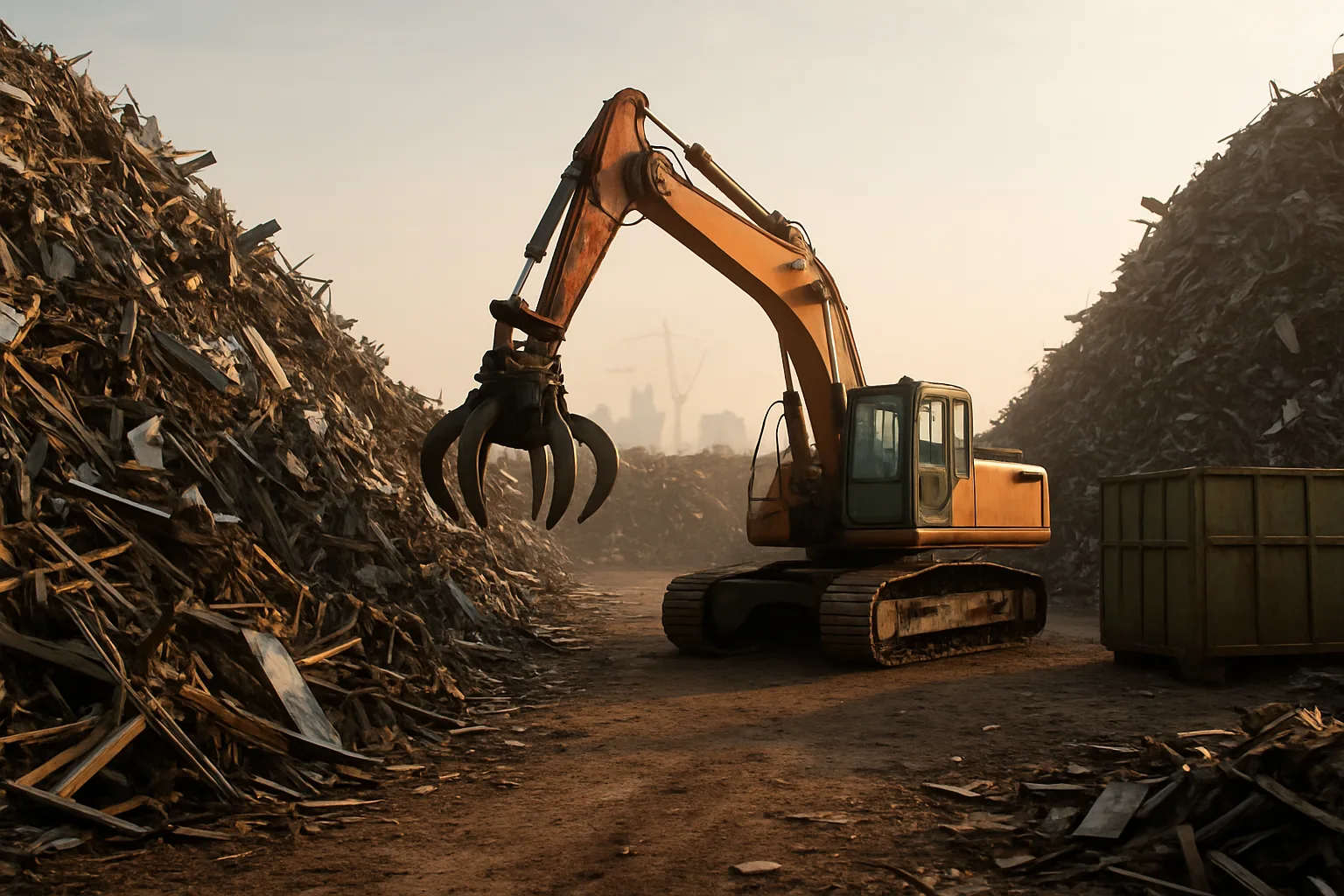
Construction and Demolition Sites Are Sitting on a Metal Goldmine — Are You Cashing In?
Every time a building comes down or a new one goes up, metal moves. Structural steel, copper wiring, aluminum framing, cast iron pipe — it doesn't disappear. It gets hauled off, piled up, and either sold smart or left on the table. If you're managing a construction or demolition site in London, Ontario, or anywhere across Canada, understanding where your scrap comes from — and what it's worth — can add serious money to your margins.
The steel scrap price today fluctuates based on global demand, mill activity, and commodity cycles. But one thing doesn't change: construction and demolition (C&D) sites consistently produce some of the highest-volume, most valuable scrap streams in the recycling industry. Knowing what you've got is the first step. Knowing how to sell it is the second.
This breakdown covers exactly where that metal comes from, what to watch for, and how platforms like SMASH are changing the way contractors and yards turn demolition tonnage into real revenue. To find the best Canadian scrap metal prices today, start by knowing what you're selling.
The Top Sources of Scrap Metal on Construction and Demolition Sites
C&D sites aren't one-size-fits-all. A high-rise demolition in a city core produces a different mix than a residential gut job or a bridge decommission. But across the board, these are the metal streams that show up most consistently — and most profitably.
1. Structural Steel
Beams, columns, decking, and rebar make up the backbone of most commercial and industrial structures. Structural steel is heavy, relatively easy to sort, and consistently in demand at mills. When you're tracking the scrap metal prices today, structural steel (also called #1 or #2 heavy melt depending on thickness and cleanliness) is usually the first benchmark to check. Large volumes move by the load, and tonnage pricing applies — this is where your BOL and accurate packing list matter.
2. Rebar and Light Iron
Concrete demolition pulls out rebar constantly. It's lower-value than heavy melt structural but adds up fast on large pours. Sort it clean — concrete-free and without attached ties where possible — to avoid deductions at the yard. In Ontario, yards vary on how aggressively they dock for contaminated rebar loads, so documentation and photo evidence of your material condition is worth the extra few minutes.
3. Copper Wiring and Pipe
Copper is where the real per-pound value lives. Electrical wiring, plumbing pipe, HVAC refrigerant lines — all of it strips out of any building gut job. Bare bright copper fetches the highest rates; insulated wire drops significantly depending on the gauge and insulation type. Don't mix grades. Keeping your copper separated — bare bright from #1 from #2 from insulated — directly impacts what you get paid. The copper price in Canada tracks the LME closely, but your actual payout depends on local yard spreads and your volume.
4. Aluminum
Window frames, curtain wall systems, door frames, HVAC ducting, and electrical conduit all come in aluminum. Modern commercial buildings use more aluminum than people realize — and the aluminum price in Canada has made it worth segregating properly instead of mixing it into general non-ferrous. Extrusion-grade aluminum versus sheet aluminum versus cast aluminum all price differently. Know the difference before you load.
5. Stainless Steel
Less common than carbon steel but significantly higher in value. Commercial kitchen demolitions, food processing plants, pharmaceutical facilities — these produce stainless pipe, sheet, and equipment. Stainless should always be kept separate from mild steel. A magnet is your first sorting tool — if it doesn't stick, you're likely holding something worth significantly more per pound than your regular steel scrap.
6. Cast Iron
Old radiators, cast iron drain lines, mechanical equipment bases — this is a heavy, dense material that prices lower per pound but weighs in big. Common in pre-1980s building demolitions and in industrial facility tear-downs. Don't overlook it because the per-pound number looks modest. By the ton, cast iron adds up.
7. Miscellaneous Non-Ferrous: Brass and Bronze
Valves, fittings, plumbing fixtures, door hardware — commercial buildings are full of brass and bronze components that most crews miss or mix into general metal. Brass runs well above iron on price per pound. Identify it, pull it, price it separately. If you're managing a full building demolition, a few hundred pounds of missed brass is real money left in the debris pile.
Why Sorting Beats Commingling Every Time
The number one mistake C&D operators make is throwing everything into one bin and letting the yard sort it. Mixed loads get priced at the lowest common denominator. If your copper is mixed with steel, you're not getting copper prices on that copper — you're getting a blended rate that benefits the buyer, not you.
Proper sorting on-site takes time upfront but pays back hard at the scale. Consider a systematic approach:
- Ferrous vs. non-ferrous — Separate these first. A magnet does the job in seconds.
- Copper grades — Bare bright, #1, #2, insulated wire. Keep them in separate containers.
- Aluminum types — Extrusion, sheet, and cast all price differently.
- Stainless — Always isolated. Never mixed with carbon steel.
- Brass/bronze — Pulled and held separately from general non-ferrous.
Documentation matters too. Photo your loads before they leave the site. Use serial tracking where applicable for equipment. When you sell through a platform that supports photo documentation and inventory tools — like SMASH — those records back up your grade claims and help buyers price with confidence rather than discounting for uncertainty.
How the Steel Scrap Price Today Affects Your C&D Haul Value
C&D scrap pricing isn't set in stone — it moves with the market. The steel scrap price today is tied to mill buying activity, export demand (particularly from Asia and the U.S. South), and overall construction sector health. When mills are running hot and need feedstock, prices rise. When capacity tightens or import dynamics shift, prices soften.
For contractors and demolition companies in London and across Ontario, the practical implication is timing. A load of heavy melt sold during a strong market can fetch meaningfully more than the same load sold during a soft cycle. That's not guesswork — that's market reality. To check current Canadian scrap metal prices before you book a pickup or schedule a sale, make it part of your standard pre-load process.
The secondary market for non-ferrous is somewhat less volatile than steel but still moves. Copper in particular tracks global LME pricing and responds to supply disruptions, energy transitions, and construction demand cycles. An EV build-out drives copper demand. So does a grid infrastructure push. Understanding what's driving scrap metal prices today — not just what they are — helps you make better timing decisions.
Why Single-Buyer Deals Shortchange Demolition Contractors
Here's the old way: you call one buyer, they quote you a price, you take it or wait. Most operations take it. They don't have time to shop. They don't have relationships with multiple yards. And so they consistently leave money on the table — not because buyers are dishonest, but because without competition, there's no incentive for them to bid their best number.
The SMASH model exists specifically to fix that. SMASH is a B2B scrap metal marketplace built for commercial sellers — yards, contractors, municipalities, industrial operations — who move volume and deserve a competitive process. Instead of one call to one buyer, your load hits a vetted buyer network. Multiple buyers see your inventory. Competition happens. Price discovery is real, not assumed.
For demolition operations running consistent volume out of London or anywhere in Ontario, this changes the math. You're not just getting a better number on one load — you're building a process that consistently outperforms the single-call approach. Sell your scrap metal on SMASH Recycling and let the auction format do what it's designed to do: surface your market price.
No subscription fees. No lock-in. SMASH wins when you win. That alignment matters in a market where margins are always under pressure. For those looking at how to sell scrap metal near me for cash, the answer increasingly points toward structured, competitive platforms rather than cold calls and single quotes.
Building a Scrap Program Into Your Demolition Operations
Scrap revenue shouldn't be an afterthought on a job site — it should be a line item. High-volume demolition projects can generate enough ferrous and non-ferrous material that it meaningfully offsets disposal and haul costs. Treating scrap as a managed revenue stream rather than a byproduct requires a few systems.
- Designate sorting zones on-site — Labeled bins for each metal category. Brief the crew once and enforce it.
- Track loads by material and weight — Know what's leaving the site. An inventory tool that tracks by load, grade, and weight keeps your records clean and your payout auditable.
- Document condition with photos — Especially for non-ferrous. Buyers pay more confidently for materials they can see.
- Watch the market before you sell — Don't sell every load the moment it's ready if timing has a meaningful impact. For large loads, a few days can matter.
- Use competitive channels for volume loads — Single-buyer deals for truckload volumes are the biggest missed opportunity in C&D scrap. If you're moving tonnage, put it in front of multiple buyers.
For contractors operating across Ontario — including London scrap metal services — building this process once and repeating it across projects compounds the benefit. A disciplined scrap program isn't just about one sale. It's about capturing value consistently across your project portfolio.
If you want to benchmark your approach against current market conditions, read the latest Canadian scrap metal pricing guides to stay current on what buyers are paying and where the market is moving.
Frequently Asked Questions
Q: What is the steel scrap price today in London, Ontario?
Steel scrap prices in London fluctuate based on mill demand, load grade, and current market conditions. Heavy melt structural steel, clean rebar, and shredded steel all price differently. Check current benchmarks at best-scrap-prices.ca before booking a sale, and always confirm with your buyer or platform since posted prices can move daily.
Q: What types of scrap metal are most common on demolition sites?
Structural steel and rebar dominate by volume. Copper pipe and wiring, aluminum framing, cast iron plumbing, stainless steel equipment, and brass fittings are also common. The mix depends heavily on the age and type of building being demolished — older buildings often have more cast iron and less aluminum, while newer commercial builds flip that ratio.
Q: How do scrap metal prices today affect what I get paid for a demolition load?
Prices shift with global commodity cycles, domestic mill buying, and local supply and demand. A load sold during a strong market can generate significantly more than the same load in a soft cycle. Monitoring current scrap metal prices — especially for steel and copper — and timing your larger loads when possible is a practical way to improve returns.
Q: Is SMASH useful for construction and demolition companies, not just scrap yards?
Yes. SMASH operates as a B2B scrap metal marketplace that serves commercial sellers across North America, including contractors and demolition companies who generate consistent volumes of ferrous and non-ferrous material. If you're moving truckload or multi-load volumes, the auction format puts your material in front of vetted buyers and lets competition determine your price — which typically outperforms single-buyer deals.
Q: How do I find scrap metal buyers near me in London or Ontario?
Local yards are a starting point, but for volume loads, a competitive platform like SMASH expands your buyer pool beyond your immediate geography. This matters when local demand is soft or when you're moving specialty materials like stainless or high-grade copper that may have limited local buyers but strong demand from regional or national purchasers.
If you're generating scrap from C&D projects in London or across Ontario, don't let market uncertainty or single-buyer habits cap your returns. Understanding your material, sorting it right, and putting it in front of the right buyers is how you capture what the market actually offers — not just what one buyer feels like paying. When you're ready to benchmark your loads against real-time market data, the place to start is best-scrap-prices.ca.
Stay sharp on the market — follow SMASH on LinkedIn for ongoing scrap metal market insights, pricing trends, and industry updates straight from the auction floor.