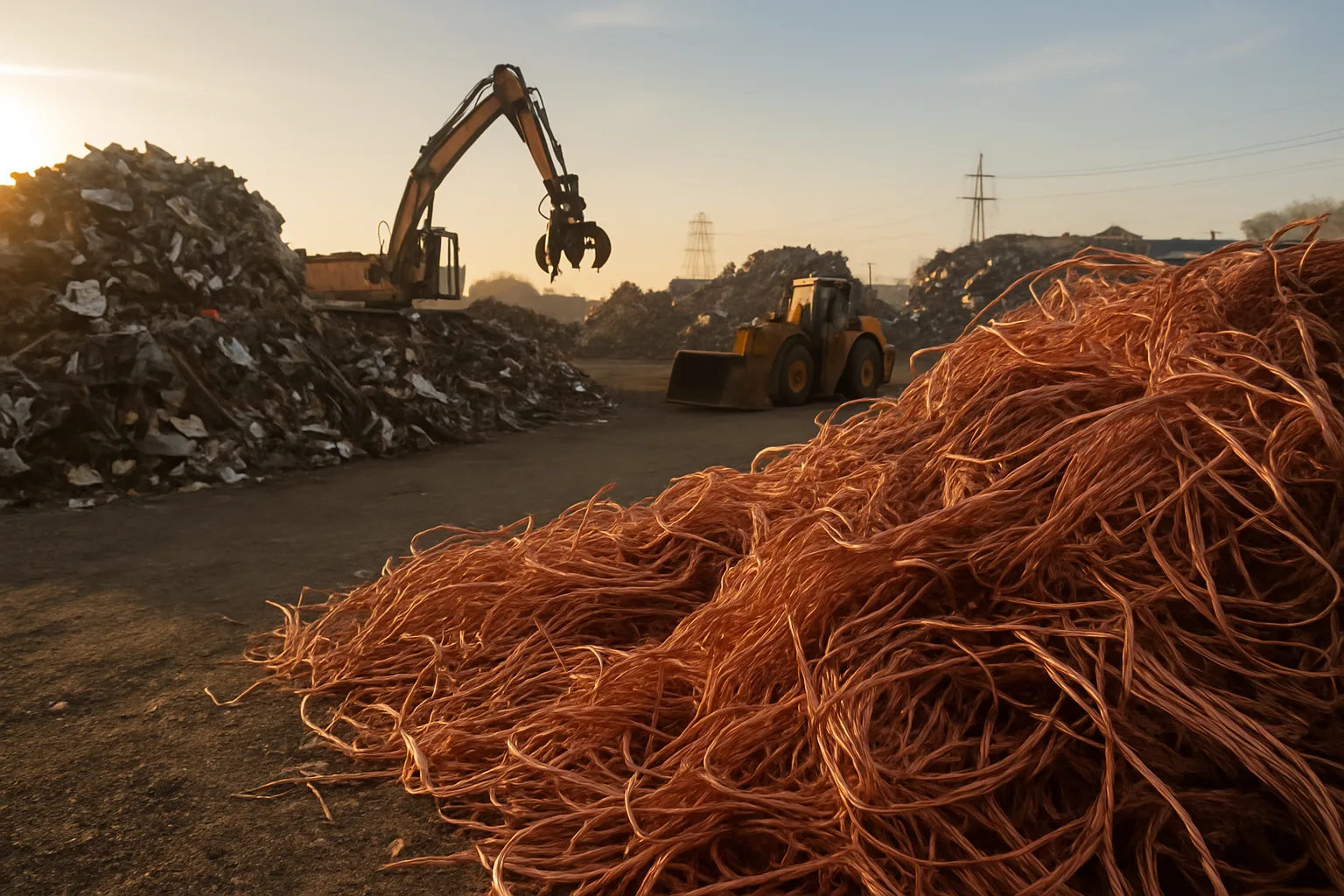
Why Some Scrap Pays 10x More Than Others — And How to Find the Best Loads
Most people hauling scrap to the yard are leaving money on the table. Not because they're doing anything wrong — but because they don't know which metals are actually worth chasing. The copper scrap price today can be five to ten times higher per pound than steel. That gap matters when you're loading a truck.
This guide breaks down the most profitable scrap metals to collect in Canada, what drives their value, and how sellers — including those in Longueuil and across Quebec — can stop guessing and start getting competitive prices on every load.
Copper: The King of Scrap Metal Prices Today
There's a reason experienced collectors call copper "red gold." It's consistently one of the highest-value metals in any yard's price sheet. The copper scrap price today in Canada reflects global demand from electrical manufacturing, construction, and EV production. When those industries are moving, copper moves with them.
Copper comes in several grades, and the spread between them is real:
- #1 Bare Bright Copper — clean, uncoated wire or solid copper with no insulation. Top dollar, no exceptions.
- #1 Copper — clean pipe, bus bars, clippings. Slightly lower than bare bright, still premium.
- #2 Copper — pipe with solder, fittings, painted or coated copper. Priced noticeably below #1.
- Insulated Copper Wire — value depends heavily on copper content percentage. Strip it if you can.
If you're sorting your copper before you drop it at the yard, you're already ahead of most sellers. A buyer sees clean, graded copper and they know exactly what they're bidding on. That confidence translates into stronger offers — especially when multiple buyers are competing for your load. Platforms like the SMASH Recycling auction platform put your documented, graded inventory in front of vetted buyers across North America, which means the market sets your price — not one yard's daily sheet.
Aluminum: High Volume, Serious Non-Ferrous Money
Aluminum might not carry the same per-pound price as copper, but it's everywhere — and that makes it one of the most practical metals to collect at scale. Rims, extrusions, cast aluminum, sheet, and litho: each grade prices differently, so knowing what you have matters.
For sellers in Longueuil and the surrounding South Shore, aluminum is especially common in automotive and light industrial scrap. Old window frames, patio furniture, engine components — it adds up fast when you're running regular pickups.
Key aluminum grades to know:
- Clean Aluminum Extrusion — door frames, window frames, clean profiles. Mid-to-high aluminum pricing.
- Aluminum Rims (Cast) — pulled from vehicles. Consistent demand, decent price per pound.
- Sheet Aluminum — roofing, siding, clean flat stock. Priced by cleanliness and alloy.
- Mixed/Dirty Aluminum — anything with steel inserts, plastic, or contamination. Takes a penalty.
The same principle applies here as it does with copper: clean, sorted, documented loads earn better offers. When buyers don't have to guess, they don't pad their margin with uncertainty. Check current Canadian scrap metal prices before your next drop to make sure you know what grade you're holding.
Catalytic Converters: The High-Stakes Scrap Category
Catalytic converters (cats) are one of the most valuable — and most complicated — scrap categories in North America. The precious metals inside (platinum, palladium, rhodium) are what drive the price, and those markets swing hard. A single cat can be worth anywhere from $30 to several hundred dollars depending on the vehicle it came from.
The challenge with cats is traceability. Regulations around catalytic converter sales have tightened across Canada and the U.S. in recent years, and for good reason — theft has been a serious problem. As a legitimate seller, documentation is your best friend. Serial numbers, VINs, proof of ownership — these protect you and make your inventory more attractive to serious buyers.
This is where SMASH's built-in serial tracking and VIN lookup tools do real work. Instead of walking a box of cats into a yard and hoping for a fair number, you document each unit, match it to vehicle records, and present a verified lot to buyers who know what they're bidding. Fewer surprises. Better price discovery. That's how competitive cat sales should work. To understand how to maximize your returns on cats and other high-value metals, read the latest Canadian scrap metal pricing guides covering what drives these markets.
Steel and Iron: Lower Price Per Pound, But Volume Wins
Steel and iron are the bread-and-butter of most scrap yards — low per-pound price, but the sheer volume makes it worth hauling if you're already moving other metals. Structural steel, rebar, cast iron, plate: the prices are commodity-driven and don't swing as dramatically as non-ferrous metals, but they're consistent.
For collectors in Longueuil and across Quebec, construction and demolition sites are steady sources of ferrous scrap. Old appliances, machinery, automotive bodies — it's all ferrous, and it all goes to the scale.
A few things that affect your ferrous payout:
- Contamination — concrete, wood, or plastic attached to steel drops the price. Strip it.
- Preparation — shredder-ready material vs. oversized pieces. Yards will process differently and price accordingly.
- Volume — ferrous is a volume play. Small loads rarely justify the trip cost alone. Batch it with non-ferrous when you can.
Don't overlook stainless steel. It's technically ferrous but prices significantly higher than mild steel due to its nickel and chromium content. Know what you have before you let it get lumped in with general iron.
What Drives Scrap Metal Prices in Canada Right Now
It's mid-2026, and the scrap metal market in Canada is being shaped by a few converging forces. Global EV production is pushing non-ferrous demand — especially copper and aluminum — higher than traditional industrial cycles would predict. Infrastructure spending across North American markets is keeping steel demand relatively firm. And trade policy continues to create regional price variation that makes local price discovery more important than ever.
For sellers in Quebec, currency fluctuation between CAD and USD has a direct effect on what you get paid at the yard. Most non-ferrous metals price off USD commodity benchmarks, then convert to CAD at the scale. When the loonie softens, your CAD payout can look stronger even if the underlying USD price hasn't moved. When it strengthens, the reverse happens. It's not a reason to time the market obsessively — but it's worth understanding.
The single biggest factor in your payout, regardless of market conditions? Competition. One buyer means one number. Multiple vetted buyers competing for your load means the market shows you what your material is actually worth. That's exactly the problem platforms like SMASH were built to solve — and why more yard operators across Longueuil and the rest of Quebec are looking at auction-based selling for their better loads.
Ready to stop guessing and start getting real market prices? Find the best Canadian scrap metal prices today and see how the market is moving before your next sale.
How to Maximize Your Payout on Every Load
Knowing which metals are most valuable is step one. Getting top dollar for them consistently is the real skill. Here's how experienced scrap sellers approach every load:
- Sort before you sell. Mixed loads get mixed prices. Keeping copper separate from aluminum, and both separate from ferrous, puts you in control of how each material gets graded.
- Document everything. Photos, weights, serial numbers on cats, VINs where applicable. Documentation gives buyers confidence. Confident buyers bid higher.
- Know your grades. #1 copper and #2 copper are not the same product. Aluminum extrusion and aluminum cast are not the same product. Grade accuracy means grade-appropriate pricing.
- Don't accept the first number. The old way — one call, one quote, take it or leave it — doesn't reveal market value. It reveals one buyer's margin. Use competition to find out what your load is actually worth.
- Check current prices before you haul. Scrap metal prices move. Knowing the general market before you show up gives you a reference point and protects you from low-ball offers on high-value material.
SMASH handles the documentation, the buyer vetting, and the auction format automatically. Auto-invoicing and photo documentation are built into the workflow — so you're not adding admin, you're replacing guesswork with a process that works.
Disclaimer: Scrap metal prices fluctuate based on global commodity markets, local supply and demand, and currency exchange rates. All price references in this article are general in nature. Always check current rates before selling your material.
If you're selling scrap in Longueuil, across Quebec, or anywhere else in Canada, the goal is the same: get what your material is worth. That means knowing your metals, sorting your loads, documenting your inventory, and putting it in front of more than one buyer. Check rates at best-scrap-prices.ca — it's the simplest way to stay current on what the market is paying and make sure you're not leaving money at the gate.
Frequently Asked Questions
Q: What is the copper scrap price today in Canada?
Copper scrap prices in Canada fluctuate daily based on global commodity markets and local yard demand. The grade of copper — bare bright, #1, #2, or insulated wire — has a significant impact on the price per pound. Always check current rates at best-scrap-prices.ca before hauling to get a realistic benchmark for your material.
Q: Where can I sell scrap metal for cash in Longueuil, Quebec?
Longueuil has access to scrap yards serving the South Shore and greater Montreal area. For higher-value loads — copper, cats, non-ferrous — consider listing through an auction platform like SMASH to expose your material to multiple vetted buyers rather than accepting a single yard quote. More competition means better price discovery.
Q: What's the most profitable scrap metal to collect in Canada right now?
Copper consistently returns the highest price per pound among common scrap metals, followed by catalytic converters (which contain platinum, palladium, and rhodium), aluminum, and stainless steel. Ferrous metals like steel and iron are lower per pound but valuable in volume. Sorting and grading your material correctly is the fastest way to improve your payout regardless of which metal you're selling.
Q: How do scrap metal prices in Canada compare to prices in other countries?
Canadian scrap prices track global commodity benchmarks but are paid out in CAD, which means exchange rate fluctuations affect your payout relative to USD-denominated markets. Prices in Canada will differ from scrap metal markets in other countries — searches like "copper scrap price today in Pakistan" reflect entirely different regional markets, trade policies, and currency dynamics that don't apply to Canadian sellers.
Q: How does SMASH help me get better scrap metal prices in Canada?
SMASH puts your documented, graded scrap inventory in front of vetted buyers through a competitive auction format. Instead of one yard setting your price, multiple buyers compete — which can reveal what your material is actually worth in the current market. There are no subscription fees; SMASH only earns when a sale completes. Contact jeff@smashscrap.com to get started.
Stay current on scrap metal market trends and pricing shifts by following SMASH on LinkedIn — regular updates on industry pricing, buyer activity, and what's moving in the non-ferrous market across Canada.