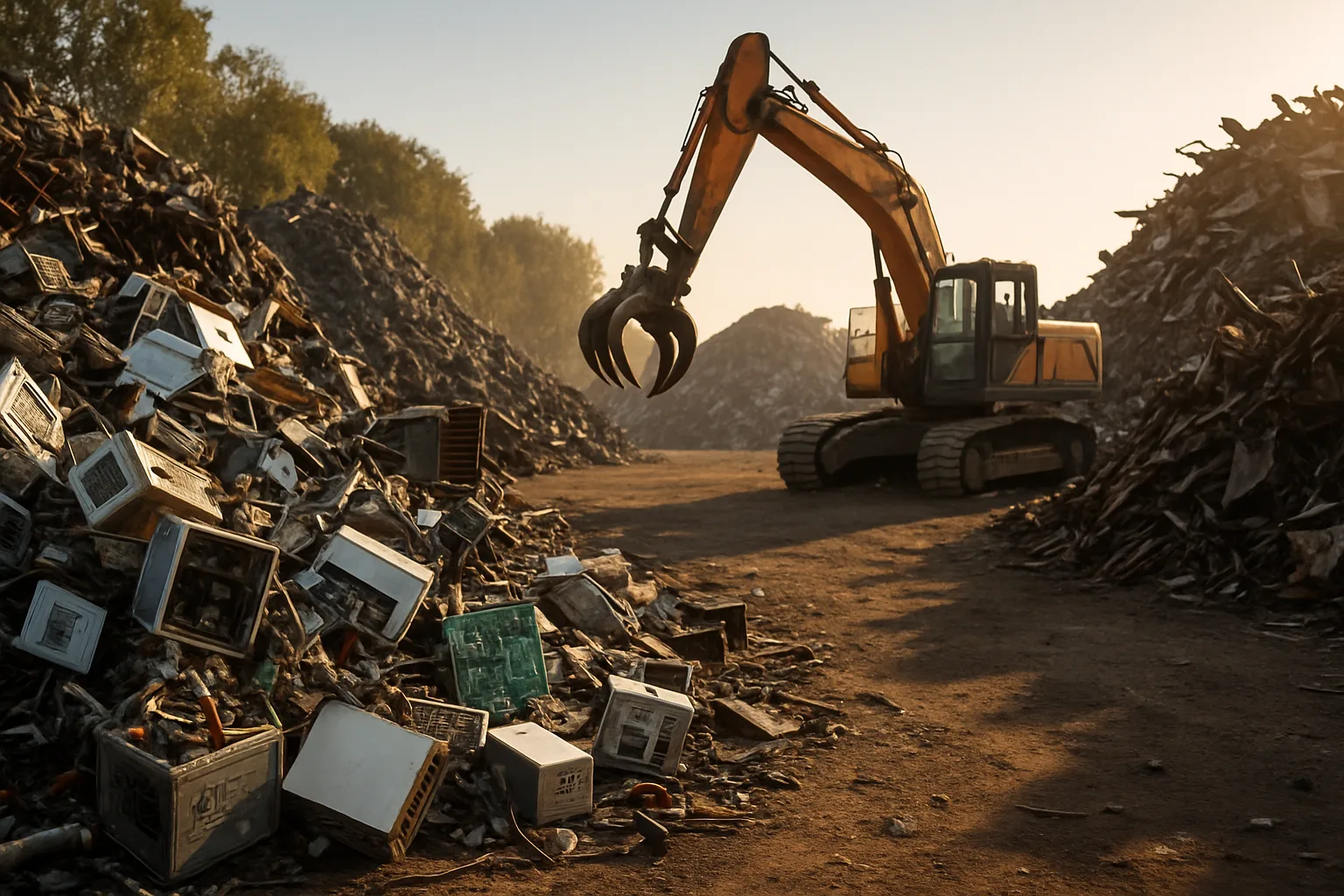
Your old laptop has gold in it. So does that broken smartphone sitting in your junk drawer. Most people in Prince George toss old electronics without realizing they're throwing away recoverable metals — copper, aluminum, gold, silver, and even palladium. If you're looking to sell scrap metal Prince George and haven't considered e-waste, you're leaving money on the table.
Electronics recycling isn't just about environmental responsibility. It's about price discovery, knowing what metals you have, and finding buyers who will pay fair market value. This guide breaks down what's actually inside your old electronics, what those metals are worth, and how to get competitive prices for them in Prince George and across British Columbia.
What Metals Are Actually Inside Old Electronics?
Consumer electronics are dense with recoverable materials. A single desktop computer contains copper wiring, aluminum heat sinks, steel chassis components, and small but real quantities of precious metals embedded in circuit boards and connectors. The value isn't obvious from the outside — that's why most people underestimate what they're holding.
Here's a breakdown of what you'll typically find:
- Copper: Found in wiring, motors, printed circuit boards (PCBs), and transformers. Copper remains one of the most consistently valued non-ferrous metals in scrap metal recycling Canada-wide.
- Aluminum: Heat sinks, laptop chassis, and cable sheathing. Keep an eye on the aluminum scrap price today — it fluctuates with global supply and energy costs.
- Gold: Present in very small quantities in CPU pins, connector contacts, and PCB edge connectors. High density per gram, but you need volume.
- Silver: Found in solder points and some switch contacts.
- Palladium: Used in ceramic capacitors on circuit boards. Less common but valuable.
- Steel: Cases, brackets, and mounting hardware. Lower value per pound, but weight adds up fast with bulk loads.
The challenge with e-waste isn't finding the metals — it's separating and documenting them well enough that buyers will bid competitively. Bulk loads of mixed e-scrap sell for less than sorted, categorized loads. If you're a recycling yard processing e-waste in Prince George, sorting by material type before listing is the single biggest thing you can do to improve your return.
Why E-Waste Pricing Is More Complicated Than Bulk Scrap
Selling a load of clean #1 copper pipe is straightforward. Selling a pallet of mixed circuit boards, old hard drives, and broken laptops is a different calculation entirely. E-waste pricing depends on the composition of the load, the grade of the materials, and how much processing the buyer needs to do downstream.
Processors buy e-scrap at different grades:
- Low-grade PCBs — mixed consumer electronics boards, often from phones, TVs, and appliances
- Mid-grade PCBs — server boards, telecom equipment, networking hardware
- High-grade PCBs — CPU boards, high-density connector assemblies, gold-rich industrial equipment
The spread between low-grade and high-grade boards can be significant. That gap rewards sellers who know what they have. If you're processing e-waste at volume — decommissioned office equipment, telecom infrastructure, data center hardware — sorting matters more than speed. Document your loads with photos. List weights by category. Buyers bid harder when they're confident in what they're buying.
For sellers in Prince George trying to understand current pricing, platforms like SMASH give you direct access to vetted buyers who compete for your material. That competition is the fastest way to find out what your load is actually worth right now — not what someone told you last quarter.
How Scrap Metal Recycling in Prince George Connects to Global Precious Metal Markets
Prince George isn't isolated from global commodity markets. Copper prices in London, palladium demand from automotive manufacturers, and gold spot prices all ripple through to what recyclers in British Columbia get paid for their e-scrap loads.
In 2026, precious metal demand from electronics manufacturing remains strong. The shift toward electric vehicles, renewable energy infrastructure, and advanced semiconductor production keeps pressure on base metals like copper and aluminum. That's good news for anyone sitting on a stockpile of old electronics — but only if you're positioned to capture that value through competitive selling.
The old way — calling one buyer, taking their number, shipping the load — doesn't account for this. Market prices move weekly. What a buyer quoted you three months ago may not reflect what they'd pay today if they were bidding against competitors. Transparent auctions solve this. When you find the best Canadian scrap metal prices today, you're not just getting a number — you're benchmarking your load against real market demand.
For Prince George recyclers handling both conventional scrap and e-waste streams, it's worth treating precious metal recovery as its own category. Track it separately, document it carefully, and sell it through channels that create genuine competition.
Preparing Your E-Waste Load for Better Prices — Practical Steps
Preparation isn't glamorous. But it directly affects what you get paid. Buyers discount heavily for uncertainty. The more clearly you document your load, the more confidently they'll bid.
Here's what makes a difference when you're ready to sell scrap metal in Prince George or ship to a processor:
- Sort by material type. Separate aluminum from steel. Pull copper cables from mixed e-scrap. Don't make buyers guess the composition.
- Photograph everything. Top-down shots, close-ups of connector types, weight on a certified scale. Photo documentation reduces buyer risk and drives up bids.
- Weigh accurately. Estimate ranges aren't good enough for serious buyers. Certified weights matter.
- Identify high-value components separately. If you have server boards or telecom equipment mixed in with consumer electronics, pull them out. They command different prices.
- Have your paperwork ready. Bills of lading, packing lists, chain of custody documentation for data-bearing devices. Serious buyers want clean transactions.
- Check current rates before you list. Check current Canadian scrap metal prices to understand what the market looks like before you commit to a number.
Recyclers who do this work upfront consistently get better results than those who dump mixed loads and accept whatever the first buyer offers. It takes time. It pays off.
Using SMASH to Sell E-Scrap and Precious Metal Loads Competitively
SMASH was built for exactly this kind of material — loads where the value isn't obvious on the surface and buyers need confidence to bid strong. The platform connects vetted buyers with sellers across North America, including Prince George scrap metal services and other British Columbia recyclers looking for real price discovery.
No subscription fees. SMASH only wins when the seller wins. That structure matters — it means the platform is aligned with getting you the best possible outcome, not charging you a monthly rate regardless of results.
The auction format creates real competition. Multiple buyers bidding on the same load means price discovery happens in the open, not in a single phone call where you have no leverage. For e-waste loads with precious metal content, that competition can reveal significant value that a single-buyer negotiation would never surface.
SMASH also handles the documentation side: inventory tools, photo uploads, serial tracking for data-bearing devices, and auto-invoicing once a deal closes. If you've ever dealt with the paperwork headache of selling data center equipment or decommissioned IT assets, that infrastructure makes a real difference. Visit Canada's B2B scrap recycling marketplace to see how it works.
For Prince George recyclers processing e-waste at volume, this is the difference between guessing your price and knowing it.
What to Do Right Now If You Have E-Waste to Move
Start with an inventory. Pull your e-scrap out of storage and categorize it. Separate the aluminum chassis from the PCBs. Weigh the copper cable. Identify anything that looks like server or telecom hardware — those loads carry premium pricing relative to consumer electronics.
Then check what those materials are trading at. Aluminum scrap price today, copper rates, PCB grades — these move with the market. Don't rely on numbers from last month. Read the latest Canadian scrap metal pricing guides to stay current on what buyers are actually paying.
Once you know what you have and what it's roughly worth, list it through a platform that creates competition. That's where SMASH comes in. The combination of vetted buyers, transparent bidding, and solid documentation infrastructure makes it the right channel for e-waste and precious metal recovery loads — especially when you're in a market like Prince George where local buyer options may be limited.
Prices fluctuate. Market conditions shift week to week. The best time to sell is when you're prepared — and when you're using a channel that puts multiple buyers in the room. Get the best Canadian scrap metal prices for your e-waste and non-ferrous loads by checking rates at best-scrap-prices.ca before you list.
Disclaimer: Scrap metal prices fluctuate based on global commodity markets, material grade, and regional demand. Always verify current rates before finalizing any sale.
Frequently Asked Questions
Q: Can I sell scrap metal in Prince George that includes old electronics and e-waste?
Yes. Many scrap recyclers and processors accept e-waste loads including computers, servers, circuit boards, and electronics with recoverable metals. Sorting your material by type — copper, aluminum, PCBs — before selling will generally improve the price you receive. Platforms like SMASH connect you with vetted buyers who specifically handle non-ferrous and e-scrap material.
Q: What is the aluminum scrap price today in British Columbia?
Aluminum scrap prices fluctuate based on global commodity markets and material grade. Clean aluminum (such as extrusions or heat sinks) commands a higher price than mixed or painted aluminum. Check current rates at best-scrap-prices.ca for up-to-date pricing before you sell. Never rely on quoted prices from weeks ago — the market moves.
Q: How do I find scrap metal recycling near me for cash in Prince George?
Start by identifying local scrap yards in Prince George that accept non-ferrous and e-scrap material. For larger loads or specialty materials like circuit boards and precious metal-bearing components, consider listing through a platform like SMASH to reach vetted buyers beyond your immediate area. More buyers means better price discovery, especially for high-value loads.
Q: Is scrap metal recycling in Canada regulated for e-waste specifically?
Yes. British Columbia has extended producer responsibility programs that govern electronics recycling. If you're a business handling bulk e-waste, you'll want to ensure your chain-of-custody documentation is in order, particularly for data-bearing devices like hard drives and servers. SMASH's inventory and serial tracking tools help maintain that documentation through the sale process.
Q: Does the gold in old electronics make them worth scrapping individually?
The gold content in a single device is very small — typically a fraction of a gram. Individual units rarely justify the cost of precious metal extraction on their own. Volume is what makes it viable. If you're accumulating e-scrap at a recycling yard or processing decommissioned IT equipment in bulk, the precious metal content across hundreds or thousands of units becomes meaningful. Selling through competitive auction helps ensure you capture that value rather than leaving it with a single buyer.
Stay ahead of the market — follow SMASH on LinkedIn for industry updates, scrap metal pricing insights, and news from across the North American recycling market.