Why the Scale and the Grade Book Matter More Than You Think
Most sellers show up at a recycling yard expecting a fair deal — and most leave wondering if they actually got one. The gap between what you expect and what you're paid almost always comes down to two things: how your load gets weighed and how it gets graded. These two steps happen fast, they're not always explained, and they have a direct impact on your payout.
If you're doing scrap metal recycling in Cambridge — or anywhere else in Ontario — understanding this process puts money in your pocket. Not because you'll argue with every yard, but because you'll know what questions to ask and how to prep your load before you pull up to the scale.
This isn't complicated. But it is worth knowing.
How Recycling Yards Actually Weigh Your Scrap Metal
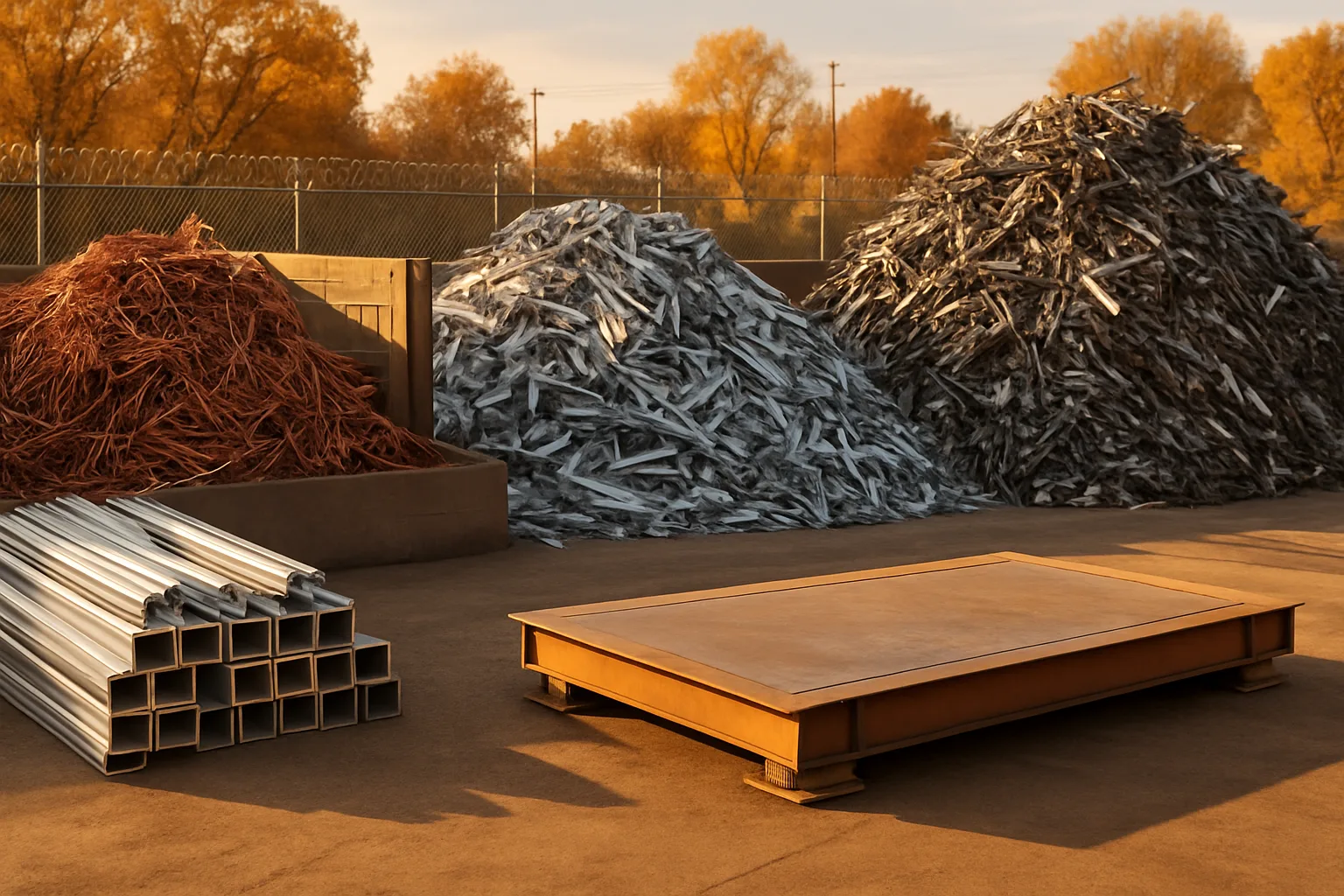
Every licensed yard uses a certified platform scale — the same kind used for truck weighing stations. You drive in, they record your gross weight (truck plus load), you drop your material, and then they weigh your truck again empty. The difference is your net weight. It sounds simple because it is.
What trips sellers up isn't the scale — it's what counts toward that weight. Most yards weigh everything together on the first pass. That means moisture, dirt, attached steel on non-ferrous loads, insulation on copper wire, and rubber still on aluminum rims all factor in before any deductions or downgrades are applied.
A few things to know about the weighing process:
- Tare weight is your empty truck weight — yards either re-weigh you or pull it from a stored value on file.
- Moisture deductions are common on corrugated steel, shredded material, or anything that's been sitting outside in the rain.
- Mixed loads are weighed together but sorted and graded separately — you may not see the breakdown unless you ask.
- Ticket accuracy matters. Get a printed scale ticket every time. That number is your baseline for any dispute.
The scale itself is regulated and audited — that part is hard to manipulate. The grading that follows is where the real variation lives.
Grading: Where Your Price Per Pound Actually Gets Set
Grading is the yard's assessment of what you actually brought in. It's not arbitrary, but it is subjective — and different yards apply different standards. A load of copper that grades as #1 bare bright at one yard might come back as #2 copper at another because of surface oxidation or slight contamination.
Most North American yards follow the Institute of Scrap Recycling Industries (ISRI) commodity specifications — a standardized grading system that covers hundreds of scrap categories. Here's a quick breakdown of common grades for the metals you're most likely selling:
Copper
- #1 Bare Bright Copper: Clean, uncoated, unalloyed wire — 16 gauge or heavier. No oxidation. Top price.
- #1 Copper: Clean uncoated copper tubing or wire with no attachments. Slight oxidation allowed.
- #2 Copper: Unalloyed but may have solder, paint, or minor contamination. Lower price per pound.
- Insulated Copper Wire: Graded by insulation percentage and copper recovery — often expressed as a percentage yield (e.g., 85% recovery wire vs. 40% recovery wire).
Aluminum
- Cast aluminum (engine blocks, transmission cases) grades separately from sheet aluminum (siding, gutters).
- Clean aluminum rims command a higher price than rims with attached steel valve stems or rubber.
- Mixed/contaminated aluminum gets lumped and priced significantly lower.
Steel and Ferrous
- #1 Heavy Melting Steel (HMS1): Clean, heavy gauge steel, no galvanizing or tin plating.
- #2 HMS: Lighter gauge, may include some mixed or thinner material.
- Shredded scrap is processed separately and priced based on shredder output quality.
The grade the yard assigns determines which price per pound you receive. This is why a load that looks like copper to you might pay out like #2 — and why knowing your grades before you arrive saves you from surprises at the window.
Why Transparency in Grading Is Still a Problem Across Ontario
Here's the honest version: most yards don't walk you through their grading decision. You drop your load, they sort it, and you get a ticket. If you're a regular customer with volume, you might get more conversation. First-timers and occasional sellers? Often not.
This is a systemic issue — not necessarily bad intent. Yards are busy operations. Graders are moving fast. But the result is that sellers often don't know why their copper scrap price in Cambridge came in lower than expected, or why their aluminum rims got downgraded. You can ask for a breakdown. Most yards will provide one. But you have to ask.
Photo documentation is your best protection. Before you drop a load, photograph it. Especially non-ferrous material — copper, aluminum, catalytic converters, cores. If a grading dispute comes up, you want evidence of what you brought in. Platforms like SMASH Recycling — where verified buyers bid on your metal require photo documentation as part of the listing process, which creates a record on both sides and gives buyers the confidence to bid accurately.
That kind of documented, competitive process is exactly what's missing from the traditional one-buyer, one-phone-call approach still common across much of Ontario. When only one buyer sees your load and sets the grade unilaterally, you're negotiating blind.
How to Prep Your Load for a Better Grade (and a Better Price)
You can't change the market. But you can change what you bring in. Preparation directly affects how your material grades — and that directly affects your payout. These aren't complex steps. They take time, but they pay off.
- Separate your metals before you arrive. Don't mix copper with aluminum, or steel with non-ferrous. Mixed loads grade down. Sorted loads grade up.
- Strip your wire. Insulated copper wire pays a fraction of bare copper. If the volume justifies it, stripping is worth your time. Check the math before you spend the hours.
- Remove attachments. Steel fittings on copper fittings, iron bolts on aluminum castings, rubber on rims — these all reduce your grade or trigger deductions.
- Let it dry. Wet steel, wet shred, and wet corrugated all attract moisture deductions. Store material covered if you can.
- Know your cats. Catalytic converter grading is complex — it depends on the unit, condition, and precious metal content (platinum, palladium, rhodium). A good VIN lookup or serial tracking process helps you understand what you have before you sell. This is one area where documentation tools built into platforms like SMASH make a real difference.
Yards in Cambridge and across Ontario deal with high volumes of material daily. The more organized and clean your load is, the faster it moves through grading — and the better your outcome.
Using Market Pricing Data to Benchmark Your Grade
Knowing how your scrap gets graded is only half the equation. The other half is knowing what that grade is worth today. Metal prices move daily — copper, aluminum, steel, and precious metals in catalytic converters all fluctuate with global demand, energy costs, and trade conditions.
If you show up at a yard without any reference point, you're accepting whatever number they give you. That's a weak position. Strong sellers check the best scrap metal prices in Ontario before they load their truck.
You can find the best Canadian scrap metal prices today to get a current market benchmark before you walk into any yard negotiation. Having that reference doesn't mean you'll always get the posted price — grades, location, and volume all affect your final number — but it means you're not walking in blind.
When you combine accurate grading knowledge with current market data, you're in a completely different position than the average seller. You know what grade your material should receive. You know what that grade is worth per pound. You can have an informed conversation — or decide which yard deserves your load.
To go deeper on this, read the latest Canadian scrap metal pricing guides for breakdowns by metal type and region.
The Case for Competitive Bidding When Your Volume Justifies It
If you're moving significant weight — a full load of non-ferrous, a batch of cats, a container of mixed metals — the one-buyer model costs you money. Not sometimes. Consistently. A single buyer has no incentive to offer top market. Competition does that.
This is the core problem SMASH was built to solve. When multiple vetted buyers see your documented load and bid against each other, price discovery actually happens. You're not guessing whether the yard's offer is fair — the market tells you. That's a fundamentally different experience than the traditional cold call to a single contact.
For sellers doing scrap metal recycling in Cambridge, or anywhere across Ontario, that competitive layer is increasingly accessible. You don't need to call five yards and manually collect offers. You list once, buyers bid, and the process is documented from inventory through auto-invoicing.
When you're ready to get serious about what your loads are worth, check current Canadian scrap metal prices and see how a competitive, transparent process stacks up against the old way.
Disclaimer: All scrap metal prices fluctuate based on market conditions, grade, volume, and regional demand. Always verify current rates before selling.
Frequently Asked Questions
Q: How do I know if a Cambridge recycling yard is giving me the right grade for my copper?
Ask for a written breakdown of your load by grade and weight before you accept payment. You can also photograph your copper before dropping it — bare bright, #1, and #2 copper look different, and having visual evidence helps if you want to question a downgrade. Knowing the ISRI grade definitions before you arrive is your best preparation.
Q: Does moisture in my scrap metal actually affect what I get paid?
Yes, significantly for ferrous material. Yards routinely apply moisture deductions to wet steel, wet shred, and wet corrugated. For non-ferrous metals like copper and aluminum, moisture matters less on the deduction side — but cleanliness still affects grading. Dry, sorted loads consistently outperform wet, mixed ones.
Q: What's the difference between selling scrap metal online versus at a local yard in Cambridge?
Selling at a local yard is immediate — you drop it, you get paid. Selling through an online platform like SMASH means your documented load reaches multiple vetted buyers who bid competitively, which can result in better price discovery for higher-value or larger loads. The right channel depends on your volume and what you're selling.
Q: How often do scrap metal prices change in Ontario?
Copper, aluminum, and steel prices shift daily based on global commodity markets. Precious metals in catalytic converters (platinum, palladium, rhodium) can move even faster. Always check current rates before committing to a sale — a price that was fair last week may be below or above market today.
Q: Are grading standards the same at every recycling yard in Ontario?
Most professional yards follow ISRI commodity specifications as a baseline, but interpretation can vary. Surface oxidation tolerance, contamination thresholds, and attachment policies differ from yard to yard. This is one reason why getting competing offers — rather than accepting the first quote — gives you a clearer picture of what your load is actually worth.
Know your grades, prep your loads, and don't accept the first number you hear. The best price for your scrap doesn't come from luck — it comes from being informed. Find the best Canadian scrap metal prices today and go into your next sale knowing exactly where the market stands.
Follow SMASH on LinkedIn for regular scrap metal market updates, pricing insights, and industry news across North America.
```