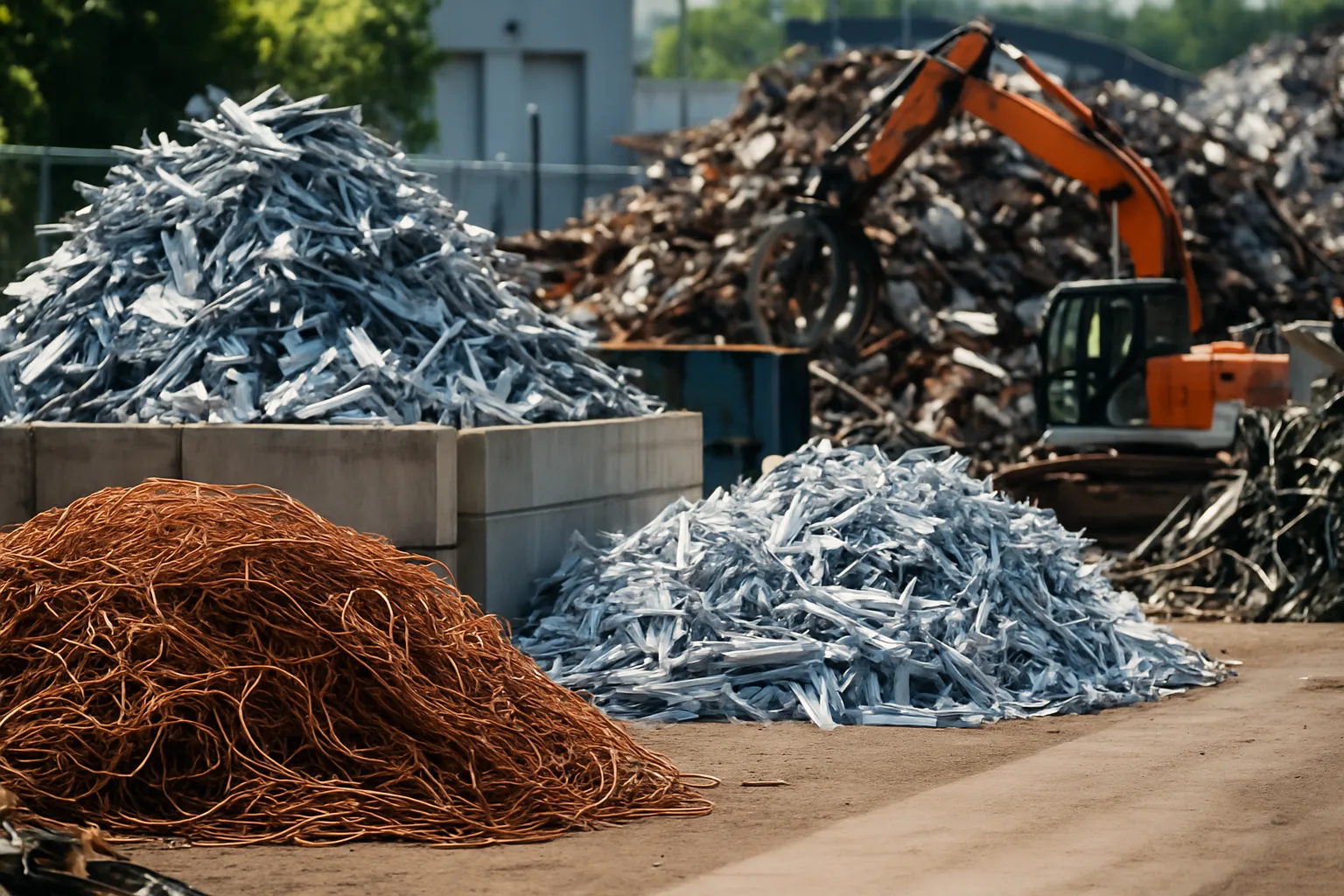
Why the Aluminum Scrap Price Today Can Change Before Lunch
You pulled a load of aluminum last week. You got a price. You show up today with the same material — and the number is different. Sound familiar? That's not the yard playing games. That's the market doing what markets do. Understanding why the aluminum scrap price today differs from yesterday's quote is the difference between leaving money on the table and knowing exactly when to sell.
Daily price swings in scrap metal aren't random. They follow real signals — commodity futures, global demand, energy costs, currency exchange. The problem is most sellers never see those signals. They take one call, get one number, and assume that's the market. It's not. It's one buyer's offer on one day. That gap — between one buyer's number and the actual market — is where sellers consistently lose out.
If you're hauling material in or around Oshawa and you're not checking prices before you load the truck, this guide is for you. Let's break down how daily fluctuations actually work — and how to use that knowledge to get better returns on every load.
What Actually Drives the Aluminum Scrap Price Today
Aluminum is a globally traded commodity. The price you get at a yard in Oshawa, Ontario is connected — directly — to what's happening on the London Metal Exchange (LME) and in manufacturing hubs across North America and Asia. When those markets move, your local price moves too, usually within 24 to 48 hours.
Here are the core factors that push aluminum scrap prices up or down on any given day:
- LME aluminum spot price: The global benchmark. When it climbs, domestic scrap prices typically follow. When it drops, yards adjust their buy rates fast.
- USD/CAD exchange rate: Most commodity pricing originates in USD. A weaker Canadian dollar means Canadian sellers may see higher CAD-denominated payouts — even if the underlying metal price hasn't moved.
- Domestic mill and smelter demand: When Canadian smelters are running hard, they need feed material. Higher demand from mills can push scrap premiums up locally, even if LME prices are flat.
- Energy costs: Aluminum production is energy-intensive. When energy prices spike, demand for recycled aluminum — which uses a fraction of the energy of primary production — tends to increase.
- Seasonal demand cycles: Construction and automotive manufacturing — two of the biggest aluminum consumers — have distinct seasonal peaks. More building activity typically means tighter scrap supply and better pricing.
None of this is secret information. It's publicly available. The issue is that most individual sellers don't have time to track it, and most single-buyer relationships don't give you any reason to ask questions. That's why transparent platforms built around price discovery matter — and why sellers who use them consistently make more informed decisions.
The Case for Checking More Than One Buyer — A Real-World Pattern
Here's a pattern that plays out constantly across scrap yards in Ontario. A seller — let's say they run a small demolition operation — has a regular buyer they've worked with for years. They trust the relationship. Every few weeks, they call, get a price, and deliver the load. No drama, no hassle.
Then, on a whim, they start checking prices elsewhere before making that call. What they find surprises them. Their regular buyer's aluminum price is consistently 5 to 15 percent below what other vetted buyers in the region are offering. Not because the yard is dishonest — just because there's no competition keeping the number honest. A relationship without competition is just a comfortable habit.
This is exactly the dynamic that platforms like sell your scrap metal on SMASH Recycling were built to break. When multiple vetted buyers compete for your load, the price gets tested against the actual market. You find out fast whether your regular buyer was giving you a fair number or not. Competition doesn't just help in theory — it changes the number you walk away with.
For sellers hauling aluminum, copper, or non-ferrous loads in the Oshawa area, this kind of price transparency is genuinely accessible right now. You don't need to cold-call ten yards. You need one platform where the buyers are already there, already vetted, and already competing.
Best Scrap Metal Prices in Oshawa — What Sellers Should Know in 2026
The scrap market across Ontario has stayed active through the first half of 2026. Automotive-sector activity in the Greater Toronto Area — including the supply chain that runs through Oshawa — continues to generate steady non-ferrous scrap volumes. That's good news for sellers with aluminum extrusions, copper wire, zorba mixes, or catalytic converters to move.
If you're searching for the best scrap metal prices in Oshawa, a few things are worth knowing before you make a call:
- Grade matters more than volume — sometimes. A small, clean load of #1 copper will often fetch a better rate per pound than a large mixed load. Know your material and sort it if you can.
- Documentation adds value. Buyers pay more confidently when they know exactly what they're bidding on. Photos, weights, and serial numbers (for cores and cats) reduce buyer uncertainty — and uncertainty always costs the seller.
- Timing within the week matters. Prices can shift mid-week based on market data releases or large trades. Some experienced sellers track LME movements and try to move loads when the trend is favorable.
- Local Oshawa scrap metal services vary widely. Not every yard in the region will offer the same price for the same material on the same day. Checking multiple sources — or using an auction-style platform — reveals that spread fast.
The bottom line: selling scrap in Oshawa doesn't have to mean guessing. The data is out there. You just need the right tools to access it. Find the best Canadian scrap metal prices today before you book your next pickup or delivery.
Catalytic Converters, Copper, and Steel — Prices Move Differently
Not all scrap metal reacts to market forces the same way. Understanding the differences can help you decide what to sell now and what to hold — if holding is a viable option for your operation.
Aluminum tracks closely with LME spot prices and industrial demand. It's one of the more predictable non-ferrous metals on a day-to-day basis, though monthly swings can still be significant.
Copper is more volatile. Global economic signals — manufacturing PMI data, infrastructure spending, electric vehicle production rates — hit the copper price fast. The copper price in Canada in 2026 has continued to reflect strong EV-sector demand pulling against periodic inventory buildups at major smelters. Sellers with clean copper wire or pipe should track LME copper daily before committing to a price.
Steel and ferrous pricing tends to be more regionally driven. Local mill demand, scrap export volumes out of Canadian ports, and domestic construction activity all play a role. Steel prices move more slowly than non-ferrous, but they do move — and holding a large ferrous load through a downswing has real cost implications.
Catalytic converters are in their own category entirely. Cats are priced based on PGM (platinum group metal) content — platinum, palladium, and rhodium. These metals have their own separate markets and can swing dramatically in short periods. If you want to sell catalytic converters online, using a platform that provides VIN lookup, serial tracking, and photo documentation gives buyers the confidence to bid competitively. Vague listings get low bids. Documented loads get real competition.
SMASH handles all of this — inventory tools, photo documentation, serial tracking for cats and cores, and vetted buyers who know exactly what they're bidding on. That transparency drives better price discovery across every metal type. Read the latest Canadian scrap metal pricing guides to stay current on what each metal is doing right now.
How to Stop Guessing and Start Getting Market Prices
The sellers who consistently get the best scrap prices in Ontario aren't necessarily the ones with the biggest loads. They're the ones who treat selling scrap like a business decision — not a routine errand.
Here's a practical approach for sellers who want to stop leaving money behind:
- Check prices before you commit. The aluminum scrap price today is not the same as last week's quote. Take five minutes to check current Canadian scrap metal prices before you finalize any deal.
- Document your loads. Photos, weights, and condition notes cost you nothing and make a real difference in buyer confidence — which translates directly to bid prices.
- Use competition. One buyer doesn't tell you the market. The market tells you the market. Platforms that bring multiple vetted buyers to your load — like SMASH — replace guesswork with actual price discovery.
- Understand your grades. The difference between #1 and #2 copper, or between clean and mixed aluminum, can be significant. Sorting pays for itself.
- Time larger loads strategically. If you can hold a load for a few days without a storage cost problem, watching market signals before selling a significant non-ferrous load can be worthwhile.
None of this requires a commodity trading background. It requires treating your scrap inventory like the asset it is — not just material you need to get off the lot before it takes up more space.
If you're hauling material in Oshawa or anywhere across Ontario, the infrastructure to get better prices already exists. You don't need to call more yards or negotiate harder. You need to put your load in front of more buyers — buyers who are actually competing for it. That's what SMASH does, and it's why sellers who make the switch rarely go back to the single-call approach.
The market sets your scrap's value every single day. The only question is whether you're finding out what that value actually is — or whether you're taking someone else's word for it. Get the best Canadian scrap metal prices by checking rates at best-scrap-prices.ca before your next load goes out the door.
Disclaimer: Scrap metal prices fluctuate daily based on global commodity markets, local demand, and material grade. All prices referenced in this article are general in nature. Always verify current rates directly with buyers or pricing platforms before finalizing any transaction.
Frequently Asked Questions
Q: Why does the aluminum scrap price today differ from what I was quoted last week?
Aluminum pricing follows global commodity markets — primarily the London Metal Exchange (LME) spot price — along with local demand, energy costs, and the CAD/USD exchange rate. These factors shift daily, sometimes significantly. Always check current rates before confirming a sale rather than assuming a previous quote is still valid.
Q: Where can I find the best scrap metal prices in Oshawa?
Start by comparing multiple buyers rather than relying on a single yard's quote. Platforms that use a competitive auction format — like SMASH — bring vetted buyers to your load so you can see what the market is actually willing to pay. You can also check current rates at best-scrap-prices.ca for up-to-date pricing benchmarks across Ontario.
Q: Can I sell catalytic converters online in Canada?
Yes. Selling catalytic converters online through a documented, auction-style platform is one of the most effective ways to get competitive pricing on cats. Because PGM values (platinum, palladium, rhodium) vary significantly by vehicle and part serial number, platforms that support VIN lookup and photo documentation give buyers the confidence to bid higher and more accurately.
Q: How often do scrap metal prices change in Ontario?
Ferrous (steel, iron) prices typically adjust weekly or bi-weekly at most yards. Non-ferrous metals like aluminum and copper can move daily or even within a single business day during volatile commodity periods. If you're planning to sell a significant load, it pays to track prices for a few days rather than selling on the first available quote.
Q: Do I need a large volume of scrap to use an auction platform like SMASH?
Not necessarily. SMASH works with a range of load sizes and material types — from non-ferrous mixed loads to catalytic converters, cores, and more. The key is proper documentation: photos, weights, and material grades. Well-documented loads attract serious buyers regardless of volume.
Follow SMASH on LinkedIn for ongoing scrap metal market updates, pricing insights, and industry news across North America.