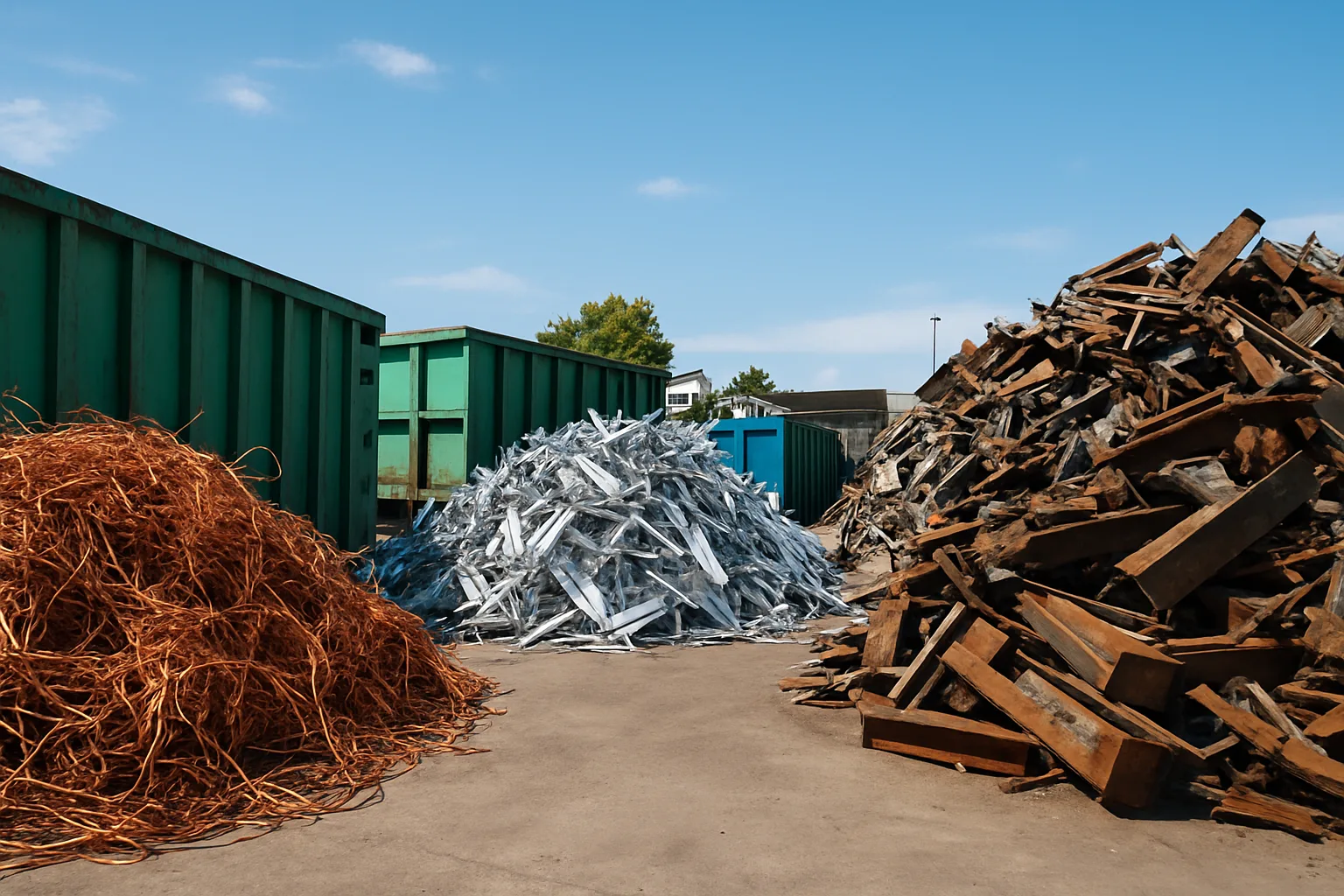
Most sellers treat steel and iron like the same thing. They're not — and that mistake costs you money. Whether you're clearing out a shop in Burnaby or moving a mixed load of ferrous material in Toronto, knowing the difference between steel and iron scrap changes what you ask for and what you accept. This week's market recap breaks it down: what separates these two metals, why their prices move differently, and how to make sure you're not leaving cash on the table. We'll also touch on where copper scrap price today fits into the broader picture, because non-ferrous pricing is giving ferrous sellers something to think about right now.
---Steel and Iron Are Not the Same Material — Stop Treating Them That Way
Here's the short version: iron is the base element. Steel is iron with carbon and other alloys added to control strength, flexibility, and corrosion resistance. Cast iron — the stuff in old engine blocks, stoves, and machine bases — is brittle, dense, and melts differently than steel. Buyers treat them as separate commodities because they feed into different furnaces and different end markets.
Cast iron typically trades lower than most steel grades. It's denser, harder to process, and the demand side is narrower. Steel scrap, particularly clean heavy melt (#1 HMS) or shredded steel, is more universally wanted by mills. When buyers bid on your load, they want to know upfront what they're getting — mixed iron and steel loads attract discounts or outright rejections at some facilities.
- Cast iron: Engine blocks, radiators, old cookware, machine bases
- Wrought iron: Decorative fencing, older structural elements — rarely pure anymore
- #1 HMS (Heavy Melt Steel): Thick structural steel, plate, I-beams, clean and uncoated
- #2 HMS: Lighter gauge, may include some coated or mixed material
- Shredded steel: Auto bodies and mixed light steel, processed through shredders
Sorting matters. A load of clean #1 HMS gets a different price than a mixed pile of cast iron and light gauge steel. Buyers know the difference. You should too.
---Why Ferrous Prices Are Moving Differently Than Copper Scrap Price Today
Ferrous scrap — iron and steel — moves with infrastructure demand, domestic mill activity, and export markets. It's volume-driven. Mills buy in tonnage, and pricing swings can be relatively modest week-to-week, though quarterly shifts can be significant depending on construction cycles and global steel output.
Non-ferrous is a different animal. The copper scrap price today is driven by global commodity markets, LME (London Metal Exchange) benchmarks, and sector-specific demand like EV manufacturing, electrical infrastructure, and data centre buildout. Copper has been running hot because demand from electrification projects isn't slowing down. That divergence — flat or soft ferrous, firm non-ferrous — is something every seller should understand when prioritizing what to move first.
This week's general market picture for Canadian sellers:
- Steel scrap: Domestic mill demand steady but not aggressive. HMS pricing holding in recent ranges without strong upward pressure.
- Cast iron: Demand softer than steel. Price spread between cast and clean HMS has widened slightly.
- Copper: Remains firm. Bright copper and #1 copper wire continue to command premium positioning in the non-ferrous market.
- Aluminum: Mixed signals depending on grade. Extrusion-grade aluminum holding better than cast aluminum.
Disclaimer: Scrap metal prices fluctuate daily based on global commodity markets, local demand, and load specifications. Always check current Canadian scrap metal prices before committing to a sale.
---Scrap Metal Recycling in Burnaby and British Columbia — What Local Sellers Are Dealing With
In Burnaby and across British Columbia, ferrous scrap movement is closely tied to the construction and manufacturing sectors. Demolition activity in the Lower Mainland generates significant volumes of structural steel, rebar, and cast iron from older industrial equipment. The challenge local sellers face isn't finding a buyer — it's knowing whether the price offered is competitive.
Single-buyer relationships are the default for most yards and independent sellers in the region. You call your contact, they quote you a number, and you take it or leave it. That system works until you realize you've been accepting below-market pricing for months because you had no reference point. Scrap metal recycling in Burnaby operates in a relatively tight geographic market — there are buyers, but competition between them isn't always visible to sellers.
That's exactly the problem platforms like SMASH are built to solve. Instead of one call to one buyer, you get your load in front of vetted buyers across British Columbia and beyond. Competition reveals the market. You find out what your load is actually worth — not what one buyer decided to offer on a Tuesday morning.
If you're moving ferrous loads in Burnaby and want to know whether you're getting fair value, find the best Canadian scrap metal prices today and use that data to benchmark what you're being offered.
---How to Price a Mixed Ferrous Load — Practical Guidance for Sellers
The biggest pricing error sellers make with ferrous is treating a mixed load as a single commodity. A trailer with I-beams, cast iron pump housings, and light gauge sheet steel is three different pricing conversations. Buyers discount mixed loads because sorting is their cost, not yours — until you hand them the leverage.
Here's how to approach a mixed ferrous load before you try to sell it:
- Separate cast iron from steel where possible. Even rough segregation helps. A separate pile of engine blocks or cast machine parts gives a buyer something to price distinctly rather than blending everything down to the lowest grade.
- Identify any HMS-quality steel. Thick plate, structural members, and heavy pipe that's clean and uncoated should be called out specifically. This is your highest-value ferrous material.
- Pull out non-ferrous contamination. Copper wire attached to steel assemblies, aluminum brackets, brass fittings — these are worth far more per pound than any ferrous grade. Don't let them get buried in a steel load.
- Document what you have. Weight estimates, photos, and a basic breakdown of what's in the load give buyers the information they need to bid confidently. More information = better bids.
- Get multiple offers. One quote is not a market. It's one opinion.
SMASH's inventory and documentation tools make step four straightforward. Photo documentation, weight tracking, and load descriptions all attach to your listing. Vetted buyers see exactly what they're bidding on, which means you get serious offers instead of lowball bids built on uncertainty.
---Steel vs. Iron: The Price Gap and What Drives It
The spread between cast iron and clean steel scrap isn't fixed — it moves with demand and processing economics. When domestic mills are running hot and consuming large volumes of shredded steel, the premium for clean HMS widens. When mill activity cools, grades compress toward each other. Understanding this dynamic helps you decide when to move material and when to hold.
Cast iron demand is partially driven by foundry operations, which produce cast iron products. When foundries are active, cast prices firm up. When they're not, cast iron sits in a narrow demand channel. For most Canadian sellers, this means cast iron is typically your lower-return ferrous material — worth moving, but worth separating so it doesn't drag down your cleaner steel pricing.
For sellers in Toronto, the dynamic plays out similarly. Scrap metal recycling in Toronto involves large volumes of both ferrous and non-ferrous material — demolition steel, cast iron from older infrastructure, plus the usual mix of copper and aluminum from commercial and industrial sources. Scrap metal pickup in Toronto for larger loads often comes with negotiated pricing, which means sellers who understand grade differences negotiate better outcomes.
Want to read the latest Canadian scrap metal pricing guides on ferrous and non-ferrous grades? The market shifts fast enough that weekly check-ins on pricing are worth building into your routine.
---The SMASH Approach: Competition Does the Work
Old way: one buyer, one phone call, one number. You guess if it's fair. You probably take it because there's no easy alternative.
The SMASH way: documented load, vetted buyers, competitive auction. Multiple buyers see the same information and bid against each other. Price discovery happens in the open, not behind a single relationship.
There are no subscription fees. SMASH only wins when you do. Whether you're moving ferrous loads from a Burnaby demolition project or clearing a mixed yard in Toronto, the process is the same: document, list, let buyers compete, and make an informed decision on what to accept.
Auto-invoicing, BOL documentation, and photo records are built into the platform. You're not manually chasing paperwork — it's handled. That matters when you're moving volume and don't have time to rebuild the same documentation for every load.
If you haven't checked what competitive bids look like on your ferrous material, you don't actually know what your loads are worth. That's worth fixing. Compare scrap metal bids from Canadian buyers and see what the market actually says about your material.
---Whether you're sorting HMS from cast iron in a Burnaby yard or pulling non-ferrous out of a demolition load in Toronto, knowing what you have and getting it in front of multiple buyers is how you get fair value. Scrap metal prices today reward sellers who treat their material seriously — the ones who document, sort, and compete their loads rather than accepting the first number they hear. If you want to stop guessing and start pricing your scrap with real market data, find the best Canadian scrap metal prices today at best-scrap-prices.ca.
---Frequently Asked Questions
Q: What is the copper scrap price today in Canada?
Copper scrap prices fluctuate daily based on LME spot pricing, local demand, and the grade of copper you're selling. Bright copper, #1 copper wire, and #2 copper all trade at different values. Always check current rates before selling — prices can shift meaningfully within a week. Use best-scrap-prices.ca for current Canadian market data.
Q: Why does cast iron pay less than steel scrap?
Cast iron is more brittle, denser, and feeds into a narrower buyer base — primarily foundries rather than steel mills. It requires different processing and doesn't have the same broad demand as shredded steel or HMS. The price gap between cast iron and clean steel scrap varies by market conditions but cast iron typically trades at a discount.
Q: Where can I get competitive scrap metal prices in Burnaby?
Local yards in Burnaby offer pricing, but a single quote isn't necessarily a competitive one. Platforms like SMASH put your load in front of vetted buyers across British Columbia and beyond, so you have a reference point beyond one relationship. More buyers bidding on your load means better price discovery.
Q: How do scrap metal prices today in Canada compare for ferrous vs. non-ferrous?
Non-ferrous metals like copper and aluminum typically trade at significantly higher per-pound values than ferrous scrap like steel and iron. Ferrous is traded in larger volumes at lower per-pound prices. Right now, the non-ferrous side — particularly copper — is showing stronger demand driven by electrification and infrastructure spending.
Q: Does sorting my scrap before selling actually make a difference in price?
Yes. Mixed loads get discounted because buyers factor in their sorting and processing costs. Separating cast iron from clean HMS steel, pulling out non-ferrous material, and documenting your load with photos and weights all give buyers more confidence — and confident buyers bid higher. Platforms like SMASH are built around documented loads for exactly this reason.
---Follow SMASH on LinkedIn for weekly scrap metal market updates, pricing insights, and industry news: linkedin.com/company/scrap-metal-auction-sales-hub.