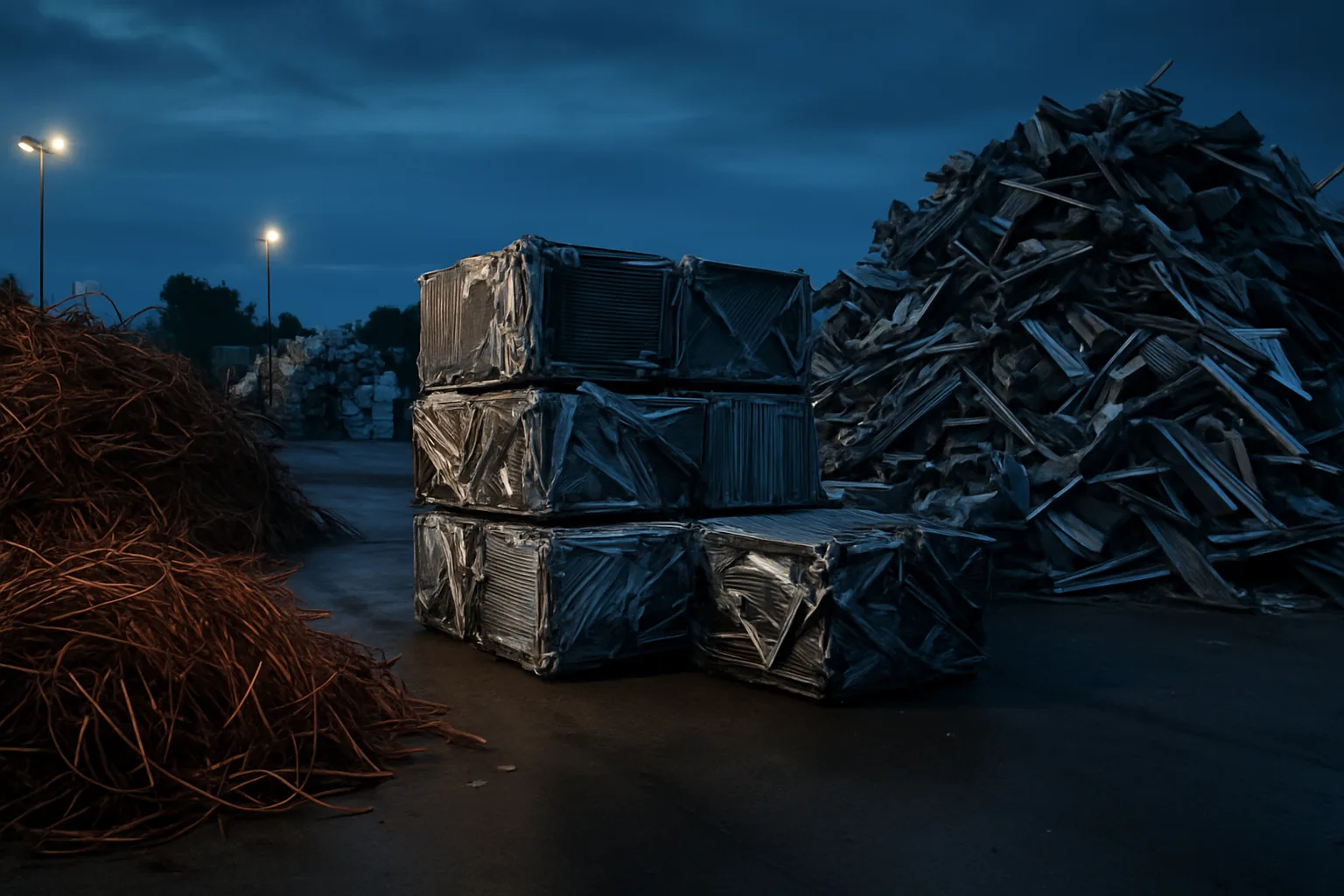
What Happens to Your Car's Radiator and Alternator After the Crusher?
Most people hand over a dead vehicle and never think twice about where the parts go. But if your car has a radiator, alternator, starter, or even a busted AC condenser sitting in it, those components are worth real money — and the metals inside them drive a significant portion of the scrap recycling economy across Canada. This week's market roundup breaks down exactly how these auto parts get processed, what metals come out the other side, and why understanding that process helps you sell smarter on a B2B scrap metal marketplace.
Whether you're a yard operator in Halifax or a seller in Nova Scotia looking to move a load of cores, knowing what buyers actually see when they look at a radiator changes how you price, document, and pitch your material.
The Metals Hidden Inside Common Auto Parts
A car radiator isn't just one material. Most late-model radiators are aluminum and plastic composites — the tanks are plastic, but the core fins and tubes are aluminum. Older radiators from pre-2000 vehicles are often copper-brass, which is denser and commands a higher price per pound. That distinction matters when you're sorting loads because copper-brass radiators and aluminum radiators don't belong in the same pile if you're trying to get accurate bids.
Alternators and starters are a different animal. They're primarily steel and cast aluminum housings, with copper windings inside. Some buyers will purchase them as whole units — called "cores" — while others want them cracked open and sorted. Here's a quick breakdown of what you're typically working with:
- Copper-brass radiators: High copper and brass content, heavier, more valuable per pound
- Aluminum radiators: Lighter, lower per-pound value but extremely common in modern vehicles
- Alternators (whole cores): Steel body, aluminum housing, copper windings — value depends on whether buyers want cores or sorted metal
- Starters: Similar composition to alternators; copper content is the key value driver
- AC condensers: Usually aluminum with copper tubing — often overlooked but consistently priced
- Electric motors: Found in power windows, wipers, HVAC systems — copper-heavy and worth pulling separately
Copper price in Canada fluctuates with global markets, but it consistently outperforms aluminum and steel on a per-pound basis. Knowing which components are copper-heavy helps you sort smarter before you sell.
How the Recycling Process Actually Works — From Core to Commodity
Once these parts hit a recycling yard, they go through a defined process before the metal becomes a tradeable commodity. The steps matter because where in the chain your yard sits determines what you can charge. If you're selling whole cores, you're leaving processing margin on the table. If you're delivering sorted, cleaned non-ferrous, you're much closer to the actual metal price.
Here's how a typical auto part moves through the recycling stream:
- Decontamination: Fluids are drained (coolant from radiators, oil from motors). Regulatory requirement across Canada — non-negotiable.
- Dismantling: Plastic tanks are removed from aluminum radiators. Copper radiators are often sold as-is since the entire core is valuable metal.
- Core processing: Alternators and starters are either sold as whole cores to remanufacturers or shredded/broken down to recover copper windings and aluminum housings separately.
- Sorting and grading: Metal is sorted by alloy type. Aluminum isn't one grade — you have cast, extruded, and sheet, all priced differently.
- Baling or shredding: Sorted non-ferrous gets baled or shredded, depending on buyer specs, then shipped to smelters or commodity buyers.
- Commodity sale: The metal enters the global commodity stream and is priced against LME benchmarks for copper, aluminum, and steel.
The more steps your operation can handle in-house, the more of that commodity margin you capture. If you're shipping whole unsorted loads, you're essentially paying someone else to do the work — and their margin comes off your price.
Sell Scrap Metal in Halifax: What the Local Market Looks Like This Week
If you're looking to sell scrap metal in Halifax, the regional market right now reflects the broader North American picture — aluminum is steady, copper remains the most actively priced non-ferrous metal, and steel pricing continues to be squeezed by import pressure. Yards across Nova Scotia are moving material, but the gap between what individual sellers accept and what a competitive market would pay them remains real.
That gap is the problem a B2B scrap metal marketplace like SMASH is designed to close. Instead of calling one buyer and taking whatever number they quote, you put your load in front of multiple vetted buyers simultaneously. Competition does what it's supposed to do — it surfaces the actual market price rather than one buyer's preferred margin. For Halifax scrap metal services, SMASH connects local sellers with a broader network of qualified buyers across the region and beyond.
If you're moving radiator cores, alternator loads, or mixed non-ferrous from automotive teardowns, the documentation side matters just as much as the material itself. Photo documentation, weight slips, and accurate descriptions of the mix — copper-brass vs. aluminum, whole cores vs. cracked — give buyers the confidence to bid higher. Uncertainty in a load description drives bids down. Clarity drives them up.
Why Documented Inventory Gets Better Bids on Auto Part Scrap
This is where most sellers leave money on the table. A pallet of "mixed auto parts" gets a conservative bid. A pallet of "18 copper-brass radiators, drained, no plastic tanks, approximate weight 340 lbs" gets a sharper bid because the buyer knows exactly what they're buying. Documentation isn't paperwork for paperwork's sake — it's a direct line to better price discovery.
SMASH builds inventory documentation into the platform. Photo uploads, serial tracking where applicable, weight inputs, and material descriptions all travel with the listing so every buyer in the auction sees the same accurate picture. That transparency is what makes competitive bids possible. You can also find the best Canadian scrap metal prices today to benchmark your material before you list, so you're walking into the auction with a realistic floor in mind.
For yards running regular automotive recycling operations — pulling radiators, alternators, and catalytic converters off end-of-life vehicles — this process compounds over time. Better documentation habits lead to faster sales, fewer back-and-forth questions from buyers, and a track record that builds buyer confidence in your loads specifically.
Catalytic Converter Auctions and the High-Value Parts You Shouldn't Bundle
While we're talking auto parts, catalytic converters deserve their own mention. Cats are the highest per-unit value part on most end-of-life vehicles, driven by the platinum group metals (PGMs) inside — platinum, palladium, and rhodium. Bundling cats into a general scrap load is one of the most common and costly mistakes a yard can make.
A catalytic converter auction format — where verified buyers with PGM assay capabilities compete for your load — consistently surfaces better price discovery than a single-buyer transaction. PGM pricing is volatile and buyer-specific; what one buyer offers reflects their processing cost and current inventory, not necessarily the market. You can get competitive bids for your scrap in Canada and ensure your cats aren't underpriced in a general non-ferrous deal.
The same principle applies whether you're in Halifax, Toronto, or anywhere else selling catalytic converters — keep them separate, document VINs or serial numbers where possible, and put them in front of multiple buyers. SMASH supports VIN lookup and serial tracking specifically for high-value items like cats where provenance documentation reduces buyer risk and supports higher bids.
Market Recap: Key Takeaways for Auto Parts Sellers This Week
The broader scrap market in July 2026 reflects ongoing demand for non-ferrous metals driven by manufacturing and EV battery supply chains. Aluminum demand remains strong as automakers continue the shift to lightweight vehicle construction. Copper demand from electrical infrastructure investment keeps copper pricing elevated relative to steel. Here's what that means practically for sellers moving auto parts:
- Copper-brass radiators: Separate them from aluminum — the per-pound premium is significant
- Alternator and starter cores: Know your buyer's preference — whole core vs. processed metal changes your approach
- Catalytic converters: Never bundle into general non-ferrous; always auction separately
- Documentation: Weight, photos, and material descriptions directly affect bid quality
- Competition: A single phone call to one buyer is not price discovery — it's one data point
To stay current on pricing trends across all of these categories, read the latest Canadian scrap metal pricing guides — they cover weekly market movement across copper, aluminum, steel, and specialty metals. And if you want to benchmark before you sell, check current Canadian scrap metal prices before you commit to a number.
The auto recycling stream is one of the most metal-dense sources in the scrap industry. Every vehicle that comes through a Nova Scotia yard carries copper, aluminum, steel, and potentially PGMs. Processing it smartly — sorting carefully, documenting accurately, and selling competitively through a B2B scrap metal marketplace — is the difference between leaving margin behind and capturing what the market will actually pay. If you're serious about getting top dollar for your auto part scrap in Halifax or anywhere across Canada, check rates and get started at best-scrap-prices.ca.
Disclaimer: Scrap metal prices fluctuate daily based on global commodity markets. All pricing references in this article reflect general market conditions as of July 2026. Always verify current rates before selling.
Frequently Asked Questions
Q: What metals are in a car radiator, and how much is it worth as scrap?
Most modern radiators are aluminum-core with plastic end tanks. Older radiators are copper-brass, which is significantly more valuable per pound. The exact price depends on current market rates for copper and aluminum — strip out the plastic tanks to get better bids on aluminum radiators, and sell copper-brass units as intact cores for maximum value.
Q: Is there a B2B scrap metal marketplace that serves Halifax, Nova Scotia?
Yes. SMASH operates across North America, including Halifax and broader Nova Scotia. The platform connects sellers with vetted buyers through a competitive auction format, which means your load gets priced by the market rather than by a single buyer's offer. No subscription fees — SMASH earns only when you sell.
Q: Should I sell my alternators as whole cores or break them down first?
It depends on your buyer and your processing capacity. Whole cores go to remanufacturers or processors who handle the breakdown themselves — convenient but you give up processing margin. If you can crack them open and separate the copper windings from the aluminum housing, you'll typically get a better return on the individual materials. Document what you have either way so buyers can bid accurately.
Q: Why should I use a catalytic converter auction instead of selling to my regular buyer?
PGM prices are highly variable and buyer-specific. One buyer's offer reflects their processing costs and current inventory — not necessarily what the market will pay. A catalytic converter auction puts your load in front of multiple qualified buyers simultaneously, creating real competition. That competition is what surfaces true market price rather than one buyer's preferred margin.
Q: How do I find the best scrap metal prices in Canada for auto parts?
Start by checking current benchmarks at best-scrap-prices.ca, then use a platform like SMASH to put your documented load in front of multiple vetted buyers. Accurate documentation — weights, photos, material grades — consistently produces better bids than vague descriptions. Never accept the first number without knowing what the market actually looks like.
Follow SMASH on LinkedIn for weekly scrap metal market updates, pricing insights, and industry news across Canada and North America.