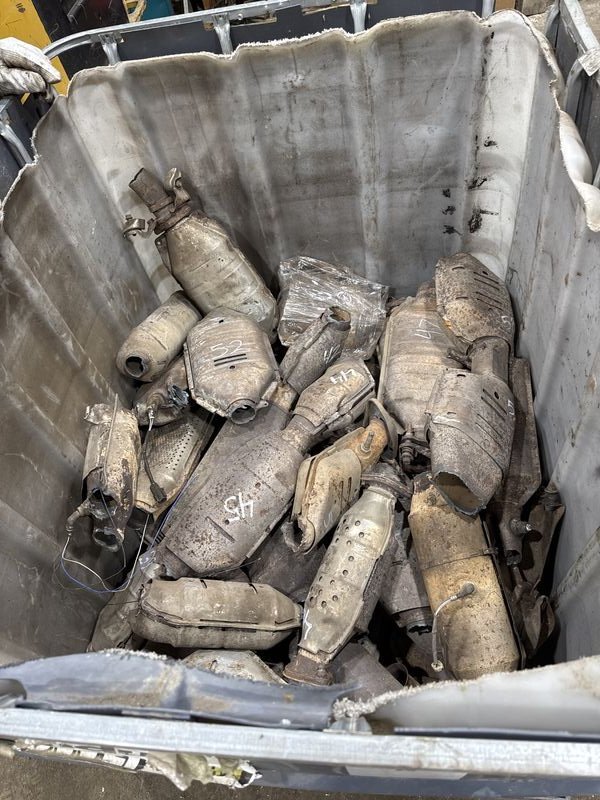
Why Your Catalytic Converter Might Be Worth More Than You Think
Most scrap yards in Winnipeg won't tell you this upfront: the catalytic converter sitting on that old beater in your driveway could be worth anywhere from $20 to over $500 CAD — depending on factors most sellers never think to ask about. That gap isn't random. It's driven by precious metal content, vehicle make, and whether you're selling to one buyer or many. Understanding how catalytic converter recycling actually works puts money back in your pocket.
If you're trying to make sense of scrap metal prices Winnipeg sellers are seeing right now — especially for cats — this guide breaks it down. No guesswork, no vague estimates. Just a clear look at the process, the price drivers, and how to stop leaving money on the table.
How Catalytic Converter Recycling Actually Works
A catalytic converter isn't just a hunk of metal. Inside that steel shell is a ceramic or metallic substrate coated with platinum group metals (PGMs) — platinum, palladium, and rhodium. These are the elements that make your exhaust cleaner, and they're also what makes your cat valuable to a recycler.
Here's the basic recycling chain:
- Collection: Cats are pulled from vehicles at salvage yards, auto recyclers, or collected loose from sellers like you.
- Sorting and ID: Each unit is identified — by serial number, OEM code, or vehicle VIN — to estimate PGM content before any processing happens.
- Decanning: The outer steel shell is removed, exposing the substrate inside.
- Assay and processing: The substrate is crushed, sampled, and sent to a smelter or refinery to extract the platinum, palladium, and rhodium.
- Settlement: The refinery returns value based on actual metal recovered, which flows back up the chain to determine what buyers can pay at the yard level.
That chain matters because every step adds margin for the next party. By the time a price gets quoted to you on the street, multiple middlemen have already taken their cut. The more competitive the buying environment, the more of that value reaches the original seller — which is exactly why the SMASH Recycling auction platform exists.
Why Catalytic Converter Prices Vary So Much in Winnipeg
Sellers doing scrap metal recycling in Manitoba often get frustrated by inconsistent quotes. One yard offers $80. Another says $200. A third won't touch it at all. This isn't necessarily dishonesty — it's a reflection of how complex cat pricing actually is.
Here are the main variables driving price differences:
- PGM content by vehicle type: A converter from a late-model Toyota Prius holds significantly more palladium than one from a base-model compact car. Diesel cats are different again — they use different catalyst formulations entirely.
- Serial number and OEM code: Experienced buyers identify cats by their codes. An unidentified or damaged unit with no readable serial number gets valued conservatively — meaning lower offers for you.
- Market prices for platinum, palladium, and rhodium: These trade on global commodity markets. Rhodium alone has historically swung from under $1,000 USD/troy oz to over $20,000 USD/troy oz. When PGM prices move, cat prices move with them.
- Aftermarket vs. OEM units: Aftermarket replacement cats contain far less PGM content than original equipment. Selling an aftermarket unit without disclosing it will get you a low offer — and rightly so.
- Condition: A cracked or melted substrate loses recoverable surface area. Physical damage reduces yield at the refinery, which reduces what a buyer can pay.
- Buyer competition: This one's underrated. If you call one buyer, you get one number. If five vetted buyers see your inventory simultaneously, competition can help reveal the true market rate. More buyers means better price discovery.
Winnipeg has a solid base of auto recyclers and scrap processors, but the market still functions largely on phone calls and personal relationships. That works fine if you know the right people. If you don't, you're negotiating blind.
Serial Numbers, Documentation, and Why They Change Your Price
The single most practical thing you can do before selling a catalytic converter — or a load of them — is document what you have. Platforms built for this use serial tracking and photo documentation to give buyers confidence before they bid.
Here's what proper documentation does for you:
- Allows buyers to look up PGM data by OEM code rather than guessing
- Reduces the "unknown unit" discount buyers apply when they can't identify a cat
- Creates a paper trail that protects both buyer and seller in disputes
- Makes your load more attractive in a competitive auction environment
Documented inventory gives buyers more confidence — and confident buyers bid higher. It's that simple. If you're moving more than a handful of units, structured documentation isn't optional. It's the difference between a guess and a real market offer.
For context on how this fits into the broader scrap metal auction platform model, read the latest Canadian scrap metal pricing guides — they cover everything from cats to copper to non-ferrous loads.
How Catalytic Converter Prices Compare to Other Scrap Metal in Manitoba
Catalytic converters are high-value per unit, but they're not the only thing worth tracking. Scrap sellers in Manitoba who haul mixed loads often deal with copper, aluminum, and steel alongside their cats. Knowing the relative value of each material helps you prioritize and negotiate smarter.
A few reference points for context (note: prices fluctuate — always check current Canadian scrap metal prices before you sell):
- Copper scrap price today: Bare bright copper consistently sits at the top of the non-ferrous price ladder. Even insulated wire and mixed copper grades hold strong value relative to weight. Tracking the copper scrap price today before a sale is non-negotiable if you're moving any volume.
- Aluminum scrap value per pound / aluminum scrap value today: Aluminum is high-volume, lower-value-per-pound compared to copper, but it moves in bulk. Cast aluminum, extrusions, and sheet all carry different rates. Know your grade before you haul it in.
- Steel and ferrous: Price per pound is low, but weight adds up fast. A full load of steel from a vehicle teardown can still generate meaningful returns.
- Catalytic converters: Per-unit value is high, but grade variance is massive. Sorting and identifying your units before selling is the most direct way to protect your return.
The point isn't to memorize every price. It's to understand that every material category has its own market, and selling without current data means you're trusting whoever's quoting you to be fair. That's a lot of trust to hand over voluntarily.
How to Get a Better Price for Your Cats in Winnipeg
Whether you're an individual seller with a few pulled converters or a Winnipeg scrap metal services operation moving regular volume, the strategy is the same: more information, more competition, better outcome.
Here's a practical approach:
- Photograph every unit — both ends, and any visible serial or OEM codes. This is your baseline documentation.
- Look up or record serial numbers before you contact any buyers. An identified cat is worth more than a mystery unit.
- Get multiple quotes. Don't accept the first number. Call at least two or three buyers, or better — use a platform that creates buyer competition automatically.
- Understand what you have. OEM vs. aftermarket. Diesel vs. gas. High-PGM makes (Toyota, Honda hybrids) vs. lower-PGM makes. This context shapes your negotiating position.
- Time your sale when you can. PGM markets move. If palladium is down significantly, holding a short period may make sense. If you need cash now, sell now — but know the market context.
SMASH takes this further by connecting sellers to vetted buyers through a structured auction format. No subscription fees. No cold calls. Documented inventory goes in front of multiple qualified buyers, and competition can help reveal the market. That's how scrap metal prices Winnipeg sellers deserve to access the market — with real data and real competition, not a single phone call and a take-it-or-leave-it number.
If you're ready to stop guessing and start getting market-driven offers, find the best Canadian scrap metal prices today and see what your load is actually worth.
Frequently Asked Questions
Q: What makes catalytic converter prices so different from yard to yard in Winnipeg?
PGM content varies dramatically by vehicle make, model, and year — and different buyers have different relationships with processors and refiners. A buyer with direct refinery access can pay more than one selling to a middleman. Competition between buyers is one of the most reliable ways to surface the real market rate for your units.
Q: How do I know if my catalytic converter is OEM or aftermarket?
OEM converters are installed by the vehicle manufacturer and contain higher concentrations of platinum, palladium, and rhodium. Aftermarket units — installed as replacements — contain significantly less PGM content. Check the unit's serial or OEM code. If it's missing or looks generic, it's likely aftermarket. Buyers will assess this and price accordingly.
Q: Are scrap metal prices in Winnipeg different from the rest of Canada?
Regional differences exist, mainly driven by local buyer competition, transportation costs to processors, and the volume of material moving through a market. Winnipeg has active scrap infrastructure, but as with any market, the number of competitive buyers affects what sellers actually receive. Using a platform that connects you to multiple vetted buyers helps neutralize regional price gaps.
Q: How often do catalytic converter prices change?
Cat prices move with the PGM commodity markets — platinum, palladium, and rhodium trade daily on global exchanges. Prices can shift meaningfully week to week, sometimes day to day during volatile periods. Always check current rates before committing to a sale, especially for larger volumes.
Q: Can I sell a catalytic converter without the vehicle in Manitoba?
Yes — loose cats are a standard product in the scrap recycling industry. Most scrap buyers in Manitoba purchase them separately from vehicles. You'll typically need to provide basic documentation (serial number, photo, sometimes proof of where it came from). Regulatory requirements around cat sales vary, so confirm with your local buyer what documentation they require before showing up with a load.
Catalytic converter recycling isn't complicated once you understand what drives the price. Know your units, document them properly, and put them in front of more than one buyer. That's how you stop leaving money in the yard. If you want to stay sharp on pricing across all scrap categories, find the best Canadian scrap metal prices today at best-scrap-prices.ca — and make sure your next sale is based on data, not a guess.
Stay current on scrap metal market movements and industry news by following SMASH on LinkedIn — it's where yard operators and buyers track what's actually happening in the market.
Disclaimer: Scrap metal prices — including catalytic converter values and PGM rates — fluctuate based on global commodity markets and local buyer conditions. All price references in this article are general and for educational context only. Always verify current rates before selling.