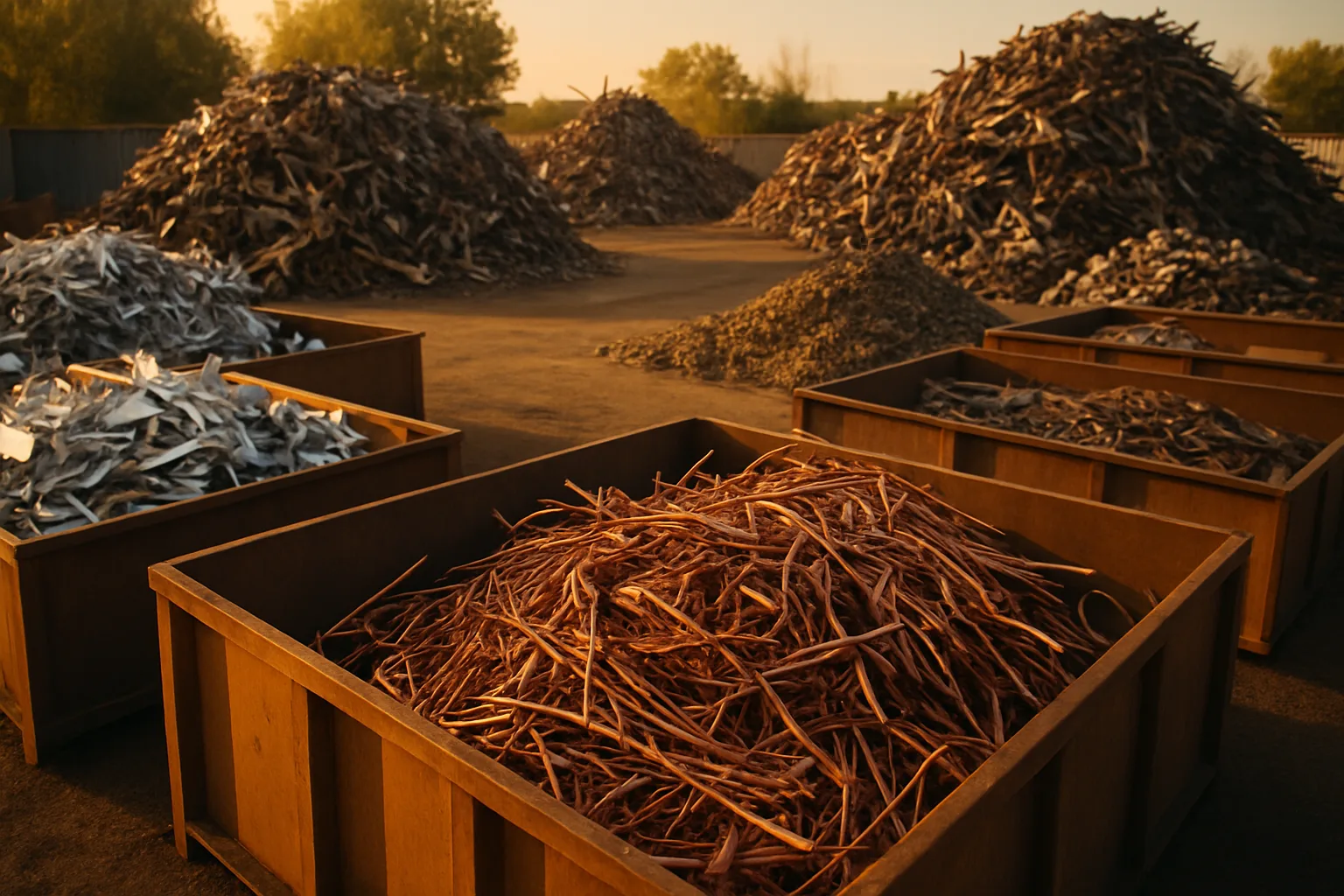
Why the Price You're Quoted Today Has Nothing to Do With Your Yard
You haul in a load of copper wire or a stack of steel plate, and the buyer quotes you a number that feels low. You push back. They shrug and say "market's down." But what does that actually mean? And more importantly — how does a steel mill shutting down in China or a rate hike from the U.S. Federal Reserve end up affecting what you get paid at a Fort McMurray scrap yard? The answer matters. Because if you understand how global forces move local scrap prices, you stop guessing and start making smarter decisions about when to sell.
This is a practical breakdown of how the global economy connects to the scrap metal auction and spot market prices you see in Alberta right now. We'll cover the main drivers, what Fort McMurray sellers need to watch, and how to use tools like SMASH to stop leaving money on the table.
The Global Supply Chain Behind Every Local Scrap Quote
Scrap metal doesn't exist in a vacuum. Every quote you get from a local buyer is anchored to the global commodity market — whether that buyer admits it or not. Copper, aluminum, steel, and catalytic converter metals like platinum, palladium, and rhodium are all traded internationally. The price a Fort McMurray yard will pay for your copper bus bar is directly tied to what a refinery in Asia or Europe is willing to pay for refined copper cathode.
Here's how the chain actually works:
- Mining output drops in a major copper-producing country (Chile, Peru, DRC) → refined copper supply tightens → scrap copper becomes more valuable as a substitute feedstock.
- Chinese manufacturing slows due to weak export demand → steel and aluminum consumption falls → domestic mills buy less scrap → prices at your local yard drop.
- A global automaker strikes a long-term palladium contract → demand for catalytic converter metals tightens → your spent cats are suddenly worth significantly more.
- The Canadian dollar weakens against USD → Canadian scrap becomes cheaper for American buyers → export demand rises → local yards can afford to pay more.
None of this originates in Fort McMurray. But all of it lands in Fort McMurray. That's the reality of selling scrap in a resource-intensive region that feeds into a global supply chain.
What Sellers in Fort McMurray Actually Feel First
Fort McMurray isn't a typical scrap market. The oilsands and energy sector generate enormous volumes of industrial scrap — heavy steel pipe, electrical cable, equipment cores, and spent catalytic converters from large-scale operations. When energy sector activity picks up or slows down, it doesn't just change the volume of scrap available. It changes the buyer landscape too.
Right now in 2026, a few specific global factors are putting pressure on best scrap metal prices Alberta sellers can access:
- Steel overcapacity in Asia — Excess steel production in some Asian markets has kept global steel prices suppressed in 2026, which translates directly to softer steel scrap price today across North America, including Alberta.
- EV transition acceleration — The ongoing shift toward electric vehicles is reshaping catalytic converter scrap volumes. ICE vehicle retirements are creating a wave of spent cats, but platinum group metal demand is in flux as automakers shift away from palladium-heavy converters. If you're looking to sell catalytic converters online, now is a good time to get multiple bids — not just accept a single local quote.
- Currency volatility — The CAD/USD spread in mid-2026 has been meaningful. When the loonie dips, Canadian scrap gets more competitive on export markets. That should — in theory — push local buyers to pay more. Whether they actually do depends on how much competition they're facing.
- Energy costs — Recycling is an energy-intensive business. Higher electricity and natural gas costs affect processor margins, which sometimes get passed back to sellers as lower buy prices. Alberta's energy market directly influences this dynamic.
Understanding these pressure points doesn't mean you need to become a commodity analyst. It means you know why prices move — and why a single buyer's quote on any given day might not reflect the actual market.
The Problem With the "One Buyer" Model in a Global Market
Here's the core issue for most scrap sellers: the global market sets the price, but your local buyer knows you probably won't call ten yards to compare. That information gap is where sellers lose money. One phone call, one quote, one transaction. If that buyer's margin is wide because they know you're not shopping around, that spread comes out of your pocket.
This is exactly what platforms like SMASH are built to fix. A scrap metal auction format puts your load in front of multiple vetted buyers simultaneously. The buyers compete. You see what the actual market thinks your load is worth — not what one buyer decides to offer you on a Tuesday morning. That's not a theoretical benefit. It's basic price discovery, and it works the same way commodity markets have always worked.
SMASH brings that same competition to yards and sellers across North America, including Fort McMurray. No subscription fees. No guessing. You win when buyers compete — and buyers compete when they know other buyers are in the room. You can get competitive bids for your scrap in Canada without making twenty phone calls or driving to three different yards to benchmark your quote.
How to Use Market Conditions to Time Your Scrap Sales
Timing isn't everything in scrap — but it's not nothing either. When you understand that global events move local prices, you can make smarter decisions about when to hold and when to sell. A few practical frameworks for Fort McMurray sellers:
Watch the signals, not just the calendar
Major infrastructure announcements — a new LNG facility, a grid expansion project, a surge in EV production — often signal rising demand for copper and aluminum before it shows up in local buy prices. Keep an eye on trade headlines and commodity indices. You don't need to be a trader. You just need to recognize when the wind is at your back.
Understand that your non-ferrous loads and your ferrous loads move differently
Steel and iron (ferrous) are closely tied to construction and manufacturing cycles. Copper and aluminum (non-ferrous) respond more to energy, infrastructure, and tech sector demand. Catalytic converter metals are in their own category — driven by auto production and emissions regulation. Don't assume that because steel is soft, your copper haul will be too. Find the best Canadian scrap metal prices today for each metal type before you sell.
Document your loads properly
When buyers compete in a SMASH scrap auction, the bids are highest on well-documented loads. Photo documentation, accurate weights, VIN lookups on cores, serial tracking on equipment — all of it gives buyers confidence. Confident buyers bid higher. That's not opinion. That's how every auction market works.
Don't let one buyer's soft-market narrative become your reality
Buyers will sometimes cite market conditions to justify a low offer. Sometimes they're right. But sometimes the "market is down" line is a negotiating tactic, not a fact. The only way to know the difference is to have competing bids. Check current Canadian scrap metal prices before you walk into a transaction — or better yet, let the market come to you through a competitive auction format.
Staying Sharp on Scrap Prices in 2026
The scrap market in 2026 is more transparent than it's ever been — but only if you use the tools available. Real-time commodity indices, auction platforms, and pricing guides have eliminated most of the information advantages that used to belong exclusively to buyers.
If you're in Fort McMurray or anywhere in Alberta and you're still selling based on one phone call and a handshake, you're operating like it's 2010. The copper scrap price today in your region is knowable. The aluminium scrap value per kg for your specific grade is benchmarkable. The competitive bid on your spent catalytic converters is just a platform away. Use those resources.
Read the latest Canadian scrap metal pricing guides to stay current on what each metal is actually fetching across Canada — not just in your backyard. Markets shift fast. Staying informed is one of the simplest edges a seller can have.
When you're ready to stop guessing and start selling with real market data behind you, SMASH is where Fort McMurray sellers and buyers come to trade. No subscriptions. No smoke. Just competition and transparency — which is exactly what a global commodity market demands at the local level.
The global economy is always moving your local scrap prices. The only question is whether you're positioned to catch the upside. Get the best Canadian scrap metal prices — check current rates and market data at best-scrap-prices.ca.
Frequently Asked Questions
Q: How does the global economy directly affect scrap metal prices in Fort McMurray?
Global demand for metals — driven by manufacturing, construction, and energy sectors worldwide — sets the commodity benchmarks that local buyers use to build their offers. When demand drops in major economies or supply spikes in key producing regions, that movement flows directly into the prices Fort McMurray yards will pay. Currency exchange rates between CAD and USD also play a significant role, since much Canadian scrap is exported south.
Q: What is a scrap metal auction and how does it help sellers get better prices?
A scrap metal auction puts your load or inventory in front of multiple vetted buyers at the same time. Instead of accepting one buyer's offer, you let buyers compete — which drives the price toward actual market value. Platforms like SMASH run this format for scrap sellers across North America, including Alberta, with no subscription fees attached.
Q: Is it worth trying to time when I sell my scrap based on market conditions?
Timing can make a meaningful difference, especially on larger loads of copper, aluminum, or catalytic converters. Watching commodity indices and trade news gives you a rough sense of where prices are heading. That said, holding scrap too long carries its own risks — storage, security, and market reversals all cut into gains. The most reliable strategy is always having multiple buyers competing for your load, regardless of where the market sits.
Q: Where can I find the best scrap metal prices in Alberta today?
Start at best-scrap-prices.ca for current Canadian market pricing data. From there, using a competitive auction platform like SMASH ensures you're not just seeing the posted market rate — you're actually capturing it through buyer competition. Posted prices and what buyers actually pay can vary, especially in tighter regional markets like Fort McMurray.
Q: Can I sell catalytic converters online from Fort McMurray?
Yes. Online platforms that specialize in scrap auctions allow you to sell catalytic converters to vetted buyers across North America without being limited to your local market. Proper photo documentation, part numbers, and accurate counts are critical to getting strong bids. SMASH supports this type of transaction and connects you with buyers who specifically purchase and process spent catalytic converters.
Follow SMASH on LinkedIn for ongoing scrap metal market insights, pricing updates, and industry news across Canada and North America.
Disclaimer: Scrap metal prices fluctuate daily based on global commodity markets, regional demand, and material grade. Always verify current rates before selling. The figures and market conditions referenced in this article reflect general 2026 market context and are not guaranteed buy prices.