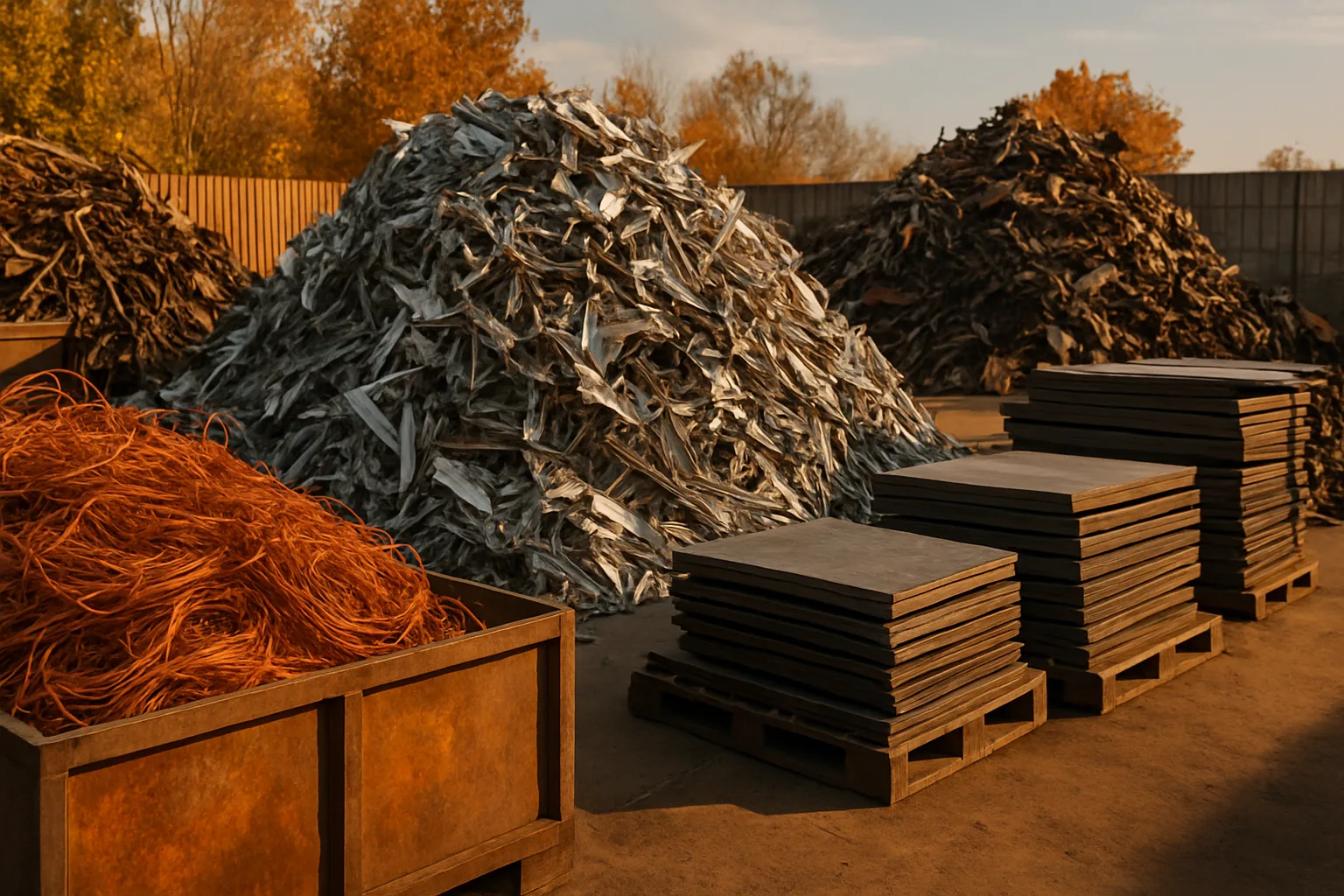
Copper is sitting in your yard right now, and you might be leaving serious money on the table — not because the market is bad, but because you don't know what grade you're holding.
Copper grading isn't complicated once you understand the system. But most sellers — especially newer yards or first-time scrappers — lump everything together and take whatever the single buyer on the phone offers. That's the old way. It costs you money every single load. Understanding copper grades, tracking price trends, and putting your material in front of competitive buyers through a scrap metal auction format is how you close that gap.
This guide breaks down copper grades, what drives prices in 2026, and how sellers in Kelowna and across British Columbia can stop guessing and start getting real market pricing on their copper loads.
Why Copper Prices in Canada Keep Moving (and What's Driving Them in 2026)
Copper doesn't sit still. It's one of the most globally traded metals on the planet, and its price reflects a tangle of variables — energy transition demand, manufacturing output, currency shifts, and supply chain pressure from mines in South America and Africa.
In 2026, the push for electrical infrastructure — EV charging networks, grid upgrades, and industrial electrification — continues to put long-term upward pressure on copper demand. That doesn't mean prices move in one direction every week. Short-term volatility is normal. But the structural demand story for copper is strong, and informed sellers use that context to time loads and negotiate from a position of knowledge.
For Canadian sellers specifically, the CAD/USD exchange rate adds another layer. London Metal Exchange (LME) prices are denominated in USD. When the Canadian dollar weakens, domestic CAD-denominated copper prices can actually rise even if the LME benchmark stays flat. Track both. Want to stay on top of this? find the best Canadian scrap metal prices today and see how the market is moving before you make a call.
Key factors influencing copper scrap prices in Canada right now:
- LME spot price — the global benchmark, updated daily
- CAD/USD exchange rate — directly affects what your yard pays in Canadian dollars
- Domestic demand — construction and electrical sectors in BC and Ontario drive regional variance
- Scrap quality and grade — higher grades get closer to LME; dirty copper gets heavily discounted
- Logistics and location — a Kelowna yard has different freight costs than a Vancouver port facility
The Complete Copper Grading Guide for Canadian Scrap Sellers
Copper grade determines your price. This isn't a technicality — it's the single biggest controllable variable in your return. Misgrading costs you money. Over-claiming grade gets your load rejected or repriced on arrival. Know your material before you sell it.
Here's how the standard North American grading system breaks down:
Bare Bright Copper (Grade #1 Bright)
This is the top of the pile. Bare bright is clean, uncoated, unalloyed copper wire — no insulation, no solder, no oxidation. Think freshly stripped electrical wire, 16 gauge or heavier. It commands the highest price per kg and the tightest spread to LME. If you're stripping wire yourself, this is what you're working toward. Small contamination — even a bit of insulation left on — drops you out of this category immediately.
Copper #1 (Heavy Copper)
Unalloyed, uncoated copper with no insulation. Includes bus bars, commutator segments, clippings from copper sheet, and clean copper tubing with no fittings or solder. Minor oxidation is acceptable. This is a workhorse category — large volumes, reliable pricing, and widely accepted across Canadian buyers.
Copper #2
Miscellaneous copper with some contamination — light coatings, minor soldering, small attachments, or oxidation. Plumbing copper with fittings often lands here. Expect a meaningful discount versus #1. Buyers will assess the level of contamination and price accordingly. Clean up your #2 loads if volume justifies the labor — separating fittings can move pipe from #2 to #1.
Insulated Copper Wire (ICW)
Priced by estimated copper recovery percentage after stripping. A thick, single-conductor cable with high copper content grades differently from thin communication wire with low recovery. Most buyers price ICW based on a percentage of bare bright. Know your wire types. Automotive wire harnesses, for example, typically yield lower copper recovery than building wire.
Copper Alloys — Brass and Bronze
Brass (copper + zinc) and bronze (copper + tin) are separate categories. Don't mix them with pure copper — you'll lose money. Yellow brass, red brass, and bronze each have their own price points. Radiators, valves, fittings, and castings fall here. They price lower than clean copper per kg but are still strong earners in volume.
If you're in Kelowna and unsure how your mixed copper loads are being graded, Kelowna scrap metal services can help you get a clearer picture of local buyer expectations and current grade pricing.
How a Scrap Metal Auction Changes What You Get for Copper
Here's the real problem with the one-buyer model: you have no idea if the price you're getting is fair. You called one yard, they gave you a number, and you either took it or drove somewhere else to get one more quote. That's not a market — that's guessing.
A scrap metal auction flips this entirely. You document your load — grade, weight, condition, photos — and vetted buyers compete for it. The price you see isn't what one buyer felt like offering that morning. It's what multiple buyers, with real purchasing intent, are willing to pay for your specific material.
SMASH is built exactly for this. Sellers list their copper loads — whether it's a drum of bare bright, a pallet of ICW, or a mixed copper and brass lot — with proper documentation including photos and weights. Vetted buyers across Canada bid. That competition does the work of price discovery that used to require three phone calls and a lot of gut instinct. compare scrap metal bids from Canadian buyers and see what real competition looks like for your material.
For sellers in British Columbia, this matters especially. Regional pricing can vary significantly depending on proximity to port facilities, local demand, and buyer concentration. Getting a single quote from the only yard in your area is not the same as knowing what your load is actually worth in the market.
Preparing Your Copper Load to Get the Best Price
Price discovery only works if buyers have confidence in what you're selling. Vague descriptions and no photos don't inspire competitive bidding — they inspire lowball offers that account for uncertainty. Here's how to present your copper load properly.
Grade it honestly. Don't call #2 copper a #1 to get a better opening bid. Buyers know. Repricing on arrival damages your reputation and your future sales. Grade accurately, describe any contamination, and let competition do the rest.
Weigh it before you list it. Approximate weights waste everyone's time and create disputes. Get your scale ticket. Document the tare and gross. Attach it to your listing.
Photograph everything. Top, sides, and a close-up of the material quality. Show the insulation on ICW. Show the fittings on pipe copper. Transparency builds buyer confidence, and confident buyers bid higher.
Separate your grades. Mixed loads get priced to the lowest grade in the lot. Separating bare bright from #2 and ICW before listing can meaningfully increase your total return — even if it costs an hour of labor.
Platforms like SMASH provide inventory tracking tools, photo documentation support, and structured listing formats so buyers have everything they need to bid with confidence. That infrastructure is what makes competitive bidding possible. You can also read the latest Canadian scrap metal pricing guides to stay current on what buyers are looking for in 2026.
Copper Price Trends for Kelowna and British Columbia Sellers in 2026
British Columbia's scrap market has its own regional characteristics. Construction activity in the Lower Mainland and Okanagan Valley, mining operations in the province's interior, and proximity to Pacific port facilities all influence local copper pricing. Interior BC sellers — including those in Kelowna — sometimes face freight disadvantages compared to Metro Vancouver yards, which is exactly why getting competitive bids from multiple buyers matters more, not less.
The Okanagan has seen steady growth in residential and commercial construction through 2026, which means copper pipe, wiring, and electrical components continue to flow into the scrap stream at volume. That's good news for local sellers — the material is there. The challenge is making sure that material gets priced properly instead of going to a single buyer at a single price with no competition.
Steel scrap prices and aluminum prices have also remained active in the BC market in 2026, and multi-metal loads — copper alongside aluminum or steel — are common. Understanding how to separate, grade, and list each metal category separately can significantly improve your total return on a mixed load. Don't let copper get buried in a mixed-metals price when it deserves its own bid.
If you want to know where copper scrap price per kg stands today in Canada, don't rely on a single yard's verbal quote. check current Canadian scrap metal prices and go to market with real data behind you.
Frequently Asked Questions
Q: What is the difference between Copper #1 and Copper #2 in Canada?
Copper #1 is clean, uncoated, unalloyed copper with no insulation and minimal oxidation — pipe, bus bars, and heavy copper sheet typically qualify. Copper #2 has some contamination: light coatings, minor solder, oxidation, or attached fittings. Copper #2 is priced at a discount to #1, and the gap varies by buyer and market conditions. Separating and cleaning your material before selling can move loads from #2 to #1 pricing.
Q: How does a scrap metal auction work for copper loads?
In a scrap metal auction, you document your copper load — grade, weight, photos, condition — and list it so vetted buyers can submit competing bids. Instead of one price from one buyer, you see what multiple buyers will actually pay for your specific material. Platforms like SMASH run this process with vetted buyers and structured documentation to support real price discovery.
Q: Where can I find the best copper scrap prices in Kelowna?
Local yard quotes are a starting point, but they're not the full picture. To get competitive pricing in Kelowna, you need to know what multiple buyers will pay — not just the nearest yard. Using a platform that brings buyers to your load, rather than requiring you to shop your material one call at a time, gives you much better information and often better outcomes.
Q: What affects copper scrap prices in Canada today?
The main drivers are the LME copper spot price, the CAD/USD exchange rate, domestic demand from construction and electrical sectors, and the grade and condition of your specific material. Regional factors like freight costs and local buyer competition also play a role, especially in interior British Columbia. Prices fluctuate daily — always verify current rates before committing to a sale.
Q: Do I need to sort copper by grade before selling through an auction platform?
Sorting is strongly recommended. Mixed loads get priced to the lowest grade in the pile, which means your bare bright gets valued the same as your #2 copper if they're lumped together. Separating grades before listing takes time but typically pays off — especially on larger loads where the per-kg price difference between grades is significant.
Disclaimer: Copper scrap prices fluctuate daily based on global market conditions, exchange rates, and buyer demand. All pricing information in this article is general in nature. Always verify current rates before making selling decisions.
Knowing your grades and understanding what drives the market is step one. Step two is making sure that knowledge translates into real dollars — not just a better conversation with one buyer. If you're selling copper in Kelowna, British Columbia, or anywhere across Canada, the best move you can make is putting your documented load in front of multiple vetted buyers and letting competition do what it's designed to do. find the best Canadian scrap metal prices today and go into your next sale with real market data behind you.
Stay current on copper trends, grading standards, and market pricing — follow SMASH on LinkedIn for regular industry updates and scrap metal market insights: SMASH on LinkedIn.