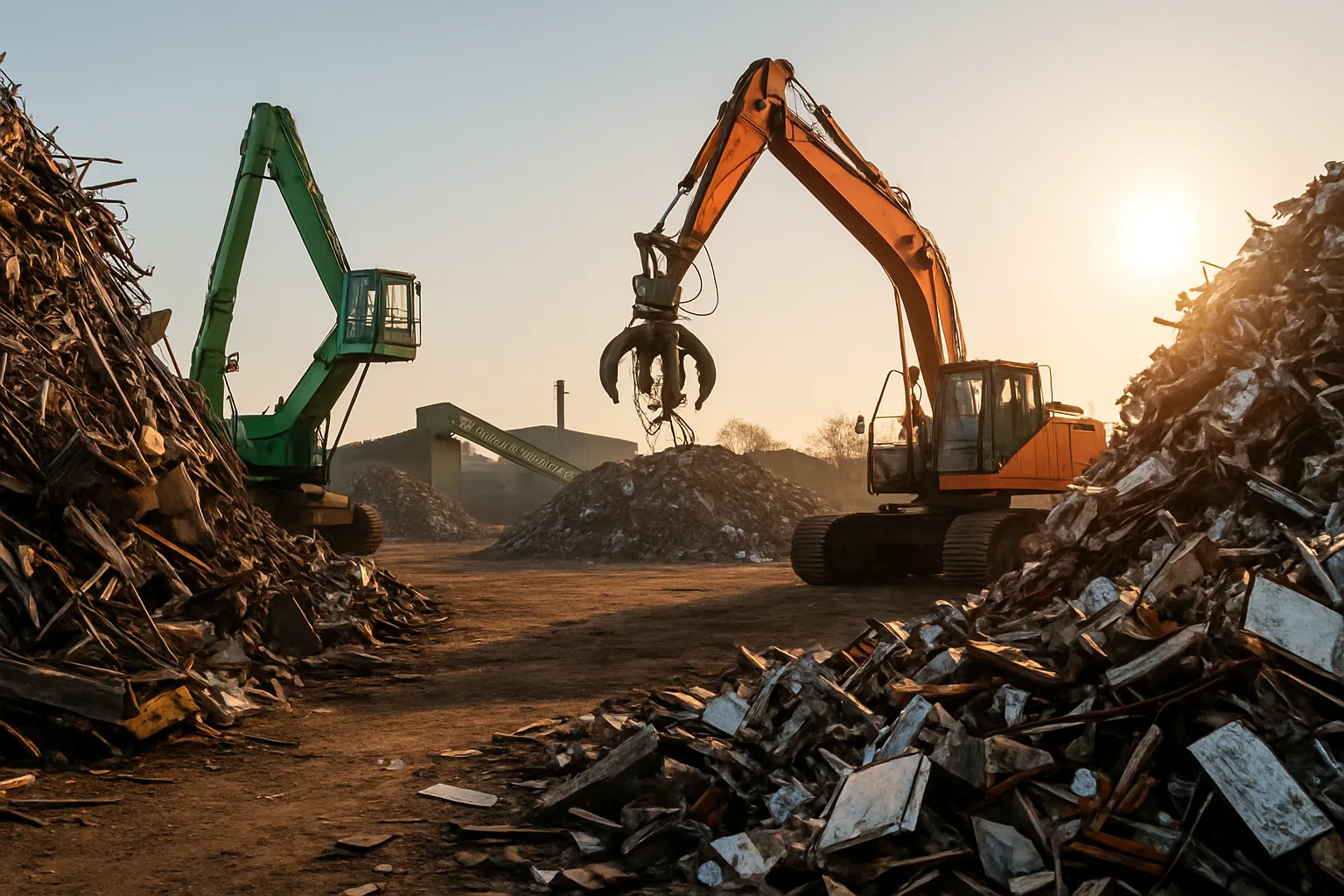
Here's something most sellers don't realize: the price a Markham scrap yard quotes you on copper today was shaped by a manufacturing decision made in Shanghai last week. Global economics don't stay global for long. They land in your yard, on your scale ticket, and on your payout cheque. If you want better copper scrap prices in Markham — or anywhere in Ontario — you need to understand what's actually moving the market before you load the truck.
This isn't theory. Copper, aluminum, steel, and catalytic converter metals trade on global exchanges. A slowdown in Chinese construction, a U.S. tariff shift, or a shipping bottleneck in a key port can swing local scrap metal prices in Markham by double digits within days. Knowing the signals helps you time your sales smarter.
---Why Global Demand Sets Your Local Copper Price
Copper doesn't care where you live. It trades on the London Metal Exchange (LME) and COMEX, and those benchmarks ripple out to every scrap buyer in North America — including your local yard in Markham or anywhere across Ontario. When global manufacturing demand climbs, copper prices rise. When factories idle, prices retreat. It's that direct.
Right now in 2026, the push toward electrification — EVs, grid infrastructure, battery storage — continues to keep copper demand elevated globally. That's generally good news for sellers. But demand pressure from one sector doesn't cancel out softness in another. If construction activity in major economies slows, copper wire scrap prices can soften even while EV-related demand holds firm. Understanding which demand driver dominates at any given moment tells you more about your copper scrap prices in Markham than any single yard's posted rate.
Key global demand signals to watch:
- Chinese manufacturing PMI — China consumes roughly half the world's copper. When their manufacturing index dips, copper prices usually follow.
- U.S. industrial output data — A strong U.S. manufacturing sector supports North American scrap pricing.
- EV production targets — Each electric vehicle uses significantly more copper than a traditional ICE vehicle.
- Grid infrastructure spending — Utility-scale renewables and transmission upgrades are copper-intensive.
Tracking these indicators takes time most sellers don't have. That's why platforms like SMASH make it easier to get competitive bids for your scrap in Canada — because competitive auction pressure does the market-tracking work for you.
---The 5 Biggest Global Factors Affecting Scrap Metal Prices in Markham Right Now
Let's break it down clearly. These are the five forces with the most direct impact on what you'll get paid for scrap metal in Markham and across Ontario in 2026.
1. Currency Exchange Rates
The Canadian dollar moves against the U.S. dollar daily, and that gap matters. Because most base metals price in USD on global exchanges, a weaker CAD means Canadian sellers can sometimes see relatively higher CAD payouts — but it also raises the cost of imported goods, compressing margins for the buyers you sell to. It's a two-sided equation, and exchange rate volatility alone can shift your effective payout by several percentage points.
2. U.S. Trade Policy and Tariffs
The trade environment in 2026 remains active. Cross-border scrap flows between Canada and the U.S. are heavily influenced by tariff conditions. When tariffs tighten on finished metal goods, demand for domestic scrap feedstock can increase — pushing local scrap metal prices upward. When tariff pressure eases or exemptions apply, the dynamic can reverse. Markham yards selling into U.S. mills feel this directly.
3. Global Shipping and Logistics Costs
When ocean freight rates spike, the cost of moving processed metal globally rises. That can make North American scrap more attractive to domestic mills — a positive for sellers. When freight is cheap, offshore competition intensifies. Shipping disruptions — port congestion, geopolitical tension in key shipping lanes — create unpredictable short-term swings in what local buyers will offer.
4. Energy Prices
Steel mills, smelters, and refiners are energy-intensive operations. When natural gas or electricity costs climb, processing margins tighten. Buyers pay less for feedstock to protect their margins. This hits steel and aluminum scrap pricing harder than copper, but the ripple effect touches all metals. In Ontario, energy cost dynamics affect both what local yards pay and what they can extract from their downstream buyers.
5. Geopolitical Events and Supply Disruptions
Mining disruptions in copper-producing countries — Chile, Peru, the DRC — tighten refined copper supply and support scrap prices as mills substitute. Political instability, labor strikes, or export restrictions in these regions can move the market faster than any economic report. These events are unpredictable by nature, but their impact on copper scrap prices in Markham and across North America is real and measurable.
---How Aluminum and Steel Prices Move Differently — And Why It Matters
Sellers who only watch copper prices miss part of the picture. Aluminum and steel follow global economics too, but their price drivers aren't identical. Understanding the difference helps you make smarter decisions about what to sort, what to hold, and what to move immediately.
Aluminum is highly sensitive to energy prices because smelting is extremely power-intensive. When energy costs rise globally, primary aluminum production becomes expensive, which can push buyers toward scrap aluminum as a cheaper feedstock — supporting scrap premiums. Aluminum is also closely tied to auto and aerospace manufacturing cycles. A slowdown in vehicle production hits cast and sheet aluminum scrap demand quickly.
Steel pricing is more regional than copper or aluminum. North American steel prices reflect domestic mill capacity, construction activity, and automotive production more directly than global LME benchmarks. That said, global overcapacity — particularly from overseas producers — continues to create downward pressure on steel scrap pricing when import flows increase. Canadian scrap metal prices for steel in 2026 are also influenced by what U.S. electric arc furnaces are paying for shredded and heavy melt grades.
The bottom line: don't treat your scrap yard load as a single commodity. Sorting, grading, and understanding what drives each metal's price separately is how serious sellers maximize their returns. To find the best Canadian scrap metal prices today, you need visibility across all grades — not just the top-of-pile copper.
---Scrap Metal Inventory Management: How Timing the Market Starts at Your Yard
Global signals are only useful if you can act on them. That means good scrap metal inventory management is a genuine competitive advantage — not just an operational nicety. Sellers who know exactly what they're holding, the grade breakdown, and the approximate weight by metal type can make fast decisions when the market moves in their favor. Sellers who guess can't.
Here's what basic scrap metal inventory management looks like in practice:
- Separate metals at intake — Don't let copper, aluminum, and steel intermingle in a general bin. Sorting at intake saves time and protects grade purity.
- Photograph loads — Photo documentation supports better buyer confidence and cleaner transactions. It also protects you in disputes.
- Track weights by grade — Know whether you're holding bare bright copper, #1 copper, or mixed copper/aluminum radiators. Each grades differently and prices differently.
- Set volume thresholds for selling — Small loads often get discounted. Know your break-even load size for each metal.
- Monitor market signals weekly — Copper above key benchmarks? Move your #1 copper. Aluminum soft? Hold if you can and watch energy prices.
Platforms like SMASH support this process directly. The inventory tool, photo documentation features, and VIN/serial tracking help sellers document what they have before they list it — which means buyers bid with more confidence and pricing reflects actual grade rather than assumption. Better documentation leads to better price discovery. That's not a slogan; it's mechanics.
If you want to go deeper on market timing and grade strategy, read the latest Canadian scrap metal pricing guides — practical breakdowns written for sellers who take this seriously.
---What Sellers in Markham Can Actually Do About Global Price Volatility
You can't control the LME. You can't call a copper mine in Chile. But you can control how you sell, how you document, and how many buyers compete for your loads. That's where the gap between average returns and strong returns actually lives.
Sellers in Markham dealing with copper scrap prices that fluctuate week to week have a few practical levers:
- Don't sell to one buyer exclusively. Single-buyer relationships feel comfortable but they're pricing anchors. Competition is how you find the actual market.
- Use auction-format platforms. When multiple vetted buyers compete for your load, the price reflects real demand — not one buyer's margin target.
- Document everything. Graded, photographed, weighed loads attract stronger bids. Ambiguous loads attract cautious bids.
- Watch the calendar. End-of-quarter purchasing by mills, seasonal construction slowdowns, and annual budget cycles all affect scrap demand rhythms.
- Know your metals separately. Moving copper when copper is strong and holding aluminum until energy prices pull it up is a legitimate strategy — if your inventory management supports it.
The old way — one phone call, one buyer, one quote, take it or leave it — doesn't give you the information you need to know if that quote is fair. More buyers means better price discovery. That's not speculation. It's arithmetic.
Whether you're in Markham, across Ontario, or anywhere else in Canada, the goal is the same: get paid what your metal is actually worth in a functioning market. To check current Canadian scrap metal prices and understand where the market sits today, don't rely on a single yard's posted rate. Use every tool available.
---Global economics will keep moving your local scrap prices whether you're watching or not. The sellers who understand why prices shift — and who position their inventory and their sales process to respond — consistently outperform those who treat scrap as a static commodity. If you're serious about maximizing what you get for copper, aluminum, steel, or catalytic converter metals, start with better information and more competitive selling. That's exactly what best-scrap-prices.ca is built for — helping Canadian sellers find the best scrap prices Canada has to offer, not just the most convenient ones.
---Frequently Asked Questions
Q: Why do copper scrap prices in Markham change so frequently?
Copper prices follow global LME benchmarks that update daily based on supply, demand, currency movements, and geopolitical factors. Your local Markham yard adjusts its buying prices to reflect those movements — sometimes daily, sometimes weekly. Prices can swing significantly within a short period, which is why checking current rates before you sell matters.
Q: How can I get the best scrap metal prices in Markham?
The single most effective strategy is creating competition among buyers. A platform like SMASH connects your load to multiple vetted buyers bidding against each other, rather than relying on one yard's posted rate. Proper sorting, grading, and documentation of your load also directly supports stronger bids — buyers pay more when they know exactly what they're getting.
Q: Does the Canadian dollar affect what I get paid for scrap in Ontario?
Yes. Because base metals price globally in USD, the CAD/USD exchange rate affects your effective payout in Canadian dollars. A weaker CAD can translate to relatively higher CAD payouts for scrap — but it also affects the economics of the buyers and mills you sell to. Exchange rate movements are one reason scrap metal prices in Markham and across Ontario can shift even when the underlying metal price in USD hasn't changed dramatically.
Q: Is it worth sorting my scrap before selling, or should I just sell it mixed?
Sorting is almost always worth it for copper and non-ferrous metals. Mixed loads get downgraded — buyers price for the worst-case grade in the mix. Separating bare bright copper from #1 copper, or copper from aluminum radiators, lets each grade get priced accurately. The effort usually pays back in measurable payout differences, especially on larger volumes.
Q: What's the best way to track scrap metal prices in Canada?
Check LME and COMEX copper benchmarks for directional signals, monitor Canadian scrap metal price guides for actual buyer rates, and use platforms that show you competitive market bids rather than posted single-buyer prices. Resources like best-scrap-prices.ca aggregate Canadian pricing information to help sellers understand where the market actually sits — not just where one yard wants it to be.
---Stay current on scrap metal market movements and industry insights by following SMASH on LinkedIn — practical updates for sellers and buyers who want to stay ahead of the market.
Disclaimer: Scrap metal prices fluctuate based on global market conditions, exchange rates, and local buyer demand. All pricing references in this article are general and educational. Always check current rates before making selling decisions.