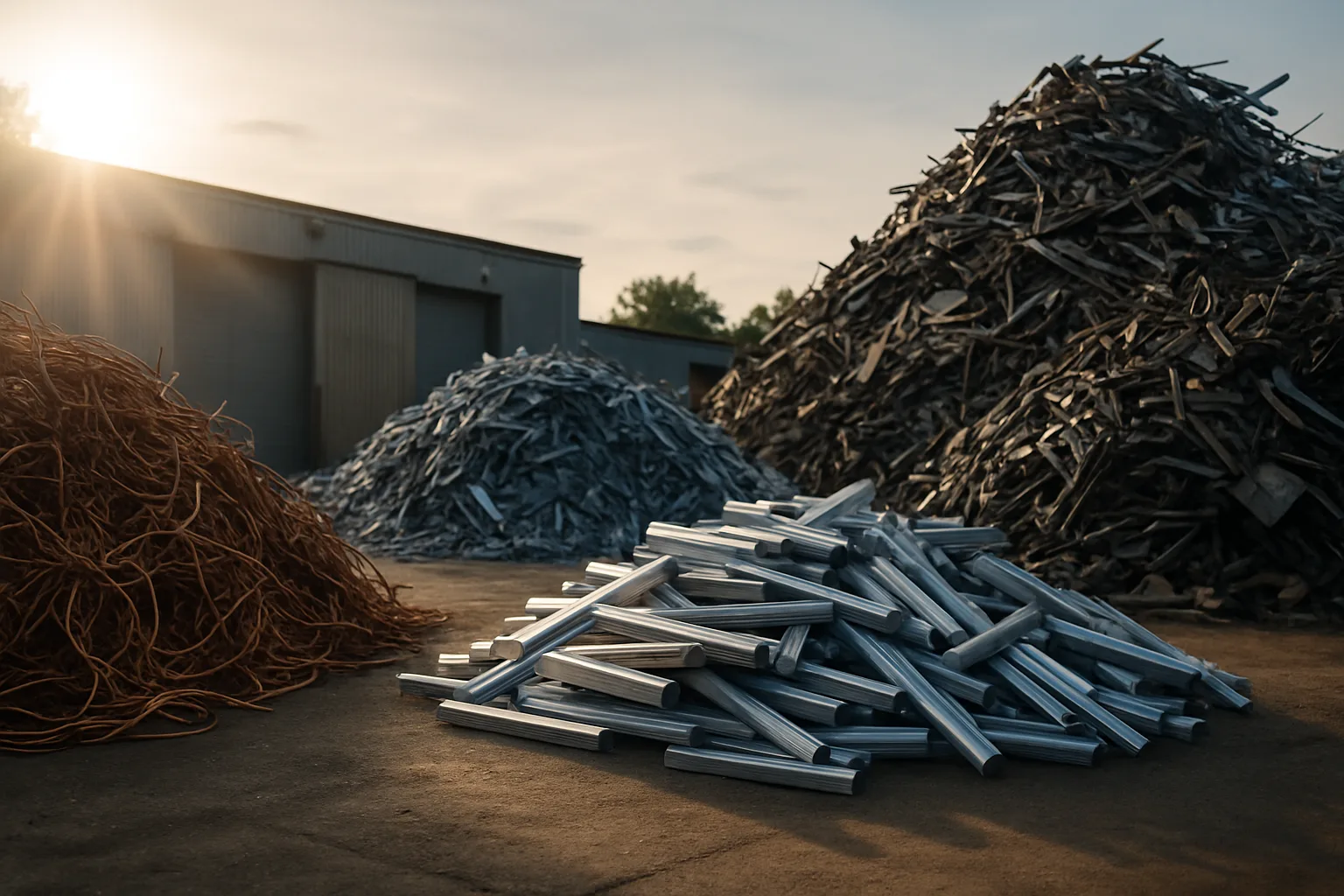
7 Ways the Global Economy Moves Your Local Scrap Metal Prices Today
You called your buyer last Tuesday. Same load, same yard, same material — and the price was down eight percent from two weeks ago. Nobody explained why. That's not bad luck. That's the global economy landing in your driveway.
Scrap metal prices today don't live in a vacuum. What happens in a steel mill in China, a currency exchange desk in Tokyo, or a trade negotiation in Washington shapes what you get paid for your copper wire in Calgary. Understanding the connection won't just satisfy curiosity — it will help you time your loads better, negotiate smarter, and stop leaving money on the table.
Here are seven forces driving that number up or down right now.
1. Chinese Manufacturing Demand Sets the Floor for Copper and Aluminum Prices
China consumes more steel and non-ferrous metal than any other country on earth. When Chinese manufacturing slows — factory output, construction starts, export orders — demand for raw input materials drops fast. Copper, aluminum, and even shredded steel all feel it within days.
The inverse is also true. A stimulus package in Beijing, a new infrastructure push, or a spike in EV production can pull non-ferrous prices up sharply. For a yard operator in Calgary trying to sell a load of #1 copper or clean aluminum extrusion, the floor on that price is often set somewhere in Guangdong Province before the bid even gets placed locally.
This is exactly why checking find the best Canadian scrap metal prices today matters — regional buyers price against international benchmarks in real time, and you need to know where the market actually sits before you commit a load.
2. The Canadian Dollar Makes Your Scrap Worth More or Less Without Moving an Ounce
Scrap metal is priced globally in USD. When you sell in Canada, your buyer is doing a currency conversion — whether they tell you that or not. A weaker Canadian dollar means Canadian scrap looks cheaper to foreign buyers, which can push export demand up and lift local prices. A stronger loonie does the opposite.
In mid-2026, currency volatility has continued to create price swings that have nothing to do with the physical supply of material in Alberta. A yard selling 40,000 lbs of zorba or a drum full of cats can see a meaningful difference in payout based purely on where the exchange rate closed that morning.
Most sellers never ask about this. The ones who do negotiate better.
3. U.S. Tariff Policy Redirects Metal Flows — and That Reaches Alberta
Trade policy between the U.S. and its partners has a direct effect on scrap flows. When tariffs go up on imported steel or aluminum, domestic U.S. mills sometimes increase their scrap intake to compensate. That tightens supply in cross-border markets and can push Canadian scrap prices up.
The flip side: when tariffs create friction on Canadian exports moving south, material piles up domestically and prices soften. Alberta yards have felt this on shredded steel and heavy melt loads more than once in the last few years. Understanding the policy environment isn't just for economists — it's useful intel for anyone deciding whether to move a load now or hold it for two weeks.
Platforms like SMASH connect you to vetted buyers across North America. That broader buyer pool helps offset regional pricing pressure when one market gets squeezed by policy changes. You're not stuck taking whatever your single local buyer offers.
4. Oil Prices Drive Industrial Scrap Supply in Alberta
This one is specific to the region. Alberta's industrial scrap supply is deeply tied to oil and gas activity. When energy prices are high, oilsands projects, pipeline construction, and industrial maintenance generate significant volumes of heavy iron, structural steel, and specialty alloys. When energy prices drop, that activity slows — and so does the supply side of local scrap.
This creates an interesting dynamic. High oil prices can suppress scrap values by flooding local yards with supply, even as strong industrial demand keeps end-market prices firm. Low oil prices can tighten supply and reduce competition among sellers — which sometimes helps smaller operators who are paying attention.
For a yard or independent seller in Calgary, reading both sides of this equation helps. You're not just watching copper futures — you're watching rig counts and capital expenditure announcements from the energy sector.
5. Catalytic Converter Values Are Tied to Platinum Group Metal Markets Worldwide
If you're holding a drum of cats, you're sitting on a position in platinum, palladium, and rhodium. Those metals trade on international commodity exchanges. Their prices swing with automotive production forecasts, emissions regulation timelines, hydrogen economy news, and mining output from South Africa and Russia.
This is why a catalytic converter auction produces wildly different results than a flat per-unit price from a single buyer. Assay-based purchasing — where the actual PGM content drives the price — rewards sellers who document their inventory, track serial numbers, and understand what they have. Guessing gets you a low offer designed to protect the buyer's margin.
SMASH was built specifically to bring competition into the cat market. The auction format puts multiple vetted buyers against each other on your documented inventory. Better documentation, better bids. smashrecycling.ca lays out exactly how it works for Canadian sellers.
Want to understand how the catalytic converter market has shifted in 2026? Read the latest Canadian scrap metal pricing guides for up-to-date context before you move your next drum.
6. Global Steel Production Cycles Set the Tone for Ferrous Prices
Steel mills in the U.S., Europe, and Asia drive scrap steel demand. When global steel production ramps up — driven by infrastructure spending, automotive demand, or housing construction — ferrous scrap prices follow. When mills idle or run at reduced capacity, they buy less scrap, and the price per gross ton drops.
For a Calgary yard moving heavy melt, shredded steel, or HMS, following global steel production data is more useful than asking your buyer what the market is doing. The buyer already knows. You should too.
Here's what to watch:
- World Steel Association monthly output reports — published publicly, shows whether global production is trending up or down
- U.S. capacity utilization rates — when U.S. mills run above 75-80%, scrap demand is firm
- Turkish import prices — Turkey is one of the world's largest buyers of scrap steel; their bid levels set a global reference point
- Domestic mill announcements — price increases or decreases from Canadian and U.S. mills signal short-term direction
None of this requires a finance degree. It requires thirty minutes a week and a willingness to treat scrap selling like the commodity business it actually is.
7. Supply Chain Disruptions and Shipping Costs Affect Export Economics
When ocean freight costs spike — as they did dramatically in prior years — it becomes more expensive to export scrap containers from North American ports to overseas buyers. That reduces export demand, which reduces competition for material, which softens domestic prices. When freight normalizes, export economics improve and more buyers enter the market.
In 2026, freight rates remain a live variable. Port disruptions, Panama Canal capacity issues, and geopolitical shipping lane pressures all affect how cost-effective it is to move Canadian scrap to end markets in Asia and the Middle East. A load that would have moved profitably six months ago might be marginal today — or vice versa.
This is exactly why check current Canadian scrap metal prices isn't a one-time exercise. Market conditions shift, and the spread between what one buyer offers and what competition reveals can be significant.
For Calgary scrap metal services, understanding these macro forces helps you time your loads, set realistic expectations, and choose the right selling channel for each material type. Whether you're moving non-ferrous out of a commercial yard or selling a drum of cats from an automotive dismantler, the same global forces apply.
The old way — one phone call, one buyer, hope for a fair price — doesn't account for any of this. SMASH does. Vetted buyers, competitive bids, full documentation, no subscription fees. The platform wins when you win.
If you want to stay ahead of what the market is actually doing, the best move is to check rates regularly and stop assuming your single buyer's offer reflects the real market. Get the best Canadian scrap metal prices — check rates at best-scrap-prices.ca.
Disclaimer: Scrap metal prices fluctuate daily based on global commodity markets, currency exchange rates, and local supply and demand. Always verify current rates before selling.
Frequently Asked Questions
Q: Why do scrap metal prices today change so frequently in Calgary?
Scrap prices move with global commodity markets — copper, aluminum, steel, and platinum group metals all trade on international exchanges that update continuously. Local prices in Calgary reflect those benchmarks plus regional supply, currency exchange rates, and buyer competition. Checking rates weekly — or before every major load — keeps you from selling at a stale number.
Q: How does the Canadian dollar affect what I get paid for scrap in Alberta?
Scrap metal is priced globally in USD. When you sell in Canada, your buyer converts that USD benchmark price into CAD. A weaker Canadian dollar generally helps sellers — your material looks cheaper to export buyers, which increases demand and can lift local bids. A stronger loonie can soften prices even when the underlying metal value holds steady in USD terms.
Q: Are catalytic converter prices in Calgary affected by global markets?
Yes — directly. Catalytic converter values are driven by platinum, palladium, and rhodium prices, which trade on international exchanges. Those prices shift based on automotive production forecasts, mining supply, and industrial demand from sectors completely unrelated to auto recycling. Using a catalytic converter auction format through a platform like SMASH ensures multiple buyers compete on your documented inventory rather than one buyer setting their own price.
Q: Is it worth waiting for better scrap metal prices or should I sell now?
There's no guaranteed answer — markets can move in either direction. Watching steel production trends, U.S. mill capacity utilization, and copper futures gives you a directional read. If the signals point to tightening demand, moving your load sooner may make sense. If supply is constrained and mills are buying aggressively, holding can pay off. The key is making an informed decision, not guessing.
Q: How do I find the best scrap metal prices near me in Calgary?
Comparing multiple buyers is the most reliable way to find competitive pricing. Platforms like SMASH put your load in front of vetted buyers simultaneously, which creates actual competition rather than a take-it-or-leave-it offer from one contact. Checking current benchmarks at best-scrap-prices.ca before you sell gives you a reference point so you know whether what you're being offered reflects the real market.
Follow SMASH on LinkedIn for industry updates, market insights, and scrap metal pricing trends across North America: linkedin.com/company/scrap-metal-auction-sales-hub