What Your Old Lead-Acid Batteries Are Actually Worth — And How to Get Paid for Them
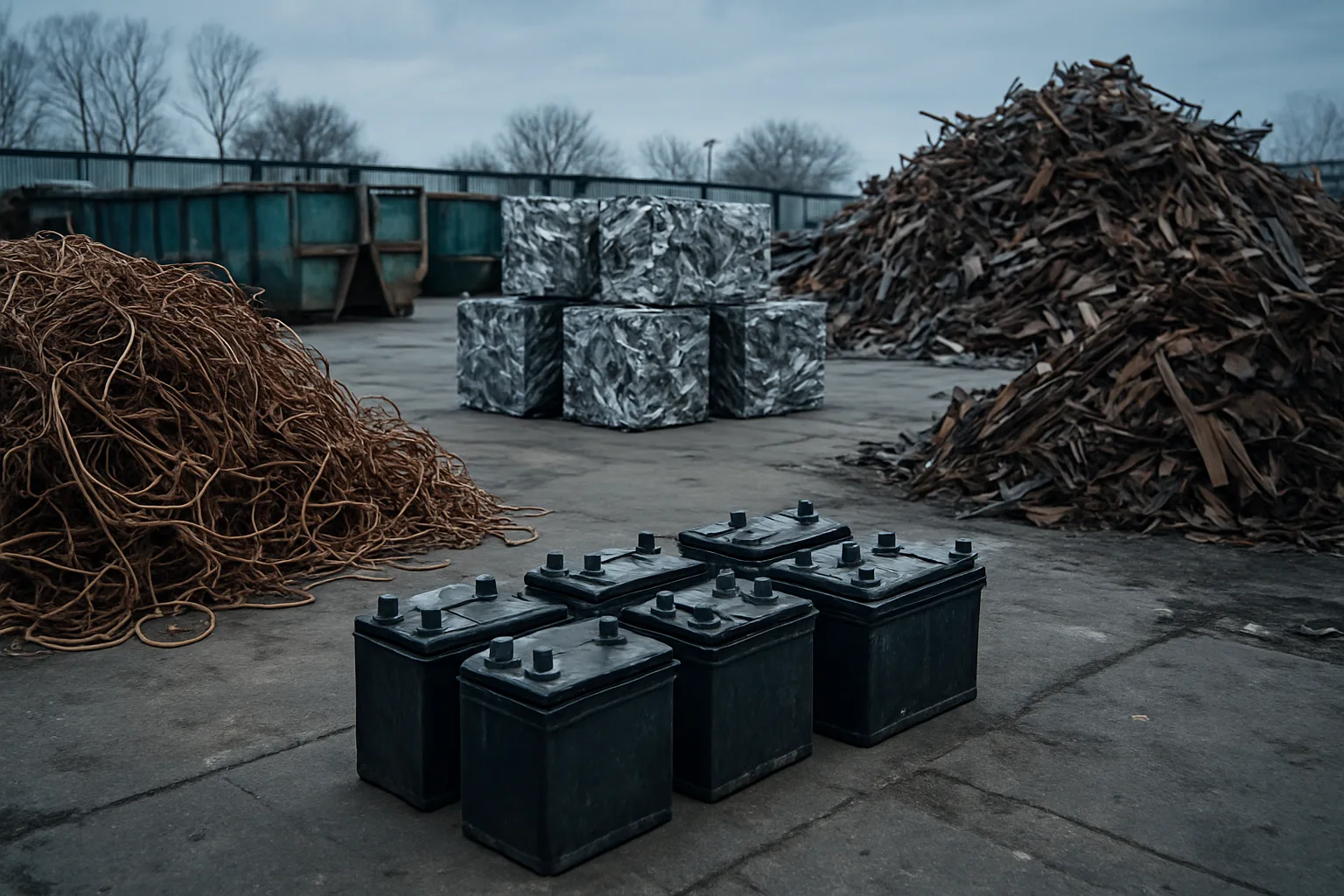
Most people toss old car batteries in a corner of the garage and forget about them. That's a mistake. Lead-acid batteries are one of the most consistently recyclable materials in the scrap world — and in 2026, lead scrap still commands real money at the right yard. If you're sitting on a pile of dead batteries in St. Catharines, you're sitting on cash you haven't collected yet.
This guide breaks down how lead-acid battery recycling works, what drives the price of lead scrap, and how to make sure you're getting the best scrap metal prices St. Catharines has to offer — not just whatever the first yard tells you.
What's Inside a Lead-Acid Battery — and Why It Has Value
A standard lead-acid battery — the kind that starts your car, powers your forklift, or backs up your UPS system — is roughly 60–70% lead by weight. That lead sits in the plates, the grid structure, and the oxide paste inside. It's recoverable, it's valuable, and secondary lead smelters across North America actively want it.
Here's what you're dealing with by weight in a typical 12-volt automotive battery:
- Lead plates and grids: The bulk of the weight and the bulk of the value
- Lead oxide paste: Recoverable through smelting — still counts toward your payout
- Polypropylene casing: The plastic shell is recyclable and sometimes factored into price
- Sulfuric acid electrolyte: Neutralized and processed separately — not your problem to handle
Scrap yards and battery recyclers price whole batteries as a unit — usually per kilogram or per battery, depending on volume and type. Forklift batteries, for example, weigh significantly more than automotive units and are priced accordingly. The lead content is what drives the number. Watch the lead price on the London Metal Exchange (LME) — it's the benchmark that moves your payout.
Lead Scrap Prices in Canada: What Moves the Market in 2026
Lead prices in Canada track global markets closely. The LME spot price for lead sets the tone, and Canadian yards apply their own margin and logistics costs on top. In Ontario, pricing also reflects transportation to smelters — lead is dense and expensive to move, so local buyers matter more than you might think.
Several factors drive what you'll actually get paid per kilogram for whole batteries or broken lead scrap:
- LME lead price: The global benchmark — check it weekly if you're moving volume
- Battery condition: Whole, unbroken batteries typically command better pricing than cracked or drained units
- Volume: Ten batteries get you a spot price. A truckload gets you a negotiated rate
- Yard competition: One quote is just a number. Two or three quotes reveal the market
- Type of battery: Industrial/forklift batteries, sealed AGM units, and marine batteries may be priced differently than standard automotive cores
The mistake most sellers make — especially smaller yards and shops in Ontario — is calling one buyer and taking the first number. That number might be fair. It might not be. You have no way of knowing without comparison. That's exactly where platforms like SMASH Recycling — where verified buyers bid on your metal change the equation. More buyers, actual competition, better price discovery. That's how the market is supposed to work.
How to Prepare Lead-Acid Batteries for Scrap — Best Practices for St. Catharines Sellers
Getting the best scrap metal prices in St. Catharines isn't just about finding the right buyer. It's about showing up with a load that's ready to move. Proper handling and documentation protect your payout and your liability.
Storage and transport tips:
- Keep batteries upright to prevent acid leakage — a cracked case can get you rejected or docked in price
- Do not mix battery types without telling your buyer — automotive, industrial, and sealed AGM may be priced separately
- Stack on pallets if you're moving volume — most commercial buyers prefer palletized loads
- Transport in a ventilated vehicle — lead-acid batteries off-gas hydrogen, especially older or damaged units
- Know your count before you arrive — per-battery pricing requires an accurate tally
Documentation for commercial sellers:
- A packing list with battery count and type goes a long way with commercial buyers
- Some buyers require a bill of lading (BOL) for larger loads — confirm before you haul
- Photo documentation of your load before it leaves the yard protects you in any weight or count dispute
If you're a shop owner, auto recycler, or fleet operator in the St. Catharines area regularly accumulating batteries, you should be treating this as a line item — not an afterthought. Lead scrap is consistent, predictable, and worth organizing around. To explore St. Catharines scrap metal services available to you, check what's active in your area before your next haul.
B2B Scrap Metal Marketplace Advantage: Why Competitive Bidding Beats Phone Calls
The old way of selling scrap lead goes like this: call the yard, get a number, load the truck, take the cheque. Simple — and consistently leaving money on the table. When one buyer sets the price with no competition, that price reflects their margin first and your return second.
A B2B scrap metal marketplace model flips that. You list your load — battery count, type, condition, location — and vetted buyers compete for it. That's not a theory. That's how commodity markets are supposed to function. Lead scrap is no different from any other material: competition can help reveal the true market price.
SMASH operates on exactly this model. Sellers list inventory with photo documentation and load specs. Buyers — verified, active, accountable — place bids. The seller sees the full picture instead of one yard's offer on a given Tuesday morning. For shops and yards in Ontario moving regular volumes of battery scrap, this isn't just convenient. It's a smarter way to run the business.
You can find the best Canadian scrap metal prices today without cold-calling every buyer in the region. The infrastructure exists. Use it.
Lead Recycling Regulations in Ontario — What Commercial Sellers Need to Know in 2026
Lead-acid batteries are classified as hazardous waste in Ontario, which means there are rules around how you store, transport, and transfer them — especially if you're a commercial generator. This isn't meant to scare you off. Millions of batteries move through Ontario's recycling chain every year without incident. But you need to know the basics.
Key regulatory considerations for Ontario sellers in 2026:
- Batteries cannot be landfilled in Ontario — they must go to an approved recycler or registered collector
- Commercial generators (shops, fleets, industrial facilities) may have specific storage and manifest obligations under Ontario's hazardous waste regulations — confirm with your buyer or a licensed waste hauler
- Stewardship programs like Call2Recycle operate collection networks across Ontario, including the St. Catharines area — useful for small volumes that don't justify a commercial haul
- For large commercial loads, confirm your buyer holds the appropriate approvals to receive and process lead-acid batteries
Working through a platform that connects you with vetted buyers reduces this risk. You know who you're selling to, what their certifications are, and where the material goes. That paper trail matters if you're ever asked about your disposal practices. To check current Canadian scrap metal prices and understand what your load is worth before you move it, do that research first — then pick your buyer.
How to Get the Best Scrap Metal Prices for Lead in Canada — The Practical Checklist
Whether you're a solo car flipper in St. Catharines with a dozen dead batteries or an Ontario auto recycler moving pallets every month, the approach is the same. Know your material, document it, and let buyers compete for it.
Before you sell, run through this:
- Count and categorize your batteries — automotive vs. industrial vs. sealed AGM
- Check the LME lead price — understand the benchmark before any conversation
- Photograph your load — weight, count, condition on record
- Get at least two quotes — one quote is a guess, two is a data point
- Ask about GST/HST handling — commercial transactions have tax implications, confirm upfront
- Confirm the buyer is a registered receiver for lead-acid batteries in Ontario
- Consider listing on a marketplace like SMASH — vetted buyers, competitive bids, no subscription fees
For those wanting to stay on top of the market, read the latest Canadian scrap metal pricing guides to track what lead, copper, and other non-ferrous metals are doing across the country. Staying informed is the easiest edge you have.
The scrap market rewards sellers who show up prepared. Lead-acid batteries are predictable, recoverable, and in steady demand. The only variable is whether you're getting the price the market actually offers — or just the price one buyer decided to give you. Those are not always the same number.
Get the best Canadian scrap metal prices by starting with the right tools — check rates at best-scrap-prices.ca and put real competition behind your next load.
Frequently Asked Questions
Q: How much is a scrap lead-acid battery worth in St. Catharines?
Prices vary with the LME lead benchmark and your local buyer's margin — always get more than one quote. Volume matters too: a single battery gets a spot price, while a palletized commercial load typically commands a negotiated rate. Check current market rates before you haul.
Q: Can I scrap lead-acid batteries anywhere in Ontario, or do I need a specialized recycler?
You need a buyer who is registered to receive lead-acid batteries — they're classified as hazardous waste in Ontario. Most established scrap yards and battery recyclers hold the appropriate approvals, but always confirm before you drop a load. Using a vetted marketplace like SMASH removes the guesswork about who you're dealing with.
Q: What's the best scrap metal prices St. Catharines has to offer for lead batteries — how do I find out?
The fastest way is to check a price aggregator like best-scrap-prices.ca and then get live quotes from multiple buyers. Platforms like SMASH let vetted buyers bid on your load directly, which gives you real market comparison instead of a single yard's number.
Q: Do I need paperwork to sell scrap lead-acid batteries commercially in Ontario?
For commercial volumes, yes. A packing list and bill of lading are standard. Depending on your status as a waste generator, there may be additional manifest or tracking requirements under Ontario's hazardous waste regulations — confirm with your buyer or a licensed hauler before your first commercial load.
Q: Is there a difference in price between automotive batteries and forklift or industrial batteries?
Yes. Industrial and forklift batteries are significantly heavier — some weigh hundreds of kilograms — and are often priced separately due to their size and the logistics of moving them. Always specify battery type when getting quotes, and don't assume the per-kilogram rate for automotive batteries applies to your industrial units.
Follow SMASH on LinkedIn for scrap metal market updates, pricing trends, and industry insights: linkedin.com/company/scrap-metal-auction-sales-hub.