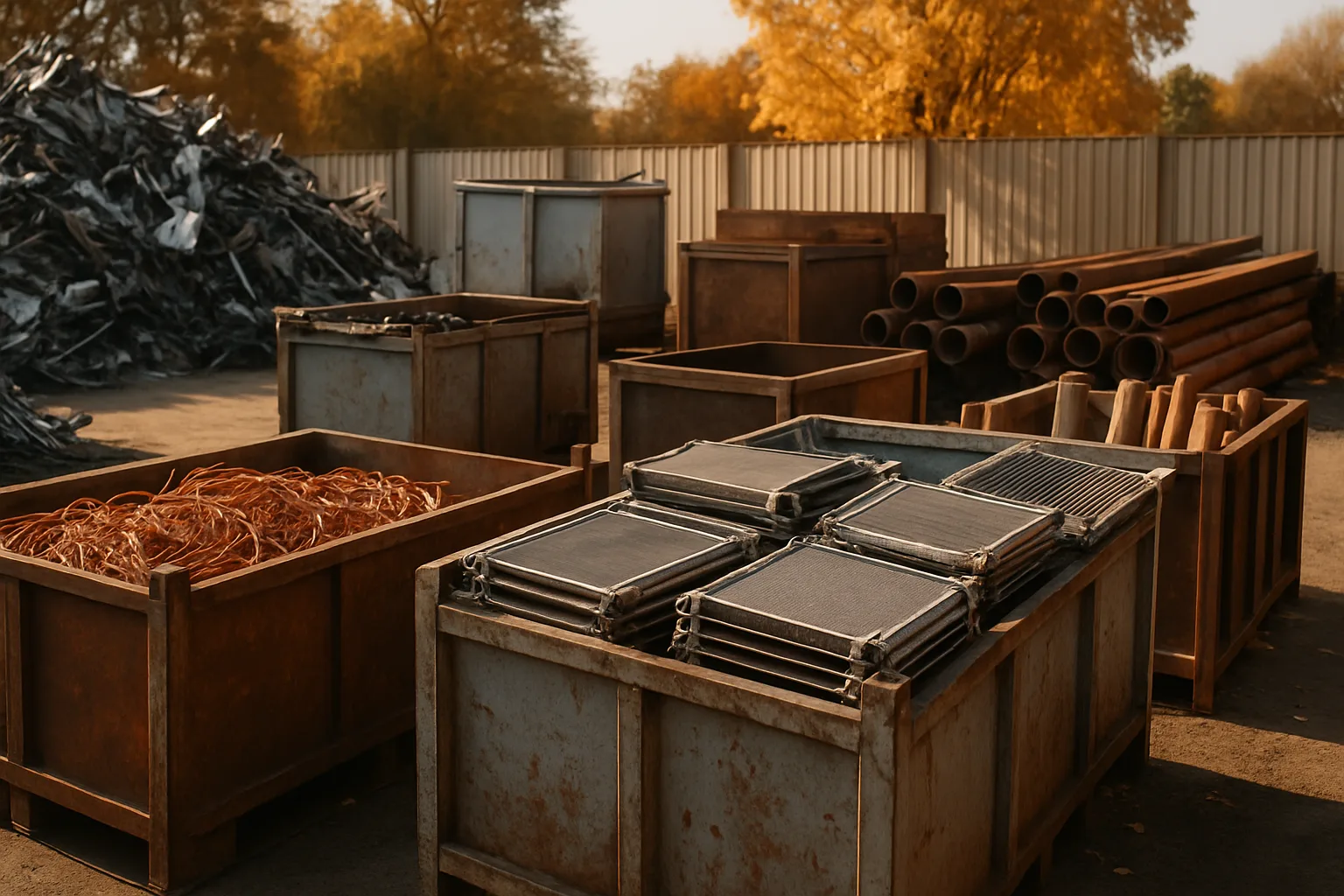
Your alternator dies. Your radiator cracks. You pull the parts, toss them in a bin — and walk away thinking they're worth nothing. They're not. Those two components alone can carry significant recoverable copper, aluminum, and steel. The copper scrap price today makes both worth stripping properly before you hand them off to any buyer.
This matters whether you run a recycling yard, strip cars on the weekend, or you're clearing out a shop in Yorkton scrap metal services and want to know what you actually have. Understanding how these parts break down — and what metal is inside — puts you in a stronger position when it's time to sell.
Why Auto Parts Like Radiators and Alternators Are Worth More Than Scrap Steel
Most people assume old auto parts are just dirty steel. They're wrong. Radiators and alternators are composite components. They carry multiple metals — and some of those metals pay significantly more per pound than basic ferrous scrap.
Radiators, depending on the vehicle, are built from copper and brass, aluminum, or a combination of both. Older vehicles tend to have copper/brass radiators. Newer ones are predominantly aluminum with plastic tanks. Both materials sit well above the steel scrap price on any given day. Alternators are a different animal — they contain a copper winding (the stator), a steel casing, aluminum end frames, and a copper rotor winding. Strip one down, and you're looking at a handful of different scrap categories, not one.
- Copper/brass radiators: Typically found in pre-2000 vehicles. Higher value per pound due to copper content.
- Aluminum radiators: Common in modern vehicles. Lower per-pound value than copper but still well above steel.
- Alternators (whole): Yards will buy these as-is, but bare copper windings pay more if you strip them.
- Stator copper: The wound copper wire inside an alternator is clean copper — one of the higher-value scrap grades.
If you're selling whole, unstripped units, you're leaving money on the table. Yards discount for the labor they'll spend processing them. Know what's inside before you price anything.
How the Recycling Process Actually Works — From Your Parts Bin to the Mill
Scrap metal recycling isn't a mystery. It's a supply chain. Your parts go through a series of steps before that metal ends up back in manufacturing. Here's what actually happens.
First, the yard receives and sorts your material. A radiator goes to non-ferrous. An alternator might get weighed whole or broken apart depending on the yard's setup. Some yards have shredders, hammer mills, and eddy current separators that can separate aluminum from copper automatically. Smaller operations do it by hand. Either way, the goal is the same — isolate each metal type so it can be sold clean to a smelter or mill.
- Receiving and inspection: Your material is weighed, graded, and priced based on current market rates and condition.
- Sorting: Ferrous and non-ferrous are separated immediately. Radiators, alternators, and other non-ferrous parts go to a separate staging area.
- Processing: Radiators may be drained of fluid and flattened. Alternators are cracked open or shredded. Copper windings are separated from steel and aluminum housings.
- Grading: Clean copper, bare bright wire, #1 copper, #2 copper, aluminum radiators, and other grades are sorted and baled or bundled.
- Sale to mills: Processed metal ships to smelters and secondary mills — often across North America. The price you receive on day one reflects what those mills are paying that week.
That last point is the one most sellers overlook. The price your yard offers you is downstream from the global commodity market. When the copper scrap price today moves, the price at the gate moves with it — sometimes the same day.
What Copper Scrap Price Today Means for Your Radiators and Alternators
Copper drives a lot of the value conversation in auto parts recycling. It's present in radiators, alternators, starters, wiring harnesses, and AC compressors. When copper is running high, stripping those components is worth the extra hour of labor. When it drops, the math changes.
The key is knowing which grade your material falls into. Not all copper pays the same. Bare bright wire (clean, uncoated, 16 gauge or better) is the top grade. Stripped alternator stator windings typically land in the #1 copper or #2 copper category depending on insulation and contamination. A full copper/brass radiator is its own grade entirely — bought by weight and assessed on copper-to-brass ratio.
Sellers across scrap metal recycling Canada markets — from Yorkton out to the Ontario yards — deal with the same pricing structure. The grades are consistent. What varies is the local buyer's margin and how many buyers are actually competing for your material. That spread between what one buyer offers and what another will pay is where sellers lose real money, and it's exactly the problem platforms like find the best price for your scrap in Canada are built to solve.
If you're hauling alternators and radiators in Saskatchewan and only calling one yard, you don't know your price. You know one buyer's price.
Scrap Metal Recycling in Yorkton and Across Saskatchewan — What to Expect
Saskatchewan has a strong industrial and agricultural base. That means yards in the province handle a wide range of ferrous and non-ferrous material — from farm equipment to automotive parts to commercial vehicles. Sellers in and around Yorkton often deal with a mix of both, and knowing how to separate and present your material matters.
For auto parts specifically, most yards in the region will buy radiators and alternators whole. But don't assume they'll break it down for free and pass the savings to you. If you bring in a pile of mixed alternators, you'll get a mixed-unit price. If you bring in stripped copper stator windings and separate aluminum casings, you'll get two separate prices — and the math almost always favors the seller who did the work.
A few practical points for Saskatchewan sellers:
- Drain fluids before hauling. Coolant in radiators can get your load rejected or heavily discounted.
- Separate copper/brass radiators from aluminum radiators. They're priced differently and worth sorting.
- Strip alternator casings if you have volume. The copper inside pays more per pound than whole-unit pricing.
- Document what you bring in. Photos, weights, and part counts give you a baseline when comparing buyer offers.
- Check the copper scrap price today before you haul. Timing your sale to a strong copper market can meaningfully change your return.
For sellers comparing best scrap metal prices Winnipeg today or looking at scrap metal prices Ontario, the grades are the same — but regional demand and buyer competition vary. More buyers means better price discovery. That's not opinion, it's how commodity markets work.
How SMASH Helps You Stop Guessing and Start Selling at Market
Here's the real problem with the traditional scrap sale: you call one buyer, get one number, and either take it or don't. There's no visibility into what the market is actually paying. No competition. No leverage.
SMASH fixes that by putting your material in front of vetted buyers who compete for it. Whether you're moving a load of copper/brass radiators, a drum of stripped alternator stators, or a mixed non-ferrous lot from a vehicle teardown — the auction format means the price isn't set by one buyer's margin. It's set by the market.
The platform handles photo documentation, inventory tracking, and auto-invoicing. Buyers know exactly what they're bidding on. That documentation — photos, weights, grade descriptions — gives buyers more confidence, which tends to produce better results for sellers. You can find the best Canadian scrap metal prices today by creating real competition around your material instead of accepting the first number you're offered.
If you're regularly moving auto parts out of Yorkton or anywhere across Saskatchewan, getting multiple buyers involved isn't a hassle — it's just smarter selling. And if you want to understand how the broader market is moving before you list anything, read the latest Canadian scrap metal pricing guides to stay current on copper, aluminum, and steel trends.
Getting Paid What Your Material Is Worth — The Bottom Line
Radiators and alternators aren't junk. They're non-ferrous metal with real market value tied directly to live commodity pricing. The seller who understands that — who separates grades, documents loads, and creates buyer competition — consistently outperforms the one who loads everything into one bin and accepts the first offer.
The copper scrap price today is one data point. How many buyers are competing for your material is another. Both matter. If you're only tracking one, you're working with incomplete information.
Whether you're a yard operator, a shop clearing parts inventory, or an independent seller in Saskatchewan — the tools exist to sell smarter. Check current Canadian scrap metal prices and see what your material is worth before your next haul. That's not extra work. That's just knowing your numbers.
Frequently Asked Questions
Q: What is the copper scrap price today in Canada for radiators and alternators?
Copper scrap prices fluctuate daily based on global commodity markets. The grade of copper in your material — bare bright, #1, #2, or copper/brass — determines the per-pound price. Check live rates at best-scrap-prices.ca before hauling, and compare at least two buyers before committing to a sale.
Q: Is it worth stripping alternators before selling them as scrap metal in Yorkton?
In most cases, yes — especially if you have volume. Whole alternators sell at a blended unit rate that accounts for the buyer's processing labor. Stripped copper stator windings and separated aluminum housings sell at their individual grades, which typically produces a better total return. Whether it's worth your time depends on current copper pricing and how many units you're processing.
Q: Are copper/brass radiators worth more than aluminum radiators for scrap metal recycling in Canada?
Generally, yes. Copper and brass both carry a higher per-pound value than aluminum, so copper/brass radiators typically pay more by weight. However, aluminum radiators still outperform basic steel scrap. Separate the two types before you arrive at the yard — mixed loads often get priced at the lower grade.
Q: How do I find the best scrap metal prices in Saskatchewan for auto parts?
Start by knowing your grades — separate copper, aluminum, and steel components before you haul. Then get more than one buyer's price. Platforms like SMASH create competitive auctions for scrap loads, which helps reveal the actual market rate rather than one yard's offer. Local Saskatchewan sellers can also use best-scrap-prices.ca to track current pricing before they sell.
Q: Do scrap metal prices in Yorkton differ from prices in Winnipeg or Ontario?
The underlying commodity grades are consistent across Canada, but local buyer margins, regional demand, and transportation costs can create price differences between markets. Comparing best scrap metal prices Winnipeg today against Ontario or Saskatchewan rates is useful context — but the most important factor is always how many buyers are competing for your specific material.
Disclaimer: Scrap metal prices fluctuate daily based on global commodity markets. All pricing information is general in nature. Always verify current rates with buyers before selling.
Stay current on the market — follow SMASH on LinkedIn for scrap metal market insights and industry updates.