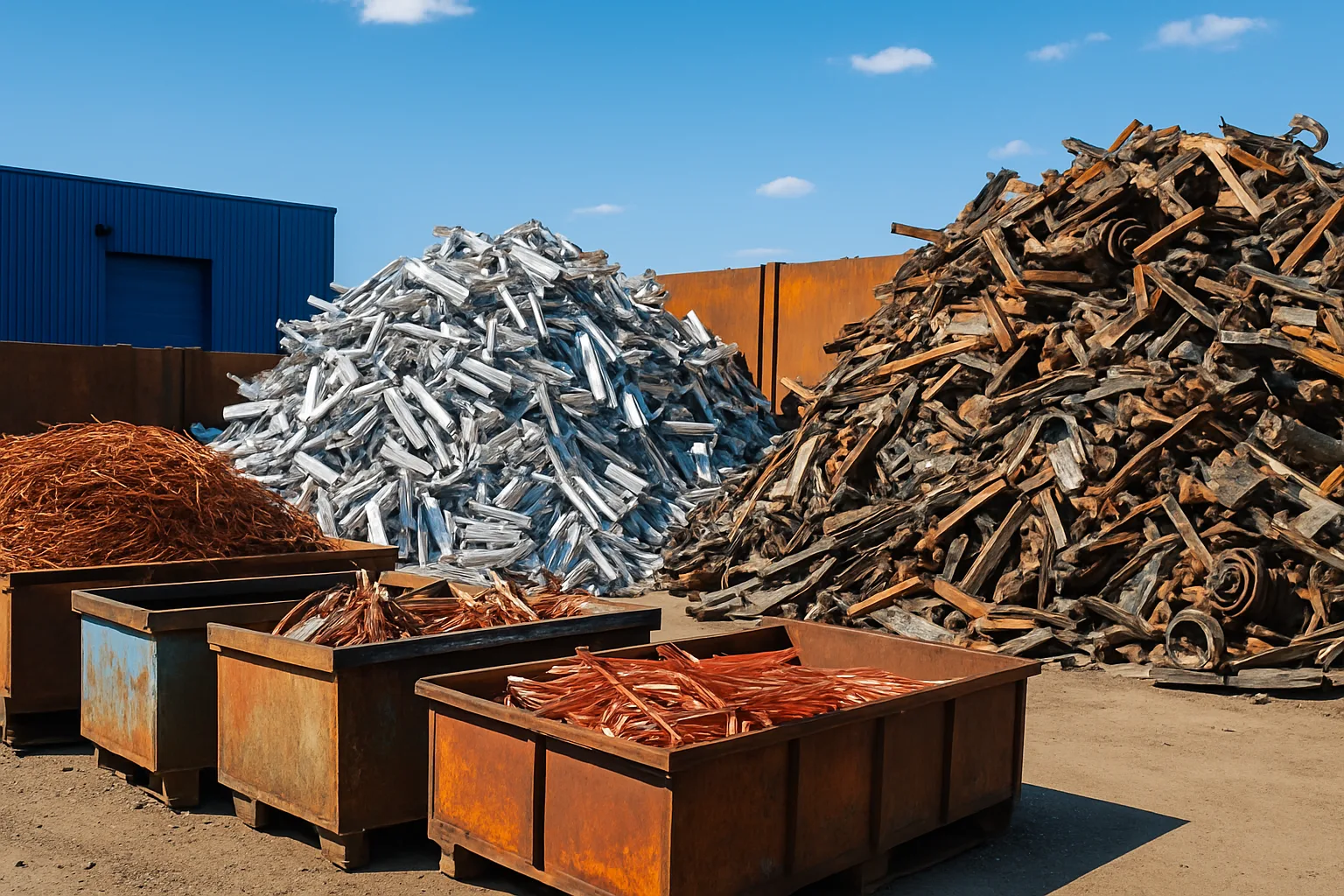
If you're hauling scrap in Oshawa and still calling one yard to ask what they're paying today, you're leaving money on the table. The steel scrap price today moves with global demand, and your local buyer knows exactly what they're paying — but not necessarily what the market will actually bear. That gap? That's your problem to solve.
This guide breaks down how to find the best scrap metal buyer near you, what actually drives prices for steel, copper, aluminum, and other materials, and why more Oshawa sellers are ditching the single-call method for something that actually creates competition.
Why the Steel Scrap Price Today Isn't What Your Local Yard Posted Last Week
Scrap metal prices aren't static. The steel scrap price today is tied to mill demand, shipping costs, export markets, and what's happening with finished steel production across North America. A mill in Hamilton ramping up production this week can push regional prices up. A slowdown in U.S. manufacturing can drag them back down before Friday.
Most posted prices at scrap yards in Ontario are updated weekly — sometimes less often. If you're relying on a sign in a yard window or a voice on the phone to tell you market value, you're working with yesterday's data. Worse, you're working with data filtered through someone whose job it is to buy low.
To actually find the best Canadian scrap metal prices today, you need more than one data point. You need to know what multiple buyers in your area are willing to pay, right now, for your specific material and load size.
What Scrap Metal Prices Today Are Driven By — In Plain Language
Understanding what moves the market helps you time your sales better and negotiate from a position of knowledge. Here's what's actually driving scrap metal prices today across the board:
- Steel and ferrous metals: Driven largely by domestic mill demand and export volume. Heavy melt, shredded steel, and plate and structural all price differently. Know your grade before you call anyone.
- Copper: One of the most globally traded commodities. Copper scrap prices in Canada track closely with London Metal Exchange (LME) movements. Even small shifts — a few cents per pound — matter when you're moving weight.
- Aluminum: Demand from the auto sector, beverage manufacturing, and construction keeps aluminum prices relatively active. Cast aluminum and extrusion aluminum are priced differently, so sort before you sell.
- Catalytic converters: Priced based on platinum group metal (PGM) content — platinum, palladium, and rhodium. Prices vary wildly by make, model, and converter type. A direct-fit cat from a diesel truck pays differently than an aftermarket unit.
- Non-ferrous odds and ends: Brass, stainless, lead, and mixed electronics all have their own market dynamics. Don't lump them together at the scale — sort for maximum return.
The point isn't to become a commodities trader. The point is to understand that your material has a real market value — and it's your job to get as close to that value as possible when you sell.
How to Find the Best Scrap Buyer Near You in Oshawa
Oshawa has a solid industrial history and an active scrap market, sitting in the heart of Ontario's manufacturing corridor. There are buyers in the region, but proximity alone doesn't make one better than another. Here's how to actually find the best buyer for your load:
1. Get more than one price
Call three yards minimum before you load the truck. Give each one the same information: material type, approximate weight, and condition. You'll often see a spread — sometimes significant. That spread is your negotiating room.
2. Separate your material before you go
Sorted loads pay more. If you show up with a mixed pile, the yard grades the whole thing down to the lowest-value material in it. Clean copper with some aluminum mixed in becomes mixed scrap. That's their math, not yours.
3. Know your volume and weight
Buyers price differently based on load size. A full truckload of #1 heavy melt gets treated differently than a half-ton of the same material. Know your approximate tonnage before you start making calls.
4. Document your load
Photo documentation of your material — especially for high-value items like catalytic converters, copper wire, or cores — creates accountability. If there's a dispute about grade at the scale, you have a record. This matters more than most sellers realize.
5. Use platforms that bring buyers to you
This is the shift that changes the game. Instead of you calling one buyer and accepting their number, platforms like SMASH let you list your inventory and have vetted buyers compete for your load. That's not one data point — that's a market.
For Oshawa scrap metal services, the difference between a single quote and a competitive bid can be material — especially on loads with significant non-ferrous content.
Scrap Metal Inventory Management: Why It Matters More Than You Think
Most small and mid-sized scrap operations in Ontario treat inventory as an afterthought. Material comes in, it piles up, it goes out. The problem is that loose inventory documentation costs you money in two ways: you lose track of what you have, and buyers have no basis to trust your grade descriptions.
Good scrap metal inventory management means knowing exactly what's in your yard — by material type, grade, approximate weight, and condition. It means having photos. It means being able to put together a packing list or BOL that a buyer can review before they commit to a price.
SMASH's platform includes an inventory tool built for this. You can document loads with photos, add serial tracking for high-value items like catalytic converters, and generate the documentation buyers need to bid confidently. Documented inventory gives buyers more confidence — and that confidence shows up in their bids.
If you're running a yard or an auto dismantling operation and you're not tracking inventory this way, you're selling blind. The buyer on the other end of the phone isn't.
Why the SMASH Scrap Metal Auction Model Works for Canadian Sellers
The old model is simple: one buyer, one phone call, take it or leave it. The buyer has all the information. You have a deadline and a pile of metal.
The SMASH scrap metal auction model flips that. You list your load with documentation — photos, weights, material grades — and vetted buyers across North America compete for it. Competition can help reveal the market. More buyers means better price discovery. You're not guessing anymore.
There's no subscription fee to list on SMASH. They only win when you win. That alignment matters — it means the platform has a real incentive to drive competitive bids, not just volume.
Auto-invoicing, VIN lookup for vehicle loads, serial tracking for cats and cores — these are built into the platform because serious scrap operations need serious tools. Not spreadsheets. Not sticky notes.
You can get started at smashrecycling.ca or reach the team directly at jeff@smashscrap.com if you're ready to list a load or want to talk through how the auction process works for your operation.
Common Mistakes Oshawa Scrap Sellers Make — And How to Avoid Them
These aren't rare edge cases. These are patterns that cost sellers real money every month:
- Accepting the first price offered. The first quote isn't the market — it's one buyer's opening position. Always get multiple quotes.
- Selling mixed material without sorting. Sorting adds work but pays for itself fast. Even basic separation — ferrous from non-ferrous, clean copper from insulated — changes your payout significantly.
- Not tracking catalytic converters properly. Cats are high-value and high-theft-risk. Serial numbers and photos protect you legally and help you negotiate price based on actual converter specs, not a buyer's generic estimate.
- Waiting too long to sell. If copper or steel prices are trending down and you're sitting on a pile waiting for a better day, you may be playing the wrong game. Know your cost to hold versus selling at today's price.
- Choosing a yard based on location alone. A yard that's ten minutes closer but pays less per hundredweight can cost you more than the fuel you saved. Do the math before you load the truck.
To stay current on what's moving in the Canadian scrap market, read the latest Canadian scrap metal pricing guides — they break down price trends by material and region so you're not flying blind.
And when you're ready to benchmark your own loads against the broader market, check current Canadian scrap metal prices to see where rates sit today across material categories.
The scrap market in Ontario rewards sellers who show up prepared. Know your grades, document your loads, and don't settle for a single quote when the tools exist to do better. Whether you're running a full yard in Oshawa or clearing out a shop, the difference between a good sale and a great one usually comes down to how much competition you created for your material.
Get the best Canadian scrap metal prices for your next load — best-scrap-prices.ca is the place to start.
Frequently Asked Questions
Q: What is the steel scrap price today in Oshawa?
Steel scrap prices fluctuate based on mill demand, export markets, and regional supply. Posted prices at Ontario yards change regularly — sometimes weekly. For the most current rates, check with multiple buyers or use a platform like SMASH to get competitive bids on your specific load. Disclaimer: Prices fluctuate — always verify current rates before selling.
Q: How do I find the best scrap metal buyer near me in Oshawa?
Start by calling at least three buyers with the same load details — material type, grade, and approximate weight. Better yet, list your load on a competitive auction platform like SMASH where vetted buyers compete for your material. More competition means better price discovery without the legwork of calling every yard in the region.
Q: Does it matter how I sort my scrap before selling?
Yes — significantly. Sorted loads consistently pay more than mixed loads because buyers can grade and bid with confidence. At a minimum, separate ferrous from non-ferrous, and keep clean copper, aluminum, and other high-value materials out of the general pile. The time it takes to sort usually pays back several times over at the scale.
Q: What affects catalytic converter prices in Canada?
Catalytic converter prices are driven by the platinum group metal (PGM) content inside — platinum, palladium, and rhodium. Prices vary by vehicle make, model, and converter type. Accurate documentation with serial numbers and photos helps you get a fair assessment rather than a generic low-ball estimate. SMASH's platform includes serial tracking specifically for this.
Q: Is there a fee to list scrap metal on SMASH?
SMASH doesn't charge a subscription fee to sellers. Their model is transaction-based — they only earn when a sale happens, which aligns their incentives with yours. You can learn more or list your first load at smashrecycling.ca or contact jeff@smashscrap.com directly.
Follow SMASH on LinkedIn for ongoing scrap metal market insights, pricing trends, and platform updates: linkedin.com/company/scrap-metal-auction-sales-hub.