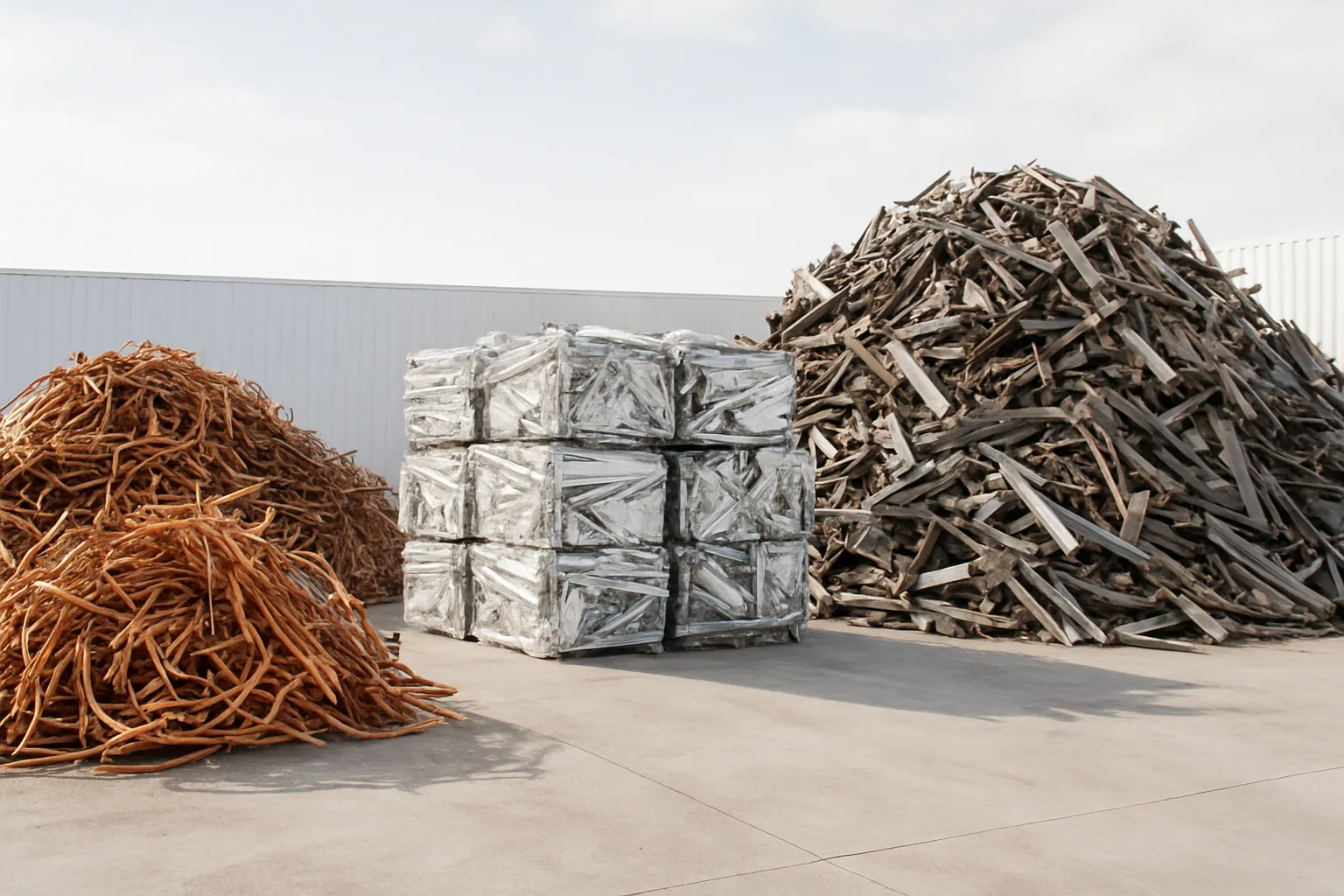
Not All Aluminum Is Worth the Same — Here's What's Costing You Money
Most scrap sellers leave money on the table before they even make a phone call. They haul in a mixed load of aluminum, accept whatever the yard offers, and walk away thinking they got a fair deal. Sometimes they did. Often, they didn't. The difference between a good payout and a great one usually comes down to one thing: knowing your grades.
Aluminum is one of the most actively traded metals in the scrap market. It's everywhere — window frames, engine blocks, wire, wheels, extrusions, cans, castings. But a B2B scrap metal marketplace buyer doesn't see "aluminum." They see 6061 extrusion, dirty cast, clean sheet, and mixed clip. Each one prices differently. Sometimes significantly differently. If you're not sorting and identifying before you sell, you're letting someone else profit from your ignorance.
This guide breaks down the major aluminum grades, what drives their value, and how sellers — especially those operating in Gatineau and across Quebec — can position their loads to attract real competition and better price discovery.
Disclaimer: Metal prices fluctuate daily based on commodity markets, regional demand, and load quality. Always check current Canadian scrap metal prices before committing to a sale.
The Aluminum Grades That Actually Move Markets
The scrap aluminum market isn't flat. It has layers, and knowing where your material sits determines how much you walk away with. Buyers on a scrap metal auction platform price based on chemistry, contamination, and consistency. Here's how the major grades break down:
- 1100 / Clean Sheet Aluminum: High-purity, low-contamination flat sheet. One of the cleaner grades to process. Commands a strong price when free of paint and coatings.
- Extrusion / 6061 / 6063: Common in window frames, door frames, structural profiles. Buyers want it clean — no steel hardware, no rubber gaskets. Separated and clean extrusion prices well on any competitive platform.
- Cast Aluminum: Engine blocks, transmission cases, manifolds. Heavier, denser, lower aluminum content than wrought alloys. Priced below extrusion but still a consistent seller. "Dirty cast" with iron inclusions drops further.
- Aluminum Wire: Insulated wire is priced by its aluminum content after stripping. Bare aluminum wire prices much closer to clean grades. Don't bundle insulated and bare together.
- MLC / Mixed Low Copper Aluminum: A catch-all grade that accepts mixed aluminum with minimal copper content. Convenient but lower-priced. Buyers discount it for the sorting they'll need to do.
- Aluminum Radiators: A specialty item. Clean aluminum/plastic radiators price differently than aluminum/copper units. Know which you have before you sell.
- UBC (Used Beverage Cans): A high-volume, low-complexity grade. Tightly priced based on LME aluminum. Baled and clean UBC moves fast on competitive platforms.
- Clip / Aluminum Turnings: Machined aluminum chips and turnings. Subject to heavy moisture and oil discounts. Dry, clean turnings from a controlled shop environment price better than mixed wet material.
Every one of these grades has a buyer somewhere. The question is whether you're presenting your material in a way that attracts the right one — or whether you're lumping it all together and letting the yard sort it out at your expense.
Why Sorting Before You Sell Pays Off — Every Time
Here's the math that most sellers skip. Say you have a mixed load that includes clean extrusion, dirty cast, and some aluminum wire. A yard buying that as a mixed load will price the whole thing to the lowest common denominator. They absorb the sorting cost. You absorb the price hit.
Separate those three streams and suddenly you have three different loads pricing at three different rates — each closer to what a buyer actually wants to pay for clean material. The labor to sort is almost always worth it at scale. For yards in Gatineau and across Quebec that are moving volume regularly, sorting discipline is the difference between average returns and consistently strong ones.
Documentation matters just as much as physical separation. A buyer on a scrap metal auction platform making a bid remotely needs confidence. They can't walk your yard and eyeball the load. Photos, weights, grade descriptions, and contamination disclosures give them that confidence. When buyers trust what they're buying, they bid more aggressively. That's how competition reveals real market value — not guesswork, not a single phone call.
What's Driving Aluminium Scrap Value Today in Canada
Aluminium scrap value today in Canada is influenced by a mix of global and domestic forces. LME aluminum prices set the floor, but regional factors — local demand, processing capacity, freight costs — shape what you actually receive at the point of sale. In 2026, demand from the automotive and construction sectors continues to support aluminum pricing, with lightweight alloys remaining a priority for manufacturers working toward stricter emissions and energy standards.
Quebec's industrial base — smelters, fabricators, and secondary processors — creates consistent local demand for clean aluminum grades. Gatineau, as part of the National Capital Region, sits close to industrial consumers in both Ontario and Quebec, which can work in a seller's favor when buyers are competing for nearby supply. Proximity to the load matters to buyers who are factoring in freight.
Copper scrap price today per kg also indirectly affects aluminum pricing decisions. Sellers with mixed loads containing both metals need to understand that copper-contaminated aluminum (like aluminum/copper radiators or wire bundles) gets discounted on the aluminum side while the copper component may be priced separately. Knowing this prevents you from accidentally blending high-value copper into a low-value aluminum stream. To find the best Canadian scrap metal prices today, you need current rates for both metals — not last week's numbers.
How a B2B Scrap Metal Marketplace Changes the Game for Aluminum Sellers
The traditional scrap selling model goes like this: call your regular buyer, accept their offer, load the truck, done. It's fast. It's familiar. It's also leaving money behind if that buyer knows they're your only call.
A B2B scrap metal marketplace like SMASH flips that dynamic. Instead of one buyer with no pressure to compete, you get multiple vetted buyers looking at the same load. When buyers compete, price discovery actually happens. The market tells you what your material is worth — not just what one buyer felt like offering that day.
SMASH's platform is built for exactly this. You document your load — grade, weight, photos, any relevant specs — and qualified buyers bid. No subscription fees. SMASH only wins when you do. For aluminum sellers moving regular volume in scrap metal recycling Quebec operations, that competitive structure can make a material difference over time. To sell your scrap metal on SMASH Recycling, you can get started without any upfront cost or commitment.
The platform also supports serial tracking, VIN lookup for automotive loads, and photo documentation — tools that reduce buyer uncertainty and support stronger bids. Less uncertainty for the buyer means more willingness to bid at the top of their range.
Practical Steps to Get Top Dollar on Your Next Aluminum Load
If you're selling scrap aluminum — whether it's a truckload of extrusion from a renovation job or a pallet of cast motors from a machine shop — these steps will put you in a stronger position before you sell:
- Identify and separate your grades. At minimum, split clean extrusion from cast from wire from mixed clip. Don't let a yard sort it for you at your cost.
- Clean what you can. Remove steel hardware, plastic inserts, and rubber seals from extrusion. Strip or declare insulation on wire. Degrease turnings where practical. Every pound of contamination you remove is a price increase.
- Weigh and document before you move. Know your weights. Take photos of the load sorted and staged. If you're selling through a platform, this documentation goes directly to buyers and supports their bids.
- Check current market rates. Don't walk into a negotiation blind. Read the latest Canadian scrap metal pricing guides to understand where aluminum is trading before you commit.
- Get more than one offer. Whether you use a competitive auction platform or simply call multiple buyers, never accept the first number as the only number. Competition is the mechanism that surfaces real value.
- Understand the freight equation. Buyers in Gatineau or elsewhere in Quebec are factoring in pickup or delivery costs. Larger, well-sorted loads are more attractive. Consolidating material before sale often beats selling small loads frequently.
None of this is complicated. It's discipline and preparation applied consistently. Sellers who do it right see the results in their payouts.
Sell Smarter — Not Just More
Volume matters in scrap. But how you sell matters just as much as how much you sell. A seller moving 10 tonnes of well-documented, sorted aluminum on a competitive platform consistently outperforms a seller moving 15 tonnes of mixed loads through a single buyer with no leverage.
If you're based in Gatineau or anywhere across Quebec and you're still selling the old way — one call, one offer, no documentation — it's worth asking what you've been leaving behind. SMASH gives you the structure to sell smarter: vetted buyers, competitive bidding, and a platform built for the realities of the scrap business.
The scrap market rewards preparation and competition. If you want to know where aluminum is trading right now and make sure your next load prices where it should, find the best Canadian scrap metal prices today at best-scrap-prices.ca.
Frequently Asked Questions
Q: What is the highest-value aluminum scrap grade I can sell?
Clean extrusion grades like 6061 and 6063 typically price at the top of the aluminum scrap market, followed closely by clean sheet aluminum. The key word is "clean" — free of hardware, coatings, and contamination. Dirty or mixed grades are discounted to account for the processor's sorting and cleaning costs.
Q: How does a B2B scrap metal marketplace work for aluminum sellers?
A B2B scrap metal marketplace connects sellers directly with multiple vetted buyers who compete for your load. You document your material — grade, weight, photos — and buyers submit bids. More competition typically means better price discovery than a single-buyer transaction. Platforms like SMASH operate on a no-subscription model, so there's no cost to list.
Q: Can I sell scrap aluminum in Gatineau through an online platform?
Yes. Online scrap metal platforms like SMASH serve sellers across Canada, including Gatineau and the broader Quebec region. Buyers on the platform factor in freight and regional market conditions when bidding. Well-documented loads with clear grade descriptions attract more competitive bids regardless of location.
Q: How does aluminium scrap value today compare to copper scrap prices?
Copper consistently prices higher per kilogram than aluminum — often by a significant margin — which is why separating the two metals before sale is important. Mixing copper into an aluminum load typically results in a discounted aluminum price rather than a blended rate that reflects copper's value. Always check current rates for both metals before selling mixed loads.
Q: Does sorting aluminum scrap grades actually make a financial difference?
Yes, consistently and meaningfully. Selling a sorted load of clean extrusion versus a mixed aluminum load can result in a noticeably higher price per kilogram for the better-defined material. The effort to separate grades — especially at volume — pays off in stronger per-load returns. Most experienced yard operators treat sorting as a standard part of load preparation, not an optional extra step.
Stay current on aluminum grades, copper prices, and scrap metal market conditions across Canada — follow SMASH on LinkedIn for industry updates and pricing insights.