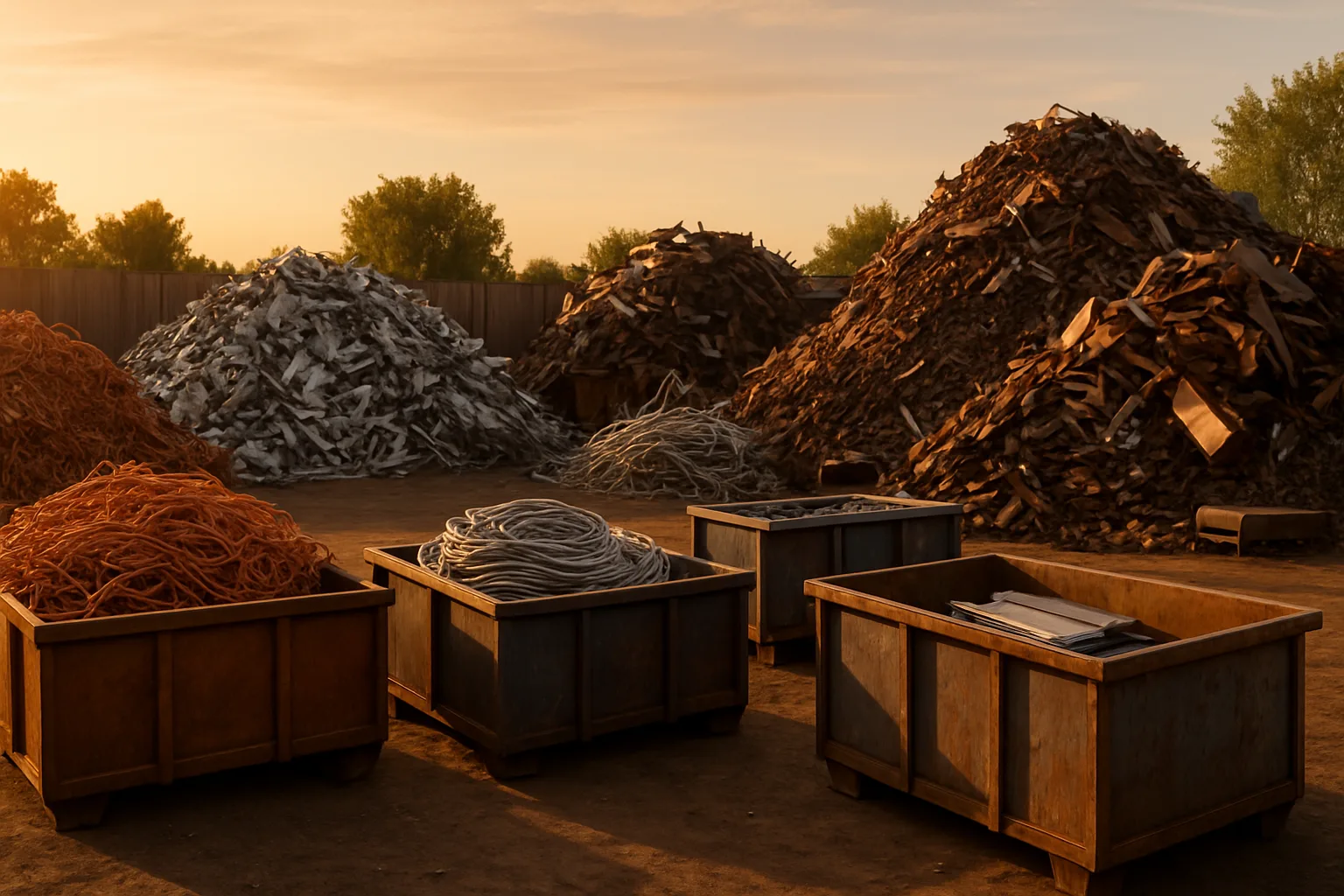
Most yards in Canada are leaving money on the table every single day — not because of bad luck, but because they're selling mixed aluminum loads when sorted grades could earn significantly more.
If you're hauling aluminum scrap and treating it as one generic pile, you're almost certainly underselling. Aluminum is one of the most recycled metals in North America, but the price spread between grades is wide. Knowing the difference between a clean 6061 extrusion and a contaminated cast chunk isn't just trivia — it's real money. Whether you're in Winnipeg, Thunder Bay, or anywhere else dealing with seasonal equipment scrap, understanding aluminum grades is how you stop guessing and start earning.
And while we're talking about price discovery — yes, we'll get to copper scrap price today comparisons too, because aluminum and copper are often sorted and sold together, and understanding both markets gives you an edge.
Why Aluminum Grades Matter More Than Most Sellers Realize
Aluminum isn't one metal — it's a family of alloys, and buyers price them differently. A smelter paying top dollar for clean 6063 extrusion will discount the same load 20–30% if it arrives mixed with cast aluminum, painted sheet, or attached hardware. That discount comes straight out of your pocket.
The core principle: the cleaner and more consistently graded your load, the less work a smelter has to do, and the more they'll pay for it. Contamination — whether it's steel bolts, plastic trim, or mixed alloy types — forces processors to either downgrade the lot or spend time and money sorting it themselves. They pass that cost back to you in the form of a lower offer.
Here's a quick breakdown of the main aluminum grades you'll encounter in a North American scrap yard:
- Clean aluminum extrusion (6063): Window frames, door frames, architectural profiles. One of the highest-paying aluminum grades when free of paint and inserts.
- Old sheet aluminum (Zorba/Twitch): Flat sheet, gutters, siding. Mid-tier pricing. Deductions apply for painted or coated material.
- Cast aluminum: Engine blocks, transmission cases, wheels. Priced lower than extrusion due to alloy composition and smelting cost.
- Aluminum radiators: Clean aluminum-only radiators pay well. Steel-insert or copper-brass radiators are priced differently — keep them separated.
- Insulated aluminum wire: Priced by estimated recovery after stripping. Full recovery price goes to bare wire only.
- Painted or coated aluminum: Lower-tier. Paint and coatings reduce recovery yield.
- MLC (Mixed Low Copper): A catch-all for mixed aluminum that doesn't fit cleaner grades. Priced conservatively — you want to avoid having loads land here.
The difference between getting top dollar and settling for scrap rate often comes down to one thing: did you sort before you sold? Find the best Canadian scrap metal prices today and compare what different grades are actually worth before you load the truck.
How Scrap Metal Recycling in Winnipeg Shapes Aluminum Pricing
Winnipeg sits at a geographic crossroads that influences how scrap moves through Manitoba and into the broader North American market. The city's industrial base — agriculture equipment, HVAC, construction, rail — generates a steady stream of aluminum scrap from seasonal and end-of-life sources. That means there's volume, but volume alone doesn't guarantee good pricing. Who's buying, and how competitive the offer process is, determines what you actually take home.
Scrap metal recycling Winnipeg is a real market, but like any regional market, buyers know what the next closest alternative costs you to access. If your only option is a single local yard, that yard knows it too. The solution isn't to drive to Ontario — it's to make more buyers compete for your load without leaving your facility.
Platforms like SMASH are built specifically for this problem. Instead of calling one buyer and accepting whatever they offer, you list your load — with proper grade documentation, photos, weights, and any relevant specs — and let vetted buyers bid. Competition drives price discovery. A Winnipeg yard selling 5,000 lbs of clean extrusion shouldn't settle for a single phone quote when multiple buyers across Canada can see and bid on that exact load. Get competitive bids for your scrap in Canada and see what your aluminum is actually worth on an open market.
Copper Scrap Price Today — And Why It Affects Your Aluminum Strategy
Here's something a lot of sellers overlook: copper scrap price today directly influences how buyers value mixed non-ferrous loads. When copper prices run high, buyers scrutinize aluminum-copper contamination more closely — because trace copper in an aluminum melt affects alloy specification and creates liability for the smelter. When copper prices are softer, the urgency to separate drops slightly, but the principle stays the same.
If you're handling radiators, you already know this. A clean aluminum radiator goes one way. A copper-brass radiator goes another. An aluminum radiator with copper end caps gets docked or rejected unless it's sorted. Knowing the copper scrap price today in your market helps you make smarter decisions about which direction to push mixed material and when to invest time in sorting versus selling as-is.
For Canadian sellers tracking live rates, the best move is to check current Canadian scrap metal prices regularly — especially when you're holding inventory and deciding when to move a load. Markets shift. Aluminum LME prices fluctuate with energy costs (aluminum smelting is energy-intensive), and those movements trickle down to scrap yard offers within days.
Documentation: The Step Most Sellers Skip That Costs Them Real Money
You've sorted your aluminum. You know what grade it is. Now what? Most sellers walk to the scale, take the offered price, and leave. That's exactly where money gets lost.
Proper documentation — weight tickets, grade breakdowns, photos of the load, any relevant specs like alloy certifications or equipment origin — does two things. First, it protects you from arbitrary downgrade decisions at the scale. Second, and more importantly for sellers using an auction or competitive bid platform, it gives remote buyers the confidence to bid higher. A buyer who can't see your load will bid conservatively. A buyer with clear photos, verified weights, and a consistent grade description will bid closer to what the material is actually worth.
SMASH builds this documentation into the process. Photo documentation, inventory tools, and load descriptions are part of every listing — not an afterthought. When your aluminum load shows up on the platform properly described and documented, buyers compete on price rather than on who's absorbing the most risk. That's the shift that moves the needle on your payout.
For sellers in Manitoba and across Canada moving larger non-ferrous volumes, this is especially important. Buyers outside your immediate region can't drive over and eyeball the load. Documentation is the bridge. Read the latest Canadian scrap metal pricing guides to stay current on how documentation practices and market conditions interact.
Best Practices to Get Top Dollar for Aluminum Scrap Across Canada
Whether you're selling out of Winnipeg, the GTA, or a yard in rural Manitoba, the fundamentals for maximizing aluminum scrap value are consistent. Here's what separates sellers who consistently get strong offers from those who don't:
- Sort before you sell. Mixed loads always pay less. Even rough sorting — extrusion separate from cast, clean sheet separate from painted — improves your offer.
- Strip what you can strip. Inserts, fasteners, and attached hardware pull your grade down. Labor spent removing steel bolts from extrusion frames often pays off at the scale.
- Weigh and photograph before it leaves your yard. Your own weight records and photos give you a baseline to compare against buyer weights and avoid disputes.
- Know current market rates before you accept any offer. You can't negotiate if you don't know where the market sits. Track LME aluminum and compare it against your buyer's offer regularly.
- Create competition for your load. One buyer = one price. Multiple buyers = market price. The math is simple. Platforms like SMASH exist for exactly this reason.
- Time larger loads strategically. If LME aluminum is trending up, holding a large clean load for a week could be worth more than moving it immediately at a soft price.
- Use load descriptions that buyers actually trust. Grade, weight, origin, contamination level, photos. Vague descriptions attract lowball bids. Specific, documented descriptions attract serious buyers.
For those also tracking best scrap metal prices Ontario as a benchmark — Ontario's dense buyer network often drives pricing signals that ripple into regional markets. Winnipeg sellers who understand those benchmarks are better positioned to push back on local offers that don't reflect what the broader market is paying.
Regulation Updates Affecting Aluminum Scrap in Canada — August 2026
The regulatory environment around scrap metal transactions in Canada has tightened in recent years, and 2026 continues that trend. Across several provinces, documentation requirements for non-ferrous scrap purchases have expanded — sellers are increasingly required to provide valid identification, transaction records, and in some cases, proof of material origin for loads above certain weight thresholds. These rules apply to buyers as well, creating a more traceable transaction chain across the industry.
For scrap metal recycling Canada-wide, this shift toward documentation-first transactions isn't just regulatory overhead — it aligns directly with best practices for price transparency. Sellers who already document their loads thoroughly find compliance straightforward. Those who've operated on handshake deals and no records are finding the transition harder. The practical upside: documented transactions are harder to discount arbitrarily, which protects sellers.
SMASH's platform records each transaction with auto-invoicing and load documentation built in — which means your compliance trail is largely handled as part of the normal workflow. If you're selling Winnipeg scrap metal services and want to stay ahead of documentation requirements while also improving price outcomes, that's a meaningful combination.
The industry is moving toward transparency. Sellers who get ahead of that shift — better sorting, better documentation, more competitive bid processes — will consistently outperform those still relying on a single buyer and a handshake. If you want to stay current on what aluminum and copper are trading at right now, and understand where your loads fit in today's market, start by checking what the market is actually paying — not just what your current buyer tells you it's worth.
Get the best Canadian scrap metal prices by doing what the top-performing yards do: document well, sort consistently, and create competition for every load. Check rates at best-scrap-prices.ca and see where your aluminum grades land today.
Disclaimer: Scrap metal prices fluctuate based on commodity markets, regional demand, and load conditions. Always verify current rates before selling.
Frequently Asked Questions
Q: What is the copper scrap price today in Canada?
Copper scrap prices in Canada fluctuate daily based on the London Metal Exchange (LME) and regional buyer demand. Bare bright copper consistently commands the highest rates, while insulated wire and mixed copper grades carry deductions based on estimated recovery. Always check live rates at best-scrap-prices.ca before making a selling decision rather than relying on quoted prices from a single buyer.
Q: What are the highest-paying aluminum scrap grades in Canada?
Clean aluminum extrusion (6063), bare aluminum wire, and clean cast aluminum wheels typically command the highest prices. The key word is "clean" — contamination from steel inserts, paint, or mixed alloys reduces the grade and the price. Sort your load before selling and document it thoroughly to support your grade claim with buyers.
Q: How do I get the best aluminum scrap prices in Winnipeg?
Start by sorting your aluminum by grade, stripping what you can, and documenting weights and photos before the load leaves your yard. Then create competition — don't accept the first offer from a single local buyer. Platforms like SMASH connect sellers in Winnipeg with vetted buyers across Canada, so your load gets priced by the market rather than by whoever happens to answer the phone first.
Q: Does sorting aluminum scrap before selling actually make a financial difference?
Yes — often a significant one. Mixed loads get priced at the lowest common denominator within the mix. Separating clean extrusion from cast aluminum or painted sheet can result in meaningfully higher per-pound offers for the cleaner grades. The labor investment in sorting generally pays back at the scale, especially on larger loads.
Q: Are there new regulations in Canada affecting scrap metal transactions in 2026?
Yes. Multiple Canadian provinces have updated documentation requirements for non-ferrous scrap transactions, including identification records and material origin documentation for loads above certain thresholds. Sellers who already operate with documented loads, proper weight records, and traceable transactions are well-positioned for compliance. Platforms with built-in auto-invoicing and load documentation — like SMASH — make this easier to manage as part of normal workflow.
Follow SMASH on LinkedIn for ongoing updates on scrap metal market conditions, pricing trends, and industry news across North America.