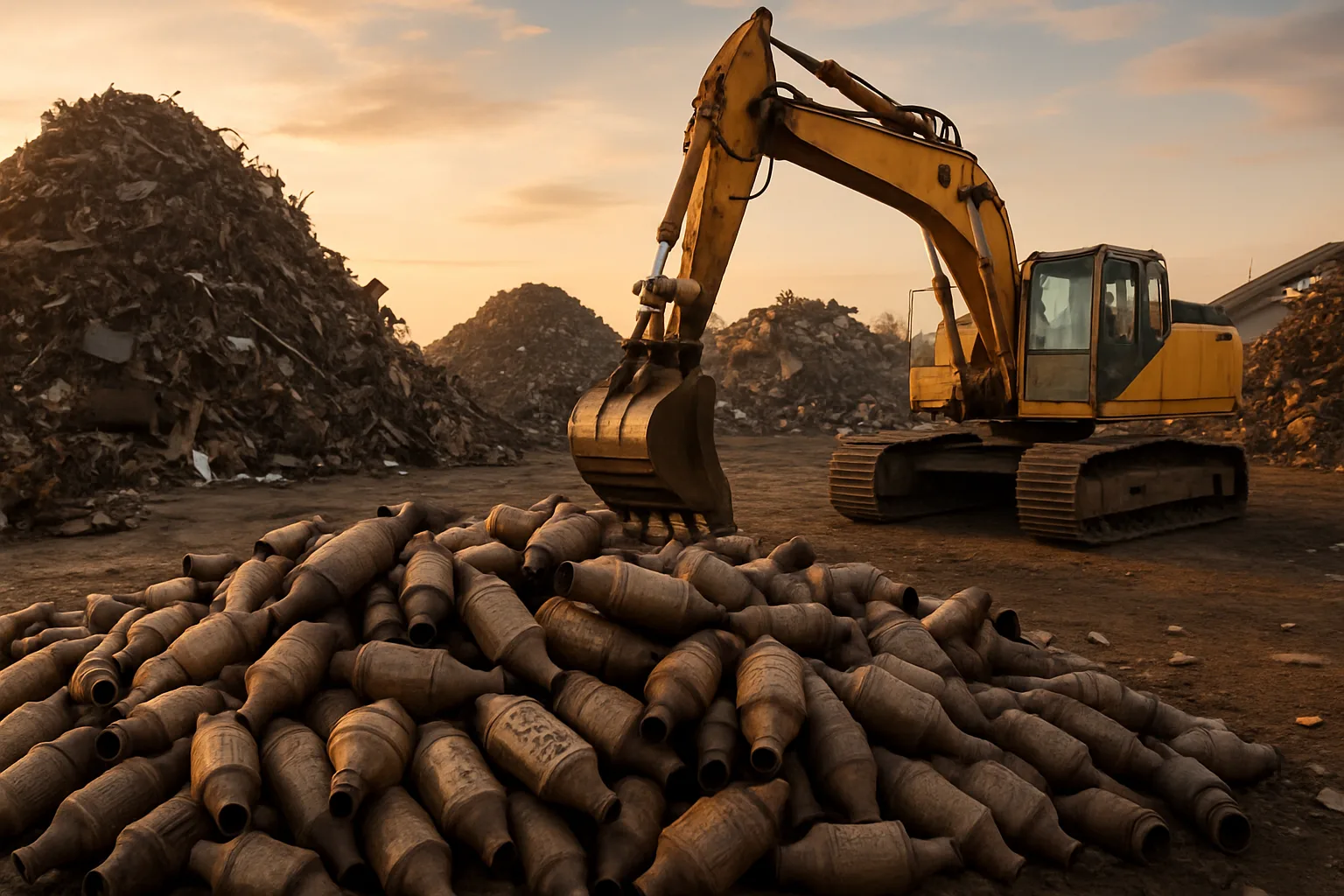
Why Your Catalytic Converter Might Be Worth More Than You Think
Most people selling scrap metal focus on the obvious stuff — steel, copper, aluminum. But if you've got catalytic converters sitting in your yard or shop, you could be leaving serious money on the table. The steel scrap price today gets most of the attention, but cats? They operate on an entirely different pricing structure — and understanding that structure is how you stop getting lowballed.
In Burnaby and across British Columbia, recyclers and auto shops deal with catalytic converters constantly. The problem is most sellers don't know what drives the price — so they take the first offer they get. This guide breaks down exactly how catalytic converter recycling works, why prices swing so dramatically, and how to position yourself to get a fair deal in 2026.
How Catalytic Converter Recycling Actually Works
A catalytic converter's value has almost nothing to do with the steel shell. It's what's inside that counts — a ceramic or metallic honeycomb substrate coated with platinum group metals (PGMs): platinum, palladium, and rhodium. These are the same metals used in jewelry, industrial applications, and electronics. They're rare. They're valuable. And recovering them requires serious processing infrastructure.
Here's the basic chain from your yard to final settlement:
- Collection: Converters come off vehicles at dismantlers, collision shops, and recycling yards.
- Sorting and identification: Each unit gets identified by make, model, and converter type. A Honda Civic cat and a Ford F-250 cat are not the same — not even close.
- Assaying: The substrate gets sampled and tested in a lab to determine the exact PGM content. This is where real value gets established.
- Smelting and refining: The PGMs are extracted through high-temperature processing and chemical separation.
- Settlement: The refiner pays out based on confirmed metal content and current commodity prices.
The gap between what a buyer pays you on the street and what the refiner eventually recovers is where margin lives. Buyers price in their processing costs, shipping, assay fees, and profit. The tighter that spread, the better your return. That's why working with buyers who operate transparently matters — and why platforms like compare scrap metal bids from Canadian buyers exist. Competition closes that spread.
Why Catalytic Converter Prices Vary So Wildly
Walk into two different scrap yards in Burnaby with the same converter and you might get two completely different quotes. That's not an accident. Pricing on cats is legitimately complex, driven by multiple variables that shift constantly.
PGM commodity prices move daily. Palladium, for example, has historically been one of the most volatile metals in the market. Rhodium prices have swung from a few hundred dollars per troy ounce to well over ten thousand in the span of a few years. When those underlying commodities move, so does every cat price downstream. The scrap metal prices today you see posted for steel or aluminum are relatively stable compared to what's happening in the PGM market on any given Tuesday.
Other factors driving price differences:
- Converter type and grade: Foil (metallic substrate) versus ceramic, domestic versus foreign, small car versus large truck — each category has a different PGM loading and a different value tier.
- Converter condition: Cracked, broken, or rattling substrates mean material loss. Buyers price that in immediately.
- Volume: If you're selling one unit, your leverage is limited. If you're moving a pallet or more, buyers compete harder for the load.
- Buyer access to refiners: A buyer with a direct refinery relationship prices better than one who flips to a middleman.
- Market timing: PGM prices shift week to week. Selling into a strong palladium market versus a weak one can mean a meaningful difference per unit.
This is why guessing your price — or taking a single verbal quote over the phone — is the wrong move. To find the best Canadian scrap metal prices today, you need real market data and multiple buyers competing for your material.
Scrap Metal Inventory Management for Catalytic Converter Sellers
If you're a yard operator, dismantler, or shop accumulating cats over time, how you track and document your inventory directly affects what you get paid. Buyers pay more for documented loads. Full stop. A pallet of cats with serial numbers, photos, make/model attribution, and condition notes is a fundamentally different product than a mystery box.
This is where scrap metal inventory management practices separate professional operations from the rest. Good documentation means:
- Each unit photographed front and back
- VIN or serial tracking tied to source vehicle where possible
- Condition notes (intact substrate, physical damage, aftermarket versus OEM)
- Accurate count and approximate weight for the lot
SMASH builds this documentation layer directly into the platform. When you list a load of cats through SMASH, you're not just posting a number — you're presenting buyers with actual data they can underwrite against. That's how you turn a guessing game into a real auction. Vetted buyers bid on documented loads. More confidence in the material equals stronger bids.
For sellers in British Columbia dealing with high volumes — auto recyclers, collision repair networks, fleet operators — this isn't a nice-to-have. It's how you protect your revenue and defend your prices against buyers who want to discount everything because "we can't verify what's in there."
The SMASH Scrap Metal Auction Advantage for Cat Sellers
The old way of selling catalytic converters: call your regular buyer, take their price, hope it was fair. The problem with that model is you never actually know if you left money behind. One buyer. One price. No competition. That's not price discovery — that's just hope.
The SMASH scrap metal auction model changes that math. When you list a documented load of cats on SMASH, vetted buyers across North America can see and bid on your material. The auction format does what a single phone call never can: it reveals what the market will actually pay. Multiple buyers competing for the same load creates real tension — and real prices.
A few things worth knowing about how SMASH works:
- No subscription fees. SMASH only makes money when you do.
- Vetted buyers only. You're not dealing with unknown counterparties.
- Auto-invoicing and documentation built in. BOLs, packing lists, photo records — the paperwork side is handled.
- Transparent process. You see what buyers are paying, not just what one buyer says the market is.
Whether you're selling a single large pallet or managing regular volume out of a Burnaby dismantling yard, more buyers means better price discovery. That's not hype — that's just how competitive markets work.
What Sellers in Burnaby Should Know About the 2026 Cat Market
The catalytic converter recycling market in 2026 has matured significantly compared to a few years back. Regulatory frameworks around converter documentation and theft prevention are more established, which has actually helped legitimate sellers. Documented origin, proper invoicing, and traceable supply chains are now standard expectations from serious buyers — not optional extras.
In Burnaby and across British Columbia, yards dealing in converters are operating in a more structured environment. That's good news if you've invested in tracking your inventory properly. It means the market rewards clean, documented lots more than it used to.
Palladium and rhodium prices have continued to be a key variable in 2026. Before you sell any significant volume of cats, read the latest Canadian scrap metal pricing guides to get a sense of where PGM values are sitting. A few hours of research before a large transaction can translate directly into better negotiating position.
It's also worth noting that the broader scrap metal prices today environment affects buyer appetite. When ferrous and non-ferrous markets are active, buyers have more capital flowing and are often more competitive on specialty materials like cats. Timing your sale when market conditions are favorable is a real lever — one that most sellers never pull because they're not watching the data.
If you want to check current Canadian scrap metal prices before your next transaction, make it a habit. Price awareness is free. Selling blind costs you every time.
The bottom line: catalytic converter recycling isn't complicated, but getting paid fairly requires more than one phone call. Document your inventory. Understand what drives PGM pricing. Use competitive channels. SMASH exists to put more buyers in the room when your load is on the table — because that's the only way to know you got a real price. Get the best Canadian scrap metal prices and make informed decisions at best-scrap-prices.ca.
Follow SMASH on LinkedIn for ongoing scrap metal market insights, pricing trends, and industry news: SMASH on LinkedIn.
Frequently Asked Questions
Q: What is the scrap price for a catalytic converter today in Burnaby?
Catalytic converter prices vary significantly based on the converter type, PGM content, and daily commodity prices for platinum, palladium, and rhodium. There's no single "steel scrap price today" equivalent for cats — each unit or lot is priced individually. Use a competitive platform or get multiple quotes before selling.
Q: Why do two scrap yards give me different prices for the same catalytic converter?
Because pricing is driven by PGM commodity values, converter grade, condition, and each buyer's access to downstream refiners. A buyer with a direct refinery relationship can typically offer better prices than one selling to a middleman. Volume also affects what buyers will pay — larger documented lots attract stronger bids.
Q: How does a catalytic converter auction work through SMASH?
You document your load — photos, unit count, condition, source vehicle info where available — and list it through the SMASH platform. Vetted buyers across North America review the lot and submit competitive bids. The auction format creates real competition, which helps reveal the actual market price rather than relying on a single buyer's quote.
Q: Does the steel scrap price today affect catalytic converter prices in British Columbia?
The steel shell of a cat has minimal value compared to the PGM content inside, so general steel pricing has limited direct impact. However, broader scrap metal market conditions can affect overall buyer activity and appetite. PGM commodity prices — especially palladium and rhodium — are the primary driver of catalytic converter values.
Q: Do I need to document my catalytic converters before selling in Burnaby?
In 2026, documentation is essentially a market requirement for serious buyers and is aligned with regulatory expectations around converter provenance. Proper records — photos, serial or VIN tracking, condition notes — help buyers price confidently and typically result in stronger offers. Undocumented lots are discounted because buyers can't fully assess what they're buying.
Disclaimer: Catalytic converter and scrap metal prices fluctuate based on daily commodity markets. All pricing information in this article is general in nature. Always verify current rates before selling.